French Bulldog and Poodle Mix: Complete Guide to the Frenchie Doodle
If you love the charming personality of a French Bulldog and the intelligence of a Poodle, you may have come across the French Bulldog and Poodle mix. Often called a Frenchie Doodle, Froodle, Frenchie Poo, or Floodle, this designer mix combines traits from two very popular companion breeds.
But is a Frenchie Doodle actually the right dog for you?
This guide covers what you should know before bringing one home, including size, personality, grooming, exercise, training, health concerns, and what to look for when choosing a responsible breeder.
Important: A French Bulldog and Poodle mix can inherit traits from either parent. Because mixed-breed dogs do not have a single standardized appearance or temperament, individual dogs can be quite different.
What Is a French Bulldog and Poodle Mix?
A French Bulldog and Poodle mix is a cross between a French Bulldog and a Poodle, most commonly a Toy or Miniature Poodle.
You may hear this mix called:
- Frenchie Doodle
- Froodle
- Frenchie Poo
- Frenchie Poodle
- Floodle
- French Boodle
Unlike the French Bulldog and Poodle, the Frenchie Doodle is not a breed with a long-established breed standard. That means there is no single “correct” size, coat, color, or personality.
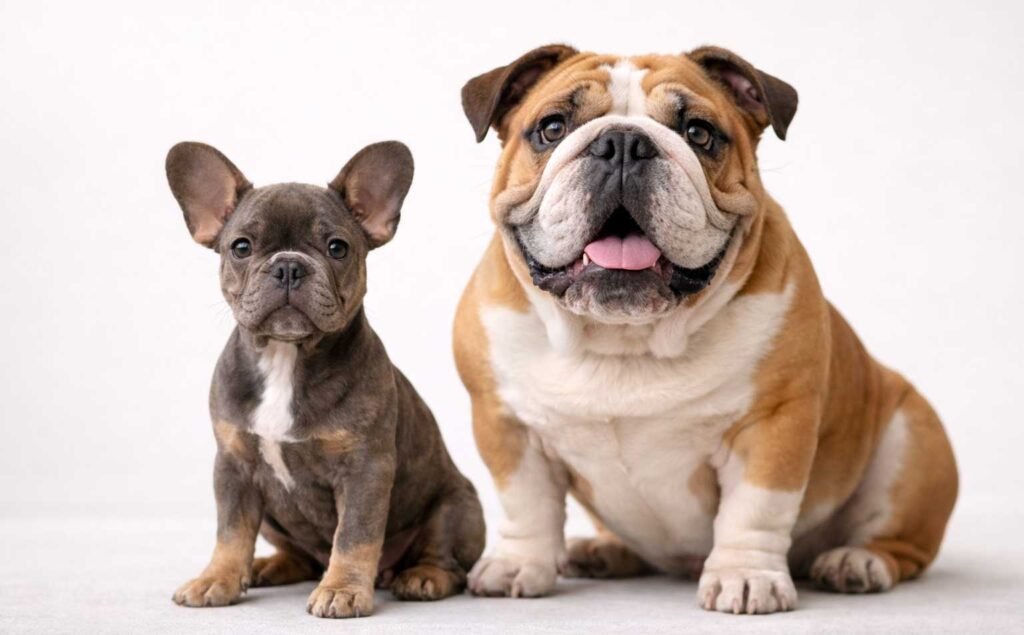
One puppy may have the short face and bat ears of a Frenchie, while another may have a longer muzzle and curlier coat like a Poodle.
That unpredictability is part of the fun—but it is also something prospective owners should understand.
French Bulldog and Poodle Mix at a Glance
| Trait | What to Expect |
| Other names | Frenchie Doodle, Froodle, Frenchie Poo, Floodle |
| Type | Mixed-breed/designer dog |
| Typical size | Often small, but can vary |
| Weight | Commonly around 15–25 pounds, depending on parents |
| Lifespan | Around 10–14 years, with individual variation |
| Personality | Affectionate, playful, social, intelligent |
| Energy level | Moderate to moderately high |
| Trainability | Generally good, although some can be stubborn |
| Shedding | Usually low to moderate, but highly dependent on coat genetics. |
| Grooming | Depends heavily on the coat |
| Apartment living | Often suitable with enough daily activity |
| Good with children | Often, with proper socialization and supervision |
| Main concerns | Breathing, eyes, joints, spine, weight and heat sensitivity |
What Does a Frenchie Doodle Look Like?
There is no one look for a French Bulldog and Poodle mix.
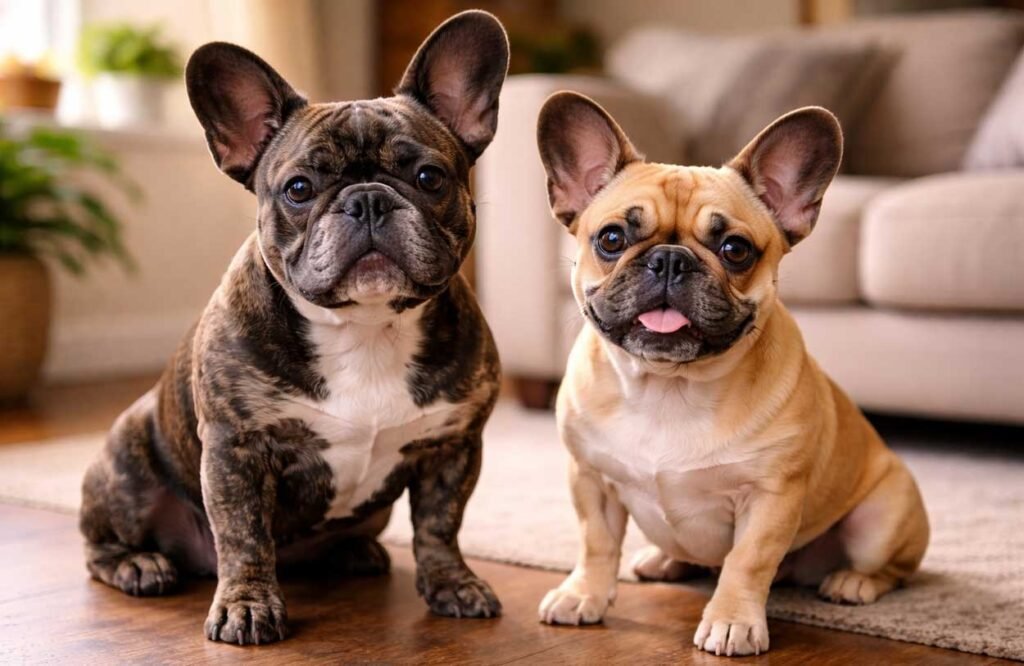
Some have the unmistakable bat ears, compact body, short tail, and facial features of a French Bulldog. Others look more like a small Poodle with a slightly stockier build.
Their coat can also vary significantly. Depending on their genetics, you might see:
- Short and smooth hair
- Wavy hair
- Soft curls
- A combination of straight and curly hair
- Low-shedding coats
- Colors such as cream, white, fawn, black, brown, apricot, gray, red, or brindle
Even puppies from the same litter can look surprisingly different.
How Big Does a French Bulldog and Poodle Mix Get?
Size depends largely on the Poodle parent.
Toy Poodles are very small, while Miniature Poodles are larger. Standard Poodles are considerably bigger. Most Frenchie Doodles are produced using Toy or Miniature Poodles, so they generally remain on the smaller side.
Many Frenchie Doodles are relatively small because Toy or Miniature Poodles are commonly used, but adult size can vary considerably depending on the parents. Rather than relying on a fixed weight range, ask the breeder about the adult size and weight of both parents and previous litters.
Your dog’s ideal weight depends on factors such as age, body size, activity level, and overall health. You can also use our dog weight calculator as a general reference, but your veterinarian should determine whether your dog’s body condition is healthy.
French Bulldog and Poodle Mix Temperament
One of the biggest reasons people are attracted to this mix is its personality.
French Bulldogs are typically affectionate, companionable, and adaptable. Poodles are known for being intelligent, active, and eager to learn. A Frenchie Doodle can inherit any combination of these characteristics.
A well-socialized Frenchie Doodle may be:
- Affectionate with its family
- Playful and entertaining
- Intelligent and curious
- Social with people
- Friendly toward other dogs
- Adaptable to different homes
- Very attached to its owners
However, genetics are only part of the picture. Early socialization, training, environment, and the individual dog’s personality all matter.
Some Frenchie Doodles can also inherit the French Bulldog’s stubborn streak. They may understand exactly what you are asking and simply decide they have a better idea!
Are Frenchie Doodles Good Family Dogs?
They can be excellent family companions.
Their small size and playful nature can work well for many families, including those with older children. However, children should always be taught how to handle and interact with a dog respectfully.
Because these dogs can have relatively small and delicate bodies, young children should not be allowed to climb on them, pull their ears or tail, or carry them without supervision.
Remember that no dog should be left unsupervised with a young child, regardless of breed or size.
Are French Bulldog and Poodle Mixes Good With Other Pets?

Many Frenchie Doodles can live happily with dogs and cats, especially when they are introduced properly.
Early socialization is important. Instead of immediately putting two unfamiliar animals together, give them time to become comfortable with each other’s presence.
Keep introductions:
- Calm
- Gradual
- Supervised
- Positive
A dog’s individual personality matters more than a simple breed label. Some Frenchie Doodles may be naturally social, while others may need more time to adjust to another pet.
How Much Exercise Does a Frenchie Doodle Need?
A French Bulldog and Poodle mix usually needs regular daily activity, but it is not necessarily a dog that needs hours of intense exercise.
Many healthy adult Frenchie Doodles can do well with roughly 30–60 minutes of daily activity, but their ideal exercise level varies. A dog with a short French Bulldog-like muzzle may need less strenuous exercise, especially in warm weather.
Good activities include:
- Daily walks
- Short games of fetch
- Interactive toys
- Training games
- Puzzle feeders
- Indoor play
- Supervised play with other friendly dogs
- Puppies, seniors, and dogs with breathing or orthopedic problems may need a different activity level.
Mental exercise is particularly useful because Poodles are highly intelligent dogs. A few short training sessions or puzzle games can sometimes tire a dog out more effectively than another walk around the block.
Mental stimulation matters: Because a Frenchie Doodle may inherit the Poodle’s intelligence and curiosity, interactive toys and puzzle feeders can be useful for providing mental exercise at home. Start with simple puzzles and choose toys that are appropriate for your dog’s size and chewing habits.
👉 Explore interactive and puzzle toys for dogs on Amazon
Be Careful With Heat
This is especially important if your Frenchie Doodle has inherited a short, flat face from the French Bulldog parent.
A Frenchie Doodle with a longer muzzle may tolerate exercise differently from one with a very short, flat face, so pay attention to your individual dog’s breathing, stamina, and comfort.
Short-nosed dogs can have more difficulty cooling themselves through panting. Hot and humid weather can therefore become dangerous much faster than many owners expect.
During warm weather:
- Exercise during cooler parts of the day.
- Avoid strenuous activity in high heat.
- Provide plenty of fresh water.
- Keep your dog somewhere cool.
- Watch for signs of breathing difficulty or overheating.
Never assume that because your dog seems eager to play, the weather is safe for exercise.
Training a French Bulldog and Poodle Mix
The good news is that this mix can be very smart and responsive to training.
Poodles are known for their intelligence, while French Bulldogs can be eager to interact with their owners. The challenge is that a Frenchie Doodle may also inherit some French Bulldog stubbornness.
The most effective approach is usually:
- Short training sessions
- Positive reinforcement
- Food rewards
- Toys and praise
- Consistent rules
- Early socialization
- Plenty of patience
Avoid harsh training methods. Your goal is to make the correct behavior rewarding and easy to understand.
Start with basic commands such as sit, stay, come, leave it, and down. House training and leash manners should also begin as early as practical.
Puppy training classes can be useful because they provide both structured learning and opportunities for safe socialization.
Training tip: Small, soft treats can be useful during short training sessions because they are easy to deliver quickly without interrupting the exercise. Choose treats that are appropriate for your dog’s size and remember to account for treats in their daily calorie intake.
👉 Browse small training treats for dogs on Amazon
Grooming a Frenchie Doodle
Grooming requirements can be one of the biggest differences between individual Frenchie Doodles.
If your dog inherits a short French Bulldog-like coat, grooming may be relatively simple. If it inherits the Poodle’s curly coat, you will have considerably more work to do.
A curly or wavy coat can develop mats and tangles, so regular brushing is important. Some owners choose professional grooming to keep the coat short and manageable.
In addition to brushing, remember:
- Trim the nails regularly.
- Check and clean the ears when needed.
- Brush the teeth regularly—ideally daily.
- Keep facial folds clean and dry if your dog has them.
- Check the skin regularly for irritation.
Dental-care tip: A dog-specific toothbrush and toothpaste can make regular home dental care easier. Choose products made specifically for dogs rather than using human toothpaste, and introduce brushing gradually so your dog becomes comfortable with the routine.
👉 Browse dog toothbrushes and dental-care supplies on Amazon
Low shedding does not mean low maintenance. A dog that sheds very little may still require frequent brushing and professional grooming.
Grooming tip: If your Frenchie Doodle has a wavy or curly coat, a quality slicker brush can make regular brushing easier and help remove loose hair and small tangles before they become mats. Look for a brush that is appropriately sized for your dog’s coat and comfortable enough for frequent use.
👉 See popular slicker brushes for dogs on Amazon
What Should a French Bulldog and Poodle Mix Eat?
There is no special “Frenchie Doodle diet” that every dog needs.
Choose a complete and balanced dog food appropriate for your dog’s life stage, whether puppy, adult, or senior.
How much your dog should eat depends on factors such as:
- Age
- Weight
- Activity level
- Body condition
- Health
- Type of food
Small dogs can gain excess weight surprisingly easily, and extra weight can put additional stress on their joints and breathing.
Your veterinarian can help you determine an appropriate feeding amount and can recommend a specific diet if your dog develops a medical condition.
Treats count toward daily calories, too. Keep them modest and use them strategically during training.
Feeding tip: A measuring cup can help keep portions consistent, while a slow feeder may be useful for dogs that tend to eat their meals too quickly. These tools don’t replace appropriate portion guidance from your veterinarian, but they can make everyday feeding easier to manage.
👉 See slow feeders and dog feeding accessories on Amazon
French Bulldog and Poodle Mix Health Problems
This is one area where prospective owners should do their homework.
A Frenchie Doodle may inherit health problems associated with either parent breed. Being a mixed breed does not automatically mean a dog will be healthier.
Potential concerns include:
Brachycephalic Airway Problems
If a Frenchie Doodle inherits a very short muzzle, it may be at higher risk of brachycephalic airway problems that can affect breathing and exercise tolerance.
Watch for:
- Loud or difficult breathing
- Excessive snoring
- Getting tired quickly
- Difficulty exercising
- Heavy panting
- Heat intolerance
- Breathing problems during sleep
These problems can become worse during exercise or hot and humid weather, particularly in dogs with more severe airway narrowing.
The facial structure of the individual dog matters. A Frenchie Doodle with a longer muzzle may have a different risk profile than one with an extremely flat face.
Importantly, loud breathing or heavy snoring should not automatically be considered normal for a flat-faced dog. If breathing appears difficult, veterinary evaluation is appropriate.
Intervertebral Disc Disease
French Bulldogs and other small, compact dogs can be vulnerable to spinal problems, including intervertebral disc disease (IVDD).
Signs of a possible spinal problem can include:
- Reluctance to move
- Back or neck pain
- Difficulty walking
- Weakness
- Unusual posture
- Trouble using the legs
Sudden neurological or mobility changes require prompt veterinary attention.
Eye Problems
Eye conditions can occur in both parent breeds. Dogs with prominent or unusually shaped eyes may also be more vulnerable to eye injuries.
If you notice redness, squinting, excessive tearing, cloudiness, rubbing, or a sudden change in vision, contact your veterinarian.
Joint Problems
Patellar luxation, hip problems, and other orthopedic conditions can occur in dogs of this type.
Maintaining a healthy weight is one of the simplest things owners can do to reduce unnecessary stress on the joints.
If your dog has a history of back problems, your veterinarian may also recommend reducing activities that involve repeated jumping, such as jumping on and off furniture.
Other Possible Conditions
Depending on their genetics, Frenchie Doodles may also be susceptible to other conditions affecting the skin, heart, nervous system, or musculoskeletal system.
This is why responsible breeding and appropriate veterinary care matter so much.
How to Choose a Healthy Frenchie Doodle Puppy
If you decide to purchase a French Bulldog and Poodle mix, don’t choose a breeder based solely on photos or a low price.
A responsible breeder should be willing to answer questions about:
- Health testing recommended for both parent breeds
- Written documentation of completed health tests, rather than simply saying the parents are “healthy”
- Patella, hip, cardiac, and ophthalmologist evaluations relevant to the French Bulldog parent
- Patella, hip, ophthalmologist, and relevant DNA testing for the Poodle parent, depending on whether the parent is Toy, Miniature, or Standard
- The parents’ veterinary and health history
If possible, visit the breeding facility and see how the adult dogs and puppies are kept.
Be cautious if a breeder:
- Always has puppies available
- Refuses to let you see where the dogs live
- Won’t discuss health testing
- Pressures you to send money immediately
- Has many different breeds available at once
- Makes unrealistic health guarantees
- Focuses entirely on unusual colors or appearance
A good breeder should also ask you questions. They should care about where their puppies are going and whether your lifestyle is a good match.
How Much Does a French Bulldog and Poodle Mix Cost?
The price of a French Bulldog and Poodle mix can vary widely depending on the breeder, location, parent dogs, health testing, pedigree, and demand. Because this is a relatively uncommon mix, there is no single standard price across the United States.
Be careful about choosing a puppy based only on price. A very low price can be a warning sign if the breeder is cutting corners on veterinary care, socialization, or health testing. On the other hand, a high price does not automatically mean a breeder is responsible.
When comparing breeders, look beyond the puppy’s purchase price. Ask about health testing, veterinary care, vaccinations, socialization, contracts, and what support the breeder provides after you take the puppy home.
Should You Adopt a Frenchie Doodle?
Adoption is worth considering.
Although the French Bulldog and Poodle mix is a relatively uncommon cross, mixed-breed dogs with similar characteristics are available through shelters and rescue organizations.
You may not find a dog specifically labeled “Frenchie Doodle.” Instead, look at individual dogs based on their personality, size, energy level, and compatibility with your household.
Shelter and rescue staff can often help match you with a dog whose temperament fits your lifestyle.
Is a French Bulldog and Poodle Mix Right for You?
A Frenchie Doodle could be a great choice if you want a small companion that is affectionate, playful, intelligent, and reasonably adaptable.
It may be a particularly good fit for someone who:
- Lives in an apartment or smaller home
- Wants an affectionate companion
- Enjoys daily walks and play
- Has time for training
- Doesn’t want a heavy-shedding dog
- Is prepared for regular grooming
- Can provide consistent socialization
- Understands the potential health concerns
- Can keep the dog cool and limit strenuous exercise during hot weather
However, this mix isn’t automatically “easy” just because it is small.
The coat may require significant grooming, the dog may inherit stubbornness, and a short-nosed puppy may have serious breathing and heat-related concerns.
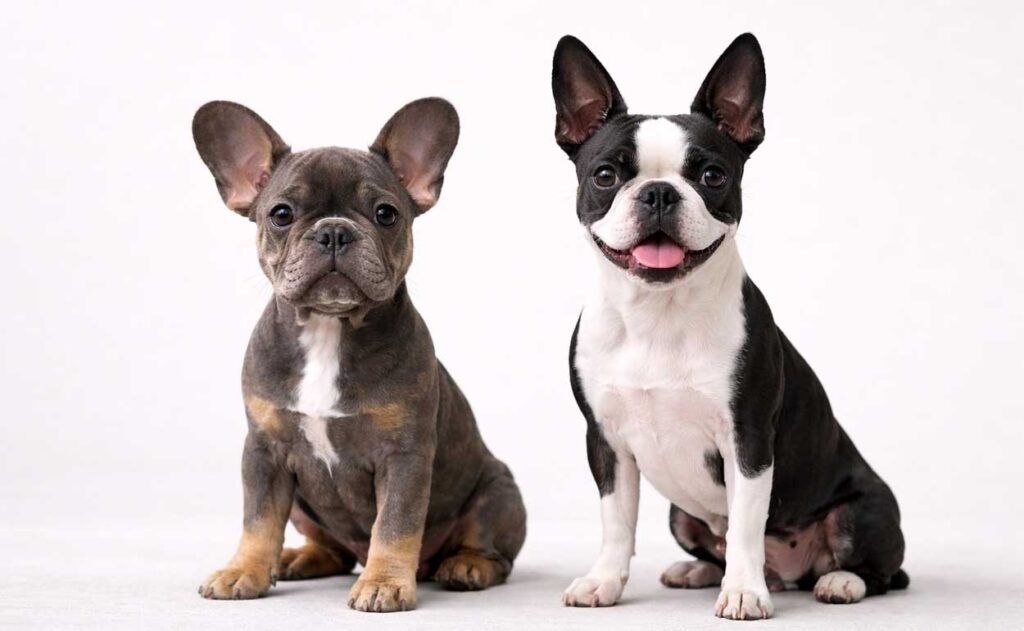
If you’re also considering a French Bulldog as a companion breed, you may want to compare its characteristics with another popular small breed in our Boston Terrier vs. French Bulldog comparison.
French Bulldog and Poodle Mix: Pros and Cons
Pros
- Affectionate and people-oriented
- Playful and entertaining
- Intelligent
- Usually small enough for many homes
- May be low-shedding, depending on coat type
- Can be good family companions
- Often enjoys training, interactive games, and mental stimulation
Cons
- Appearance and temperament can be unpredictable
- May inherit French Bulldog breathing problems
- Can be stubborn
- Curly coats may require extensive grooming
- Can become overweight without proper portion control
- May be expensive to purchase
- Health testing is especially important when choosing a breeder
Frequently Asked Questions
Is a French Bulldog and Poodle mix a good dog?
It can be an excellent companion for the right household. Frenchie Doodles are often affectionate, playful, intelligent, and social. However, individual temperament and health can vary, so it’s important to evaluate the specific dog rather than relying only on the mix’s name.
How big does a Frenchie Doodle get?
Most are relatively small because breeders commonly use Toy or Miniature Poodles. Many adults weigh roughly 15–25 pounds, but size can vary considerably depending on the parents.
Do Frenchie Doodles shed?
Usually, they don’t shed heavily, but there is no guarantee. A Frenchie Doodle can inherit a short coat from the French Bulldog or a wavy or curly coat from the Poodle. Coat type has a major effect on shedding and grooming needs.
Are Frenchie Doodles hypoallergenic?
No dog can be guaranteed to be completely hypoallergenic. A Frenchie Doodle with a Poodle-like coat may shed less and may be easier for some allergy sufferers, but people can still react to a dog’s dander, saliva, and other allergens.
Do Frenchie Doodles bark a lot?
It depends on the individual dog. Poodles can be fairly vocal, while French Bulldogs are often quieter. Your Frenchie Doodle could inherit either tendency. Boredom, anxiety, excitement, or a medical problem can also cause excessive barking.
Can Frenchie Doodles live in apartments?
Yes, many can. Their relatively small size makes them suitable for apartment living, provided they receive enough daily exercise, mental stimulation, and attention.
Are Frenchie Doodles good with kids?
Many are friendly and playful with children, but proper socialization and supervision are essential. Children should learn how to interact safely and respectfully with the dog.
How long do Frenchie Doodles live?
A reasonable general expectation is around 10–14 years, although individual dogs can live shorter or longer lives depending on genetics, health, nutrition, veterinary care, and lifestyle.
Are Frenchie Doodles recognized by the AKC?
The Frenchie Doodle is a mixed-breed cross rather than an AKC-recognized purebred breed. Recognition by smaller hybrid or designer-dog organizations is a separate matter and does not give the mix the same breed status as established AKC breeds.
Final Thoughts
The French Bulldog and Poodle mix is an appealing combination of two very different but popular companion breeds. You may get the Frenchie’s affectionate personality, the Poodle’s intelligence, or a fascinating blend of traits from both.
But the cute face should not be the only reason to choose one.
Before bringing home a Frenchie Doodle, think about the dog’s exercise needs, grooming requirements, training, potential health concerns, and the individual puppy’s temperament. Pay particular attention to breathing and heat tolerance if the puppy has a very short muzzle.
Most importantly, choose the dog—not simply the label.
A well-socialized Frenchie Doodle from a responsible breeder or rescue can become a loving member of the family for many years, especially when owners understand the dog’s individual health and exercise needs. And if you are open to adoption, don’t overlook mixed-breed dogs in shelters and rescues. The right companion may already be waiting for you.
Sources & Further Reading
AKC — Breed Health Testing Requirements
AKC — French Bulldog Health & Breed Information
AKC — Miniature Poodle Health & Breed Information
Cornell University — Brachycephalic Obstructive Airway Syndrome
Veterinary Disclaimer:
This article provides general information about the French Bulldog and Poodle mix and is not a substitute for veterinary advice. Every dog is different, and health risks can vary based on genetics, body structure, age, and overall health. If your dog develops breathing difficulties, sudden weakness, severe pain, vision changes, or other concerning symptoms, contact your veterinarian promptly.
Frenchie Doodle Essentials
Bringing home a Frenchie Doodle means preparing for grooming, training, enrichment, feeding, and everyday dental care. You don’t need every dog product on the market, but a few basic supplies can make these routines easier.
For grooming: A good slicker brush can be particularly useful for Frenchie Doodles with wavy or curly coats.
👉 Browse dog grooming brushes on Amazon
For training: Small training treats can make positive-reinforcement sessions easier and more rewarding.
👉 See dog training treats on Amazon
For enrichment: Puzzle toys and interactive feeders can provide useful mental stimulation when used appropriately.
👉 Explore puzzle and interactive dog toys on Amazon
For dental care: A dog-specific toothbrush and toothpaste can help you establish a regular home dental-care routine.
👉 See dog dental-care supplies on Amazon
Amazon Affiliate Disclosure: As an Amazon Associate, we may earn from qualifying purchases made through links on this page, at no extra cost to you.