
French Bulldog Feeding & Diet Guide (USA)
Feeding a French Bulldog the right way is one of the most important parts of responsible dog ownership. A proper French Bulldog feeding and diet guide is essential because Frenchies have unique bodies, sensitive digestion, and a strong tendency to gain weight. What you feed your French Bulldog every day directly affects their breathing, skin health, energy levels, and overall comfort.
Many French Bulldog owners in the USA struggle with common problems like gas, itchy skin, food allergies, picky eating, or unexpected weight gain—often without realizing that diet is the root cause. Choosing the wrong food, feeding incorrect portions, or following generic dog feeding advice can slowly lead to long-term health issues for French Bulldogs.
This complete French Bulldog Feeding & Diet Guide (USA) is designed to make feeding simple and stress-free. Whether you have a French Bulldog puppy, an adult Frenchie, or a senior dog, this guide covers everything you need to know—what to feed, how much to feed, which ingredients to avoid, and how to handle allergies, supplements, and weight management in the USA.
If you want your French Bulldog to stay healthy, comfortable, and happy for years to come, this guide will walk you through every step.
📌 Quick Navigation – Jump to Any Section
- 👉 Understanding French Bulldog Nutrition
- 👉 Choosing the Right Food (USA Guide)
- 👉 Portion Control & Feeding Schedule
- 👉 Supplements & Vitamins for French Bulldogs
- 👉 Special Diets (Allergies & Sensitive Stomach)
- 👉 Common Feeding Mistakes to Avoid
- 👉 French Bulldog Feeding FAQs (USA)
- 👉 Final Feeding Tips & Conclusion
Understanding French Bulldog Nutrition

Feeding a French Bulldog is not the same as feeding any other dog breed. Frenchies may be small in size, but their nutritional needs are very specific. Understanding what goes into their food—and why it matters—is the first step toward keeping your pup healthy, active, and happy for years to come.
Many first-time French Bulldog owners in the USA make the mistake of choosing food based only on brand popularity or price. But French Bulldogs have unique bodies, sensitive digestion, and a strong tendency to gain weight. Because of this, nutrition is not just important—it’s critical.
Think of food as the foundation of your Frenchie’s life. The right diet supports healthy growth, strong muscles, good digestion, shiny coat, proper breathing, and even mood and behavior.
Why Nutrition Is So Important for French Bulldogs
French Bulldogs are a brachycephalic breed, meaning they have a flat face and compact body structure. While this makes them adorable, it also creates challenges:
- Slower metabolism compared to some active breeds
- Higher risk of obesity
- Sensitive stomach and gas issues
- Food allergies and skin problems
- Joint stress due to their muscular build
Many French Bulldog owners I’ve spoken to notice significant improvements in digestion, energy levels, and skin health once they switch to a properly balanced diet.
Because of these factors, French Bulldogs need high-quality, balanced nutrition with controlled calories. Overfeeding or feeding low-quality food can quickly lead to health problems like breathing difficulty, joint pain, skin infections, and low energy.
👉what you feed your Frenchie today directly affects their health tomorrow.
Macronutrients French Bulldogs Need
A healthy French Bulldog diet is built on four main macronutrients. Each one plays a specific role in your dog’s body.
1. Protein – The Building Block of Strength
Protein is the most important nutrient for French Bulldogs.
Why protein matters:
- Builds and maintains muscle mass
- Supports healthy growth in puppies
- Helps repair tissues
- Provides steady energy
French Bulldogs are muscular dogs, even though they are small. They need high-quality animal protein to stay strong and fit.
Best protein sources for Frenchies (USA):
- Chicken (if no allergy)
- Turkey
- Lamb
- Salmon
- Duck
👉 Look for dog food where real meat is the first ingredient, not meat by-products or fillers.
2. Fats – Energy and Skin Health
Healthy fats are essential, but they must be balanced.
Benefits of good fats:
- Provide concentrated energy
- Support brain function
- Keep skin healthy and coat shiny
- Help absorb vitamins
French Bulldogs do well with moderate fat levels, not high-fat diets.
Healthy fat sources include:
- Fish oil
- Chicken fat
- Flaxseed
- Salmon oil
Too much fat can lead to rapid weight gain, so portion control is just as important as food quality.
3. Carbohydrates – Energy (But in Control)
Carbohydrates are not bad—but French Bulldogs don’t need large amounts.
Good carbs provide:
- Energy
- Fiber for digestion
- Blood sugar balance
Better carb sources:
- Sweet potatoes
- Brown rice
- Oats
- Pumpkin
Avoid foods heavy in corn, wheat, and soy, as these can cause allergies and digestive issues in many Frenchies.
4. Fiber – Digestive Support
French Bulldogs are known for sensitive digestion and gas. Fiber helps regulate digestion and improve gut health.
Benefits of fiber:
- Better stool quality
- Reduced bloating
- Supports gut bacteria
Sources of fiber include pumpkin, beet pulp, and vegetables.
Micronutrients & Essential Supplements
Beyond macronutrients, French Bulldogs also need vitamins and minerals to stay healthy.
Omega-3 & Omega-6 Fatty Acids
- Reduce itching and inflammation
- Improve coat shine
- Support joints and heart health
Calcium & Phosphorus
- Essential for bone and teeth development
- Very important for puppies
Vitamins & Minerals
- Strengthen immune system
- Support organ function
- Improve overall vitality
Most high-quality US dog foods already include these nutrients, but some French Bulldogs may benefit from supplements—only under veterinary guidance.
Why Breed-Specific Nutrition Matters
Not all dogs process food the same way. French Bulldogs are especially sensitive to poor-quality ingredients.
They are more likely to experience:
- Food allergies (chicken, beef, grains are common triggers)
- Skin redness and itching
- Ear infections
- Digestive upset
That’s why many US pet nutrition experts recommend:
- Small-breed formulas
- French Bulldog-specific dog food
- Limited-ingredient diets
These formulas are designed with proper calorie density, smaller kibble size, and easier digestion—perfect for Frenchies.
Feeding Is an Act of Love
Every time you prepare a meal for your French Bulldog, you’re doing more than just filling a bowl. You’re protecting their health, preventing pain, and supporting a longer, happier life.
Many Frenchie owners notice real changes once they switch to the right diet:
- More energy
- Less itching
- Better digestion
- Happier mood
Seeing your French Bulldog bounce around the house, breathe comfortably, and cuddle peacefully is the reward of good nutrition.
Choosing the Right Food for Your French Bulldog in the USA
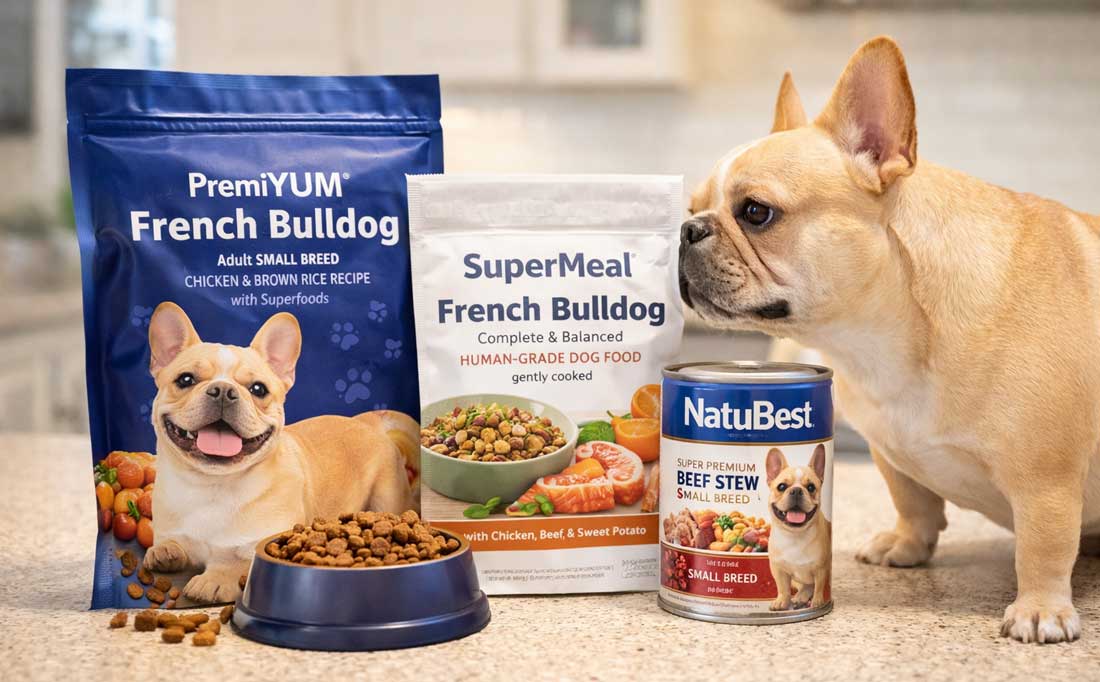
Choosing the right food for your French Bulldog in the USA can feel confusing—and honestly, a little overwhelming. Walk into any Petco, Walmart, or browse Chewy or Amazon, and you’ll see hundreds of dog food options. Bright packaging, big promises, “grain-free,” “natural,” “vet-approved”—but what actually works best for a Frenchie?
The truth is, there is no one-size-fits-all food, but there are clear rules that help you make the right choice for your French Bulldog’s body, digestion, and lifestyle.
This section will help you confidently choose food that supports your Frenchie’s health—without falling for marketing tricks.
Understanding Dog Food Labels (Very Important)
Before choosing any dog food in the USA, you must know how to read the label.
Ingredients List
- Ingredients are listed by weight, not quality
- The first ingredient should be real meat, not corn or by-products
✅ Good examples:
- Chicken
- Salmon
- Turkey
- Lamb
❌ Avoid foods where the first ingredient is:
- Corn
- Wheat
- Soy
- Meat by-products
Guaranteed Analysis
This shows protein, fat, fiber, and moisture levels.
Ideal ranges for French Bulldogs:
- Protein: 22–30%
- Fat: 10–18%
- Fiber: 3–6%
These numbers support muscle, energy, and digestion without promoting obesity.
Dry Dog Food (Kibble): Most Popular Choice in the USA
Dry kibble is the most common food choice for French Bulldog owners in the United States—and for good reasons.
Benefits of Dry Food
- Easy to store
- More affordable
- Helps reduce plaque on teeth
- Long shelf life
For French Bulldogs, choose small-breed or French Bulldog–specific kibble. These have:
- Smaller kibble size (easier to chew with flat faces)
- Controlled calories
- Digestive support
Recommended US Brands (Widely Trusted)
- Blue Buffalo (Small Breed)
- Wellness Core
- Hill’s Science Diet (Small Paws)
- Royal Canin French Bulldog Formula
👉 Always introduce new kibble slowly over 7–10 days.
Wet / Canned Food: Great for Picky Frenchies
French Bulldogs are known for being picky eaters. Wet food can be a great option—either alone or mixed with dry kibble.
Benefits of Wet Food
- High moisture (helps hydration)
- Strong smell and taste
- Easier to chew
- Good for dogs with dental issues
Things to Watch Out For
- Usually higher in fat
- More expensive long-term
- Spoils quickly after opening
Best practice: Mix a small amount of wet food with dry kibble to boost taste without overfeeding calories.
Several French Bulldog owners I’ve spoken with mention that their Frenchies become less picky once a consistent feeding routine is established.
Fresh & Human-Grade Dog Food (Popular in the USA)
In recent years, many US dog owners have switched to fresh, human-grade dog food services.
Examples include:
- Freshly cooked meals
- Refrigerated dog food
- Subscription-based services
Pros
- High-quality ingredients
- Fewer fillers
- Often easier to digest
Cons
- More expensive
- Requires refrigeration
- Portion accuracy is critical
These diets can work very well for French Bulldogs—as long as portions are controlled.
Raw Diets & Homemade Meals: Proceed With Caution
Some French Bulldog owners prefer raw or homemade diets. While these can work, they require serious commitment and proper knowledge.
Potential Benefits
- Better digestion (for some dogs)
- Improved coat
- Control over ingredients
Risks
- Nutrient imbalance
- Bacterial contamination
- Calcium/phosphorus issues (especially in puppies)
If you choose raw or homemade meals:
- Work with a US veterinarian or canine nutritionist
- Never guess ingredient ratios
- Puppies should NOT be fed unbalanced homemade diets
Grain-Free vs Grain-Inclusive: What’s Best?
Grain-free dog food became popular in the USA, but it’s not always necessary.
The Grain-Free May Help If:
- Your Frenchie has confirmed grain allergies
- Vet recommends it
Grain-Inclusive Is Often Better Because:
- Provides fiber
- Supports digestion
- Less risk of nutritional imbalance
Many French Bulldogs do better with healthy grains like brown rice or oats, not corn or wheat.
Ingredients French Bulldogs Should Avoid
Some ingredients are common in cheap dog food and can cause problems for Frenchies.
❌ Avoid foods with:
- Artificial colors and dyes
- Chemical preservatives
- Excess salt
- Corn syrup
- Rendered animal fat
Toxic Foods (Never Feed)
- Chocolate
- Grapes & raisins
- Onions & garlic
- Xylitol
- Alcohol
- Fatty table scraps
Choosing Food Is a Daily Decision of Care
Every bag of food you buy is a decision that affects your French Bulldog’s comfort, health, and happiness.
Many owners notice big changes after switching to the right food:
- Less gas
- Fewer allergies
- Better energy
- Healthier weight
Your Frenchie may not say “thank you,” but their bright eyes, playful mood, and cuddles say it all.
Portion Control & Feeding Schedule for French Bulldogs (USA Guide)
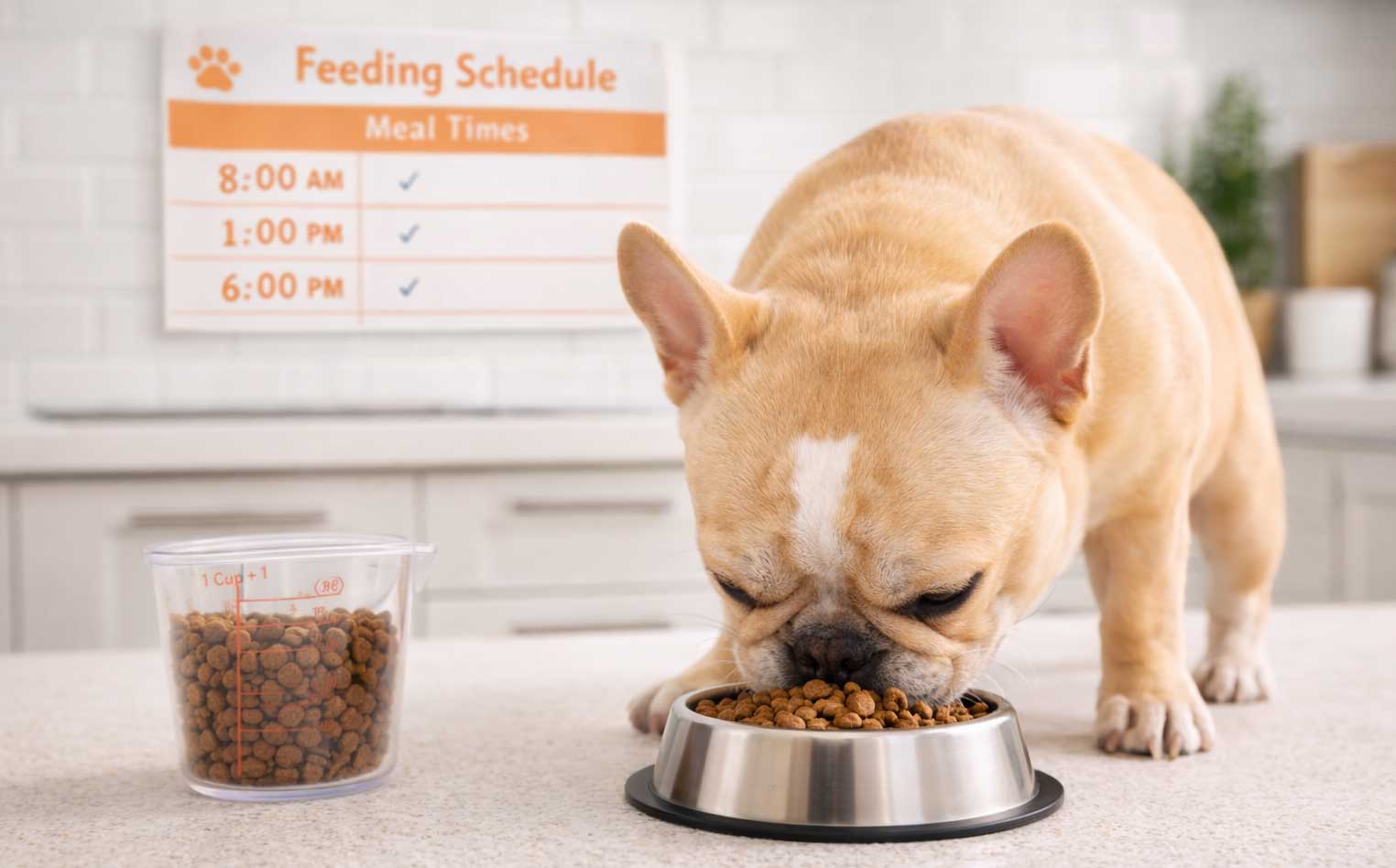
Portion control is one of the most important—and most ignored—parts of feeding a French Bulldog. Many Frenchies in the USA become overweight not because of bad food, but because of too much food.
French Bulldogs love to eat. They also have adorable faces that make it hard to say no. But overfeeding, even with high-quality food, can lead to serious health problems such as breathing difficulties, joint pain, low energy, and shorter lifespan.
This section will help you understand how much to feed, how often to feed, and how to build healthy eating habits from puppyhood to adulthood.
Why Portion Control Is Critical for French Bulldogs
French Bulldogs have:
- Compact, muscular bodies
- Lower activity levels than working breeds
- Slower metabolism
This means they burn calories more slowly. Even a small daily calorie excess can turn into weight gain within weeks.
👉 A Frenchie that is “a little chubby” is not cute—it’s unhealthy.
In conversations with French Bulldog owners, one common pattern I see is weight gain caused not by bad food—but by slightly oversized portions over time.
Proper portions help:
- Maintain ideal weight
- Reduce breathing stress
- Protect joints and spine
- Improve energy and mood
Feeding Schedule for French Bulldog Puppies
French Bulldog puppies grow fast and need frequent meals to support healthy development.
8 Weeks to 4 Months
- Meals per day: 3–4 small meals
- Why: Puppies have small stomachs and high energy needs
4 to 6 Months
- Meals per day: 3 meals
- Begin establishing a routine
6 to 12 Months
- Meals per day: 2–3 meals
- Gradually transition to adult schedule
Puppies should never skip meals. Long gaps can cause low energy and digestive upset.
Many new Frenchie puppy owners I’ve spoken to initially worry about underfeeding, but later realize that structured portions actually lead to better growth and digestion.
How Much to Feed a French Bulldog Puppy (USA Standards)
Portion size depends on:
- Age
- Current weight
- Expected adult size
- Activity level
- Type of food (dry, wet, fresh)
General Puppy Feeding Guideline
- Follow the feeding chart on the dog food bag
- Adjust slightly based on body condition, not just weight
👉 Your puppy should feel full but not bloated after meals.
Important: Measure food using a measuring cup, not estimation.
Feeding Schedule for Adult French Bulldogs
Once your French Bulldog reaches about 12 months of age, they are considered an adult.
Adult Feeding Routine
- Meals per day: 2 (morning & evening)
- Avoid free-feeding (leaving food out all day)
Free-feeding almost always leads to:
- Overeating
- Weight gain
- Poor digestion
A structured feeding schedule helps regulate appetite and digestion.
How Much Should an Adult French Bulldog Eat?
Most adult French Bulldogs weigh between 16–28 pounds.
General Daily Intake (Dry Food)
- Small Frenchie (16–20 lbs): ~¾ to 1 cup per day
- Medium Frenchie (20–24 lbs): ~1 to 1¼ cups per day
- Larger Frenchie (24–28 lbs): ~1¼ to 1½ cups per day
Split this amount into two equal meals.
These are averages. Always adjust based on:
- Activity level
- Treat intake
- Body condition
How to Tell If You’re Feeding the Right Amount
Use the Body Condition Check instead of the scale alone.
Healthy French Bulldog Signs
- You can feel ribs but not see them
- Visible waist when viewed from above
- No hanging belly
- Good energy and movement
Signs of Overfeeding
- Heavy breathing at rest
- Slow movement
- No waistline
- Constant hunger (often behavioral)
If unsure, consult a US veterinarian for a body condition score.
Treats: How Much Is Too Much?
Treats are great for training and bonding—but they add up fast.
Treat Rules for French Bulldogs
- Treats should be no more than 5–10% of daily calories
- Choose low-calorie, healthy options
- Break treats into smaller pieces
Healthy Treat Options (USA)
- Baby carrots
- Apple slices (no seeds)
- Blueberries
- Small training treats
Avoid:
- Fatty table scraps
- Processed human snacks
- Cheese in large amounts
Feeding French Bulldogs in Different US Lifestyles
Apartment Living (Cities like NYC, Chicago)
- Lower activity → slightly smaller portions
- Focus on weight monitoring
Active Homes / Yards (Suburbs & Warm States)
- May need slightly more food
- Still monitor weight closely
Climate matters too. French Bulldogs burn fewer calories in hot weather because they avoid activity.
Water Intake: Often Overlooked but Essential
Fresh water should be available at all times.
General Guideline
- About 1 ounce of water per pound of body weight per day
Increase water intake:
- In hot weather
- After exercise
- If feeding dry kibble
Proper hydration supports digestion, temperature regulation, and kidney health.
Structure Creates Trust
Feeding on a schedule doesn’t just help digestion—it builds trust.
Your Frenchie learns:
- When food is coming
- That you provide consistently
- To feel secure and calm
Many owners notice fewer begging behaviors and better manners once a routine is established.
Supplements & Vitamins for French Bulldogs (What They Really Need)

When it comes to supplements, many French Bulldog owners in the USA feel confused. Pet stores are full of powders, chews, oils, and pills claiming to fix everything—from itchy skin to joint pain to digestion problems.
The truth is simple:
👉 Not every French Bulldog needs supplements, but the right supplement can make a big difference when used correctly.
This section will help you understand which supplements are useful, when they’re needed, and how to choose safe options in the USA.
Do French Bulldogs Need Supplements?
A healthy French Bulldog eating high-quality, balanced dog food usually gets all essential nutrients from their diet.
However, supplements may help if your Frenchie:
- Has skin allergies or itching
- Suffers from joint stiffness
- Has sensitive digestion
- Is a growing puppy or senior dog
- Eats homemade or raw food
Supplements should support, not replace, a balanced diet.
Always consult a US veterinarian before starting anything new.
Most Common Supplements for French Bulldogs
1. Omega-3 & Omega-6 Fatty Acids (Very Popular)
These are among the most beneficial supplements for French Bulldogs.
Benefits:
- Reduces itching and inflammation
- Improves skin and coat shine
- Supports joint and heart health
- Helps with allergies
Common Sources:
- Fish oil
- Salmon oil
- Krill oil
Many US vets recommend omega-3 supplements for Frenchies with skin or allergy issues.
From discussions with Frenchie owners, omega-3 supplements are often one of the first additions that show visible results in coat health and reduced itching.
2. Probiotics (Digestive Health Support)
French Bulldogs often have sensitive stomachs, gas, or irregular stools.
Benefits:
- Improves digestion
- Reduces diarrhea and gas
- Supports gut bacteria
- Boosts immunity
Probiotics are especially helpful:
- After antibiotics
- During food transitions
- For dogs with chronic digestive issues
Choose dog-specific probiotics available in the USA.
3. Glucosamine & Chondroitin (Joint Support)
French Bulldogs are muscular dogs with compact bodies, which puts extra stress on joints.
Benefits:
- Supports joint health
- Reduces stiffness
- Helps prevent joint issues as they age
These supplements are useful for:
- Adult Frenchies
- Overweight dogs
- Seniors
Joint supplements work best when started early, not after serious problems begin.
4. Multivitamins (Usually Not Necessary)
Most premium dog foods already contain balanced vitamins and minerals.
Multivitamins may be considered if:
- Your Frenchie eats homemade food
- A vet identifies a deficiency
Too many vitamins can be harmful. Never give human multivitamins to dogs.
Supplements for French Bulldog Puppies
Puppies grow quickly, and their bones and joints are still developing.
Important Notes:
- Do NOT add calcium supplements unless directed by a vet
- Over-supplementation can cause bone issues
- Use only puppy-specific supplements
Most French Bulldog puppies do best with:
- Quality puppy food
- Occasional vet-approved omega-3
Choosing Safe Supplements in the USA
When buying supplements in the US, quality matters.
Look for:
- Vet-recommended brands
- Clear ingredient labels
- Made in the USA or certified facilities
- No artificial colors or sweeteners
Where to Buy:
- Vet clinics
- Petco
- Chewy
- Reputable Amazon sellers
Avoid cheap, unverified products with unclear labeling.
How to Give Supplements Safely
- Follow dosage instructions carefully
- Start with small amounts
- Monitor for side effects (vomiting, diarrhea)
- Mix liquids with food for easy feeding
If your Frenchie shows discomfort, stop and consult your vet.
Supplements Are Extra Care, Not Magic
Giving a supplement isn’t about fixing everything overnight. It’s about supporting your French Bulldog’s body gently and responsibly.
Many owners notice:
- Softer coats
- Less scratching
- Easier movement
- Better digestion
These small improvements add up to a better quality of life.
Special Diets for French Bulldogs (Allergies, Sensitive Stomach & Weight Management)

French Bulldogs are adorable, loving, and loyal—but they are also known for having special dietary challenges. Many Frenchie owners in the USA deal with issues like constant itching, stomach upset, gas, or weight gain.
The good news?
👉 Most of these problems can be managed or even fixed with the right diet.
This section focuses on special diets designed for French Bulldogs with allergies, sensitive digestion, or weight problems.
Food Allergies in French Bulldogs (Very Common)
Food allergies are one of the most common health concerns in French Bulldogs.
Common Food Allergens
- Chicken
- Beef
- Dairy
- Corn
- Wheat
- Soy
Not every French Bulldog is allergic, but many show reactions to one or more of these ingredients.
Signs Your French Bulldog May Have Food Allergies
Watch for these symptoms:
- Constant scratching or licking paws
- Red or inflamed skin
- Ear infections
- Hair loss
- Diarrhea or vomiting
- Excessive gas
If these symptoms continue, diet is often the first thing to change.
Many Frenchie owners I’ve talked to during their feeding journey are surprised by how quickly skin irritation and itching improve after changing just one ingredient in the diet.
Best Diet Options for Allergic French Bulldogs
1. Limited Ingredient Diet (LID)
These diets use:
- One protein source
- One main carbohydrate
Benefits:
- Easier to identify triggers
- Gentler on digestion
- Fewer reactions
Common protein options include:
- Lamb
- Duck
- Salmon
2. Hypoallergenic Diets
These diets use hydrolyzed proteins, which are broken down so the immune system doesn’t react.
Best for:
- Severe allergies
- Vet-diagnosed food sensitivities
Often recommended by US veterinarians.
Diet for French Bulldogs with Sensitive Stomachs
Some French Bulldogs are not allergic but still struggle with digestion.
Signs of Sensitive Digestion
- Frequent gas
- Soft stools
- Upset stomach after meals
Best Foods for Sensitive Frenchies
- Easily digestible proteins (fish, turkey)
- Added probiotics
- Moderate fat content
- Simple ingredient list
Avoid sudden food changes and fatty treats.
Weight Management for French Bulldogs
French Bulldogs gain weight easily. Even a few extra pounds can affect:
- Breathing
- Joints
- Heart health
Causes of Weight Gain
- Overfeeding
- Too many treats
- Low activity
- Free-feeding
Best Diet for Overweight French Bulldogs
Weight-Control Dog Food Features
- Lower calorie density
- Higher fiber
- Lean protein
- Controlled fat
Feeding Tips
- Measure every meal
- Reduce treats
- Increase gentle activity
- Track weight monthly
Never crash-diet your Frenchie. Slow and steady weight loss is safest.
Feeding French Bulldogs After Spaying or Neutering
After spaying or neutering, metabolism often slows down.
What to Do:
- Reduce daily calories by 10–15%
- Monitor weight closely
- Switch to weight-control formula if needed
Many US vets recommend adjusting diet immediately after surgery recovery.
Transitioning to a Special Diet (Very Important)
Never change food suddenly.
Safe Transition Method (7–10 Days)
- Days 1–3: 75% old food + 25% new
- Days 4–6: 50% old + 50% new
- Days 7–9: 25% old + 75% new
- Day 10: 100% new food
This reduces stomach upset and stress.
Comfort Starts in the Bowl
When your French Bulldog stops itching, sleeps peacefully, and moves comfortably, you know you’ve made the right choice.
Many owners feel guilty when they realize food was causing discomfort—but fixing it is an act of love, not failure.
Every adjusted meal brings relief and happiness.
Common French Bulldog Feeding Mistakes (And How to Avoid Them)

Even the most loving French Bulldog owners can make feeding mistakes—especially with so much confusing advice online. In the USA, where dog food options are endless and treats are everywhere, small daily habits can slowly harm your Frenchie’s health.
The good news is that most feeding mistakes are easy to fix once you know what to look for.
This section will walk you through the most common French Bulldog feeding mistakes and show you how to avoid them.
Mistake #1: Overfeeding (The Problem)
Overfeeding is the most common and dangerous mistake French Bulldog owners make.
Frenchies gain weight quickly, and extra weight causes:
- Breathing problems
- Joint stress
- Low energy
- Shorter lifespan
Many owners think:
“He’s just a little chubby.”
But for French Bulldogs, even a few extra pounds can seriously affect health.
How to Avoid It
- Measure every meal with a cup
- Follow feeding guidelines, then adjust
- Check body condition monthly
Mistake #2: Free-Feeding (Food Always Available)
Leaving food out all day may seem convenient, but it’s harmful for French Bulldogs.
Free-feeding leads to:
- Overeating
- Poor digestion
- Lack of routine
- Weight gain
Better Option
Feed two structured meals per day and remove the bowl after 15–20 minutes.
Mistake #3: Too Many Treats
French Bulldogs love treats—and they know how to ask for them.
Treats often cause:
- Hidden calorie overload
- Reduced interest in meals
- Weight gain
Even “healthy” treats can add up.
Smart Treat Rules
- Treats = max 5–10% of daily calories
- Break treats into small pieces
- Use treats for training only
Mistake #4: Feeding Table Scraps
Sharing food from your plate feels loving, but it’s risky.
Problems with table scraps:
- Too much fat
- Salt and spices
- Toxic ingredients
Common harmful foods include:
- Fried foods
- Processed meats
- Onions and garlic
Safer Alternative
Offer dog-safe foods like carrots or apples (no seeds).
Mistake #5: Ignoring Food Allergies
Many French Bulldogs suffer quietly from food allergies.
Ignoring signs like:
- Itching
- Ear infections
- Red skin
- Digestive upset
can lead to chronic discomfort.
What to Do
- Switch to limited-ingredient food
- Avoid common allergens
- Consult a vet if symptoms persist
Mistake #6: Switching Food Too Quickly
Sudden food changes upset sensitive Frenchie stomachs.
This can cause:
- Diarrhea
- Vomiting
- Loss of appetite
Correct Way
Always transition food over 7–10 days.
Mistake #7: Feeding Low-Quality Dog Food
Cheap dog food often contains:
- Fillers
- Artificial additives
- Low-quality proteins
These may meet basic nutrition standards but don’t support long-term health.
Better Choice
Choose trusted US brands with:
- Real meat as first ingredient
- Clear labeling
- Vet recommendations
Mistake #8: Not Adjusting Food for Age & Lifestyle
A puppy, adult, and senior French Bulldog do not have the same needs.
Feeding the same way forever leads to:
- Weight gain
- Nutrient imbalance
Adjust When:
- Puppy becomes adult
- Activity level changes
- After spay/neuter
- Health issues appear
Small Habits Make a Big Difference
Most feeding mistakes don’t happen because owners don’t care—they happen because they care too much and say yes too often.
Every small correction:
- Smaller portions
- Better food choices
- Fewer treats
adds up to a healthier, happier Frenchie.
Your dog depends on you to make the right choices—even when those puppy eyes make it hard.
Frequently Asked Questions About French Bulldog Feeding (USA)
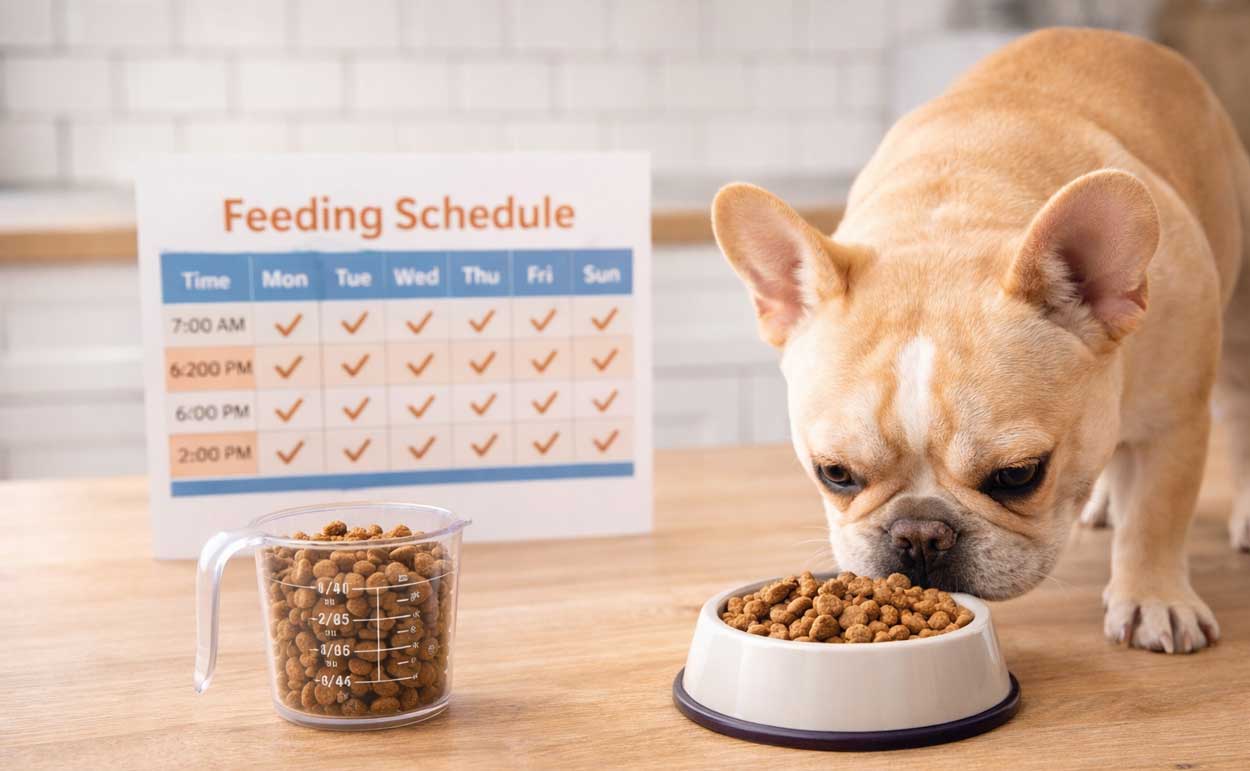
French Bulldog owners often have the same questions—especially when it comes to feeding. This FAQ section answers the most common and important questions clearly and honestly, based on real-life ownership experiences in the USA.
These short, direct answers are also featured-snippet friendly, which helps with SEO.
Q1: How often should I feed my French Bulldog puppy?
French Bulldog puppies should be fed 3 to 4 small meals per day until about 6 months of age. After that, you can gradually reduce to 2–3 meals, and by 12 months, most Frenchies do well on 2 meals per day.
Q2: How much food should an adult French Bulldog eat per day?
Most adult French Bulldogs eat ¾ to 1½ cups of dry food per day, split into two meals. The exact amount depends on your dog’s weight, activity level, and metabolism. Always adjust portions based on body condition—not just the feeding chart.
Q3: Can French Bulldogs eat human food?
Yes, but only dog-safe, low-fat foods in small amounts. Safe options include plain cooked chicken (if no allergy), carrots, apples (no seeds), pumpkin, and blueberries. Avoid spicy, salty, fried, or processed foods.
Q4: What foods are toxic to French Bulldogs?
Never feed your French Bulldog:
- Chocolate
- Grapes or raisins
- Onions or garlic
- Xylitol (found in gum and sugar-free foods)
- Alcohol
- Fatty table scraps
These foods can be dangerous or even life-threatening.
Q5: How can I prevent my French Bulldog from becoming overweight?
To prevent obesity:
- Measure every meal
- Avoid free-feeding
- Limit treats to 5–10% of daily calories
- Provide daily light exercise
- Monitor weight monthly
Weight control is especially important for French Bulldogs due to breathing and joint health.
Q6: Do French Bulldogs need supplements?
Not always. French Bulldogs eating high-quality commercial dog food usually don’t need supplements. However, omega-3s, probiotics, or joint supplements may help some dogs—only under vet guidance.
Q7: Can French Bulldogs eat a raw diet?
Yes, some French Bulldogs do well on raw diets, but only if the diet is properly balanced. Raw feeding requires careful planning and professional guidance. Puppies should never be fed unbalanced raw or homemade diets.
Q8: How long can a French Bulldog go without eating?
Adult French Bulldogs should not go more than 12 hours without eating. Puppies need more frequent meals and should not skip food for long periods.
Q9: How much water should a French Bulldog drink daily?
A general guideline is 1 ounce of water per pound of body weight per day. Water needs increase in hot weather, after exercise, or when eating dry kibble.
Q10: How do I know if my French Bulldog is overweight?
Signs include:
- No visible waistline
- Difficulty feeling ribs
- Heavy breathing at rest
- Low energy
Your vet can confirm with a body condition score.
Q11: Should I switch dog food brands often?
No. Frequent changes can upset digestion. If you need to switch foods, do it slowly over 7–10 days. Stick with a food that works unless there’s a medical reason to change.
Q12: What’s the best diet for French Bulldogs with allergies?
Limited-ingredient or hypoallergenic diets are best for allergic French Bulldogs. Common allergens include chicken, beef, dairy, and grains. A vet-guided elimination diet is often the most effective approach.
Questions Mean You Care
Asking questions means you want the best for your French Bulldog—and that’s what responsible ownership looks like.
Feeding doesn’t have to be confusing. Once you understand your dog’s needs, mealtime becomes simple, calm, and enjoyable for both of you.
Conclusion – Feeding Your French Bulldog the Right Way (USA Guide)

Feeding your French Bulldog properly is one of the most important responsibilities you have as a dog owner. More than toys, treats, or cute clothes, the food you choose every day directly shapes your Frenchie’s health, comfort, and lifespan.
French Bulldogs are a special breed. Their compact bodies, flat faces, and sensitive digestion mean they need thoughtful, controlled, and high-quality nutrition. Overfeeding, poor ingredients, or ignoring allergies can quickly lead to problems like breathing difficulties, joint pain, skin issues, and low energy.
The good news is that when you understand their needs, feeding becomes simple.
Key Takeaways From This Guide
Let’s quickly summarize what truly matters:
- Choose high-quality dog food with real meat as the first ingredient
- Control portions and avoid free-feeding
- Feed puppies more frequently, adults twice daily
- Limit treats and avoid table scraps
- Use supplements only when necessary and vet-approved
- Address allergies and weight issues early
- Avoid common feeding mistakes
- Monitor your French Bulldog’s body condition regularly
These small daily decisions add up to long-term health and happiness.
Feeding Is Not Just Routine—It’s Care
Every meal is more than just filling a bowl.
It’s:
- Preventing discomfort
- Protecting joints and breathing
- Supporting healthy skin and digestion
- Showing love through responsibility
When your French Bulldog eats well, you’ll see it in:
- Their energy
- Their playful attitude
- Their comfort while resting
- Their excitement for life
There’s nothing more rewarding than seeing your Frenchie thrive because of the care you provide.
A Note for US French Bulldog Owners
Living in the USA means you have access to excellent dog food options, veterinary care, and nutrition resources. Use them wisely.
Work with your veterinarian, read labels carefully, and resist marketing hype. What matters most is consistency, balance, and portion control—not the most expensive bag on the shelf.
Loved this guide? Take your Frenchie care to the next level! 🐾
Explore our other French Bulldog care resources designed specifically for US owners, including:
- Puppy feeding Schedule by age
- What Dog food is best for French Bulldog (USA)
- French Bulldog Health Guide
- Weight management tips
- Allergy-friendly diet plans
Bookmark this page, share it with fellow Frenchie owners, and come back whenever you need feeding guidance.
Because a well-fed French Bulldog is a happy, healthy, and loving companion—and they deserve nothing less 🐾