French Bulldog vs Chihuahua: Which Dog Is Right for You?
French Bulldog vs Chihuahua: Choosing between a French Bulldog and a Chihuahua can be surprisingly difficult. Both are small companion dogs, both can form strong bonds with their owners, and both can adapt to apartment living. But once you look beyond their size, these two breeds have some important differences in personality, exercise needs, training, grooming, health, and everyday care.
The French Bulldog is known for its compact, muscular body, affectionate personality, playful nature, and adaptability. The Chihuahua is much smaller but has a big personality of its own. Chihuahuas are often alert, confident, intelligent, and closely attached to their people.
So, which one is right for your home?
There is no single answer that works for every family. The better choice depends on your lifestyle, living situation, activity level, experience with dogs, budget, and the type of companion you want.
In this guide, we’ll compare the French Bulldog and Chihuahua in the areas that matter most to dog owners in the USA.
French Bulldog vs Chihuahua at a Glance
| Feature | French Bulldog | Chihuahua |
|---|---|---|
| Size | Small, compact, muscular | Very small and lightweight |
| Personality | Affectionate, playful, adaptable | Alert, confident, lively |
| Energy level | Low to moderate | Moderate |
| Exercise | Short walks and gentle play | Short walks, play, and mental stimulation |
| Training | Intelligent but can be stubborn | Intelligent and alert, but can be strong-willed |
| Grooming | Weekly brushing and wrinkle care | Occasional to weekly brushing, depending on coat |
| Barking | Usually not highly vocal | Often more vocal |
| Apartment living | Generally adaptable | Generally adaptable |
| With children | Supervision is important | Extra care because of small size |
| Heat tolerance | Poor | Needs protection from excessive heat |
| Typical lifespan | About 10–12 years | About 14–16 years |
| Main consideration | Breathing, heat, and breed-specific health concerns | Small size, dental, and other health concerns |
Individual dogs can be very different, so breed tendencies should not be treated as guarantees.
French Bulldog vs Chihuahua: Size and Appearance
The most obvious difference is their size and build.
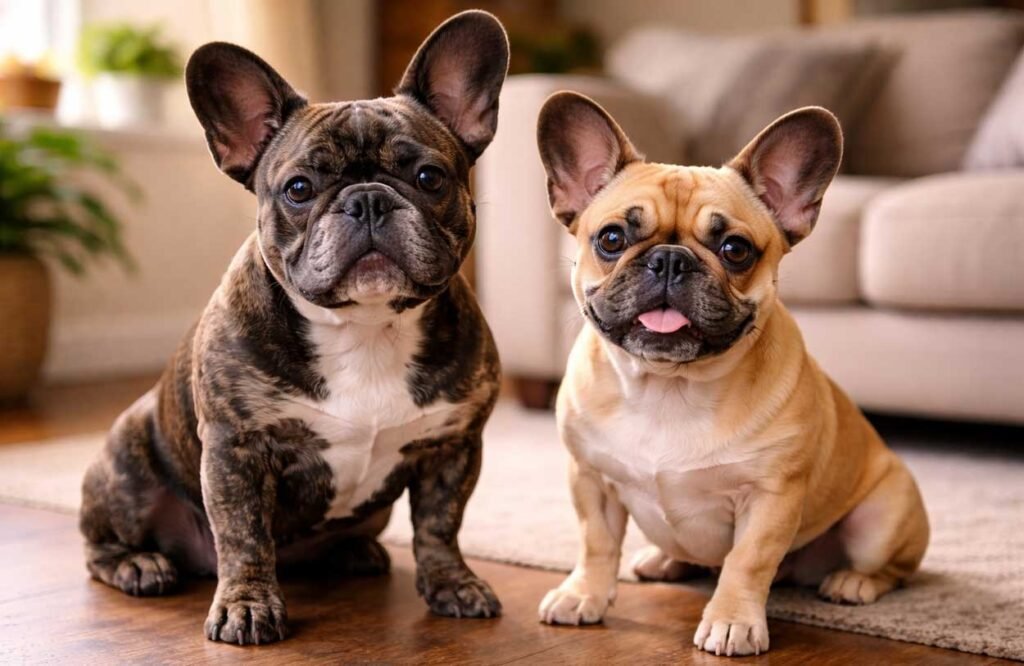
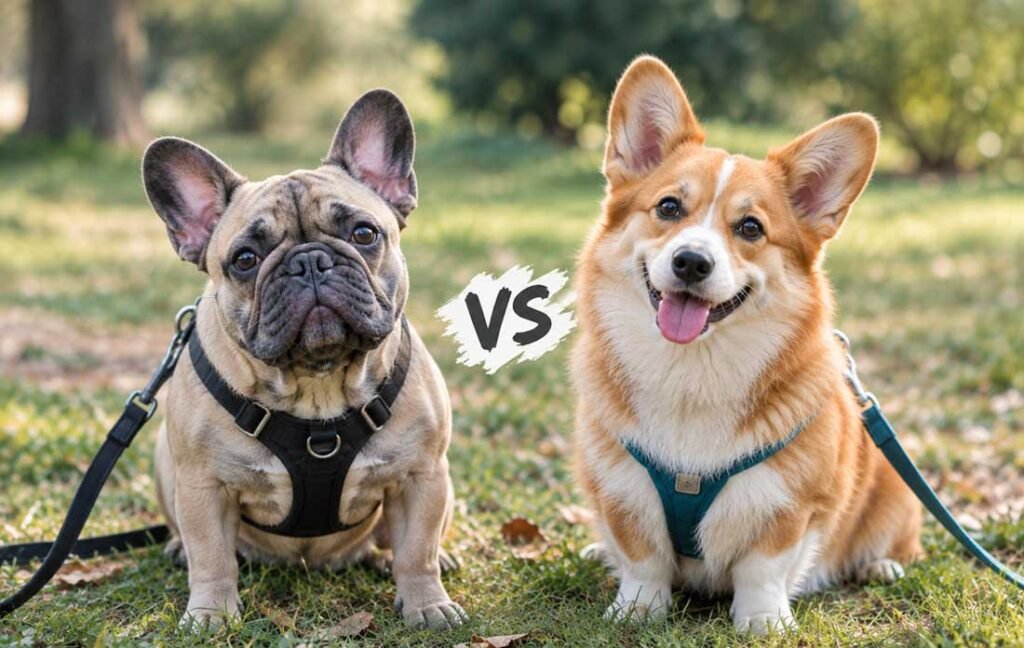
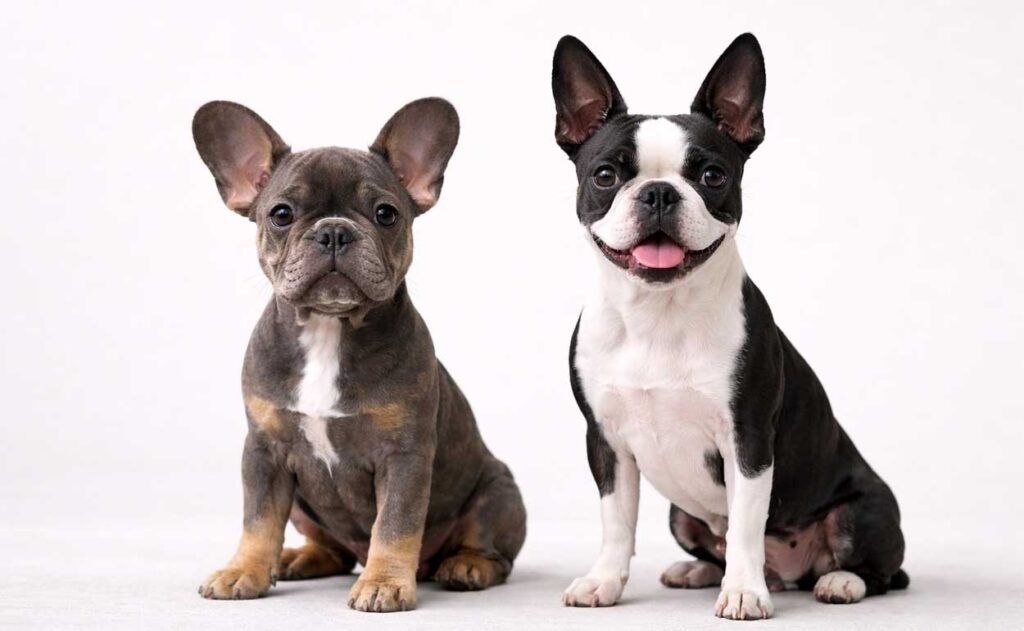
A French Bulldog is small but sturdy. Frenchies have a compact, muscular body, broad chest, short legs, large upright ears, and a short muzzle. Their body can look surprisingly strong for a small companion dog.
Chihuahuas are much smaller and lighter. They are known for their large ears, expressive eyes, and rounded apple-shaped head. The breed comes in both smooth and long coats, so their appearance can vary quite a bit.
Which dog is easier to carry?
A Chihuahua is considerably easier to pick up and carry because of its tiny size.
A French Bulldog is also small enough for most adults to handle, but its compact and muscular body makes it much heavier than a Chihuahua.
This difference can matter if you travel frequently with your dog, use public transportation, live in a building with stairs, or simply need to carry your dog regularly.
French Bulldog vs Chihuahua Temperament
This is one of the biggest differences between the two breeds.
French Bulldogs are generally social, affectionate, playful, and adaptable. They often enjoy being close to their owners and taking part in everyday family life. They can be playful without needing the constant activity associated with high-energy breeds.
Chihuahuas are also affectionate companions, but they tend to have a more alert and confident personality. They can be very aware of unfamiliar people, sounds, animals, and activity around the home.
Their small bodies should not fool you. A Chihuahua can have a surprisingly bold personality.
A typical French Bulldog may be:
- Affectionate
- Playful
- Social
- People-oriented
- Adaptable
- Relatively relaxed indoors
- Sometimes stubborn
A typical Chihuahua may be:
- Alert
- Confident
- Loyal
- Intelligent
- Lively
- Closely attached to its owner
- Vocal
Of course, no breed description can predict exactly how an individual dog will behave. Genetics, early socialization, training, environment, and the dog’s own personality all matter.
When you cannot provide constant attention, simple enrichment can help make indoor time more interesting. An interactive dog toy for small dogs can provide an additional way for your dog to play, explore, and stay mentally engaged.
Amazon.com search: Interactive dog toy small dogs
Which Is More Affectionate: French Bulldog or Chihuahua?
Both breeds can be extremely affectionate.
French Bulldogs often show affection by staying close to their owners. Your Frenchie may follow you around the house, sit beside you on the couch, or simply want to be included in whatever you’re doing.
Chihuahuas can form an equally strong bond with their owners. Many enjoy sitting close to their favorite person and being involved in family life.
The difference is often less about how much affection they give and more about how they express it.
If you want a sturdy, social companion that enjoys being part of everyday household life, a French Bulldog may fit that lifestyle well.
If you prefer a very small dog with a strong personality and close attachment to its owner, a Chihuahua may appeal to you.
Exercise Needs: French Bulldog vs Chihuahua
Neither breed needs the kind of intense daily exercise required by a high-energy working dog. But neither should be treated as a dog that needs no exercise.
Daily movement, play, and mental stimulation are important for both.
French Bulldog exercise
French Bulldogs generally do well with short walks and gentle daily activity.
However, their short muzzles can make breathing and cooling less efficient than in longer-nosed breeds. Frenchies can therefore be particularly sensitive to hot or humid weather and strenuous exercise.
Exercise should be adjusted according to the individual dog’s health, age, fitness, and weather conditions.
If your Frenchie is struggling to breathe, becoming unusually tired, or showing signs of overheating, stop the activity and move the dog to a cool environment.
Chihuahua exercise
Chihuahuas are tiny, but they can be surprisingly active. They can enjoy short walks, indoor play, training games, and other activities that keep both their body and mind busy.
Because of their small size, they usually do not need long-distance walks to get meaningful daily activity. The AKC notes that Chihuahuas can often get enough exercise even in a small space, provided they receive appropriate activity.
Who needs more exercise?
There is no simple winner because individual dogs can have very different energy levels.
French Bulldogs generally do well with short, gentle activity, while Chihuahuas can be lively and enjoy frequent short periods of play and movement.
For both breeds, the goal is not simply to tire the dog out. Regular movement and mental stimulation should match the dog’s age, health, and individual energy level.
For everyday walks, a well-fitted small dog harness can be a practical choice, especially for dogs that do better with controlled, comfortable walking gear. Look for an adjustable harness that fits securely without restricting normal movement.
Amazon.com search: Small dog harness
French Bulldog vs Chihuahua for Apartment Living
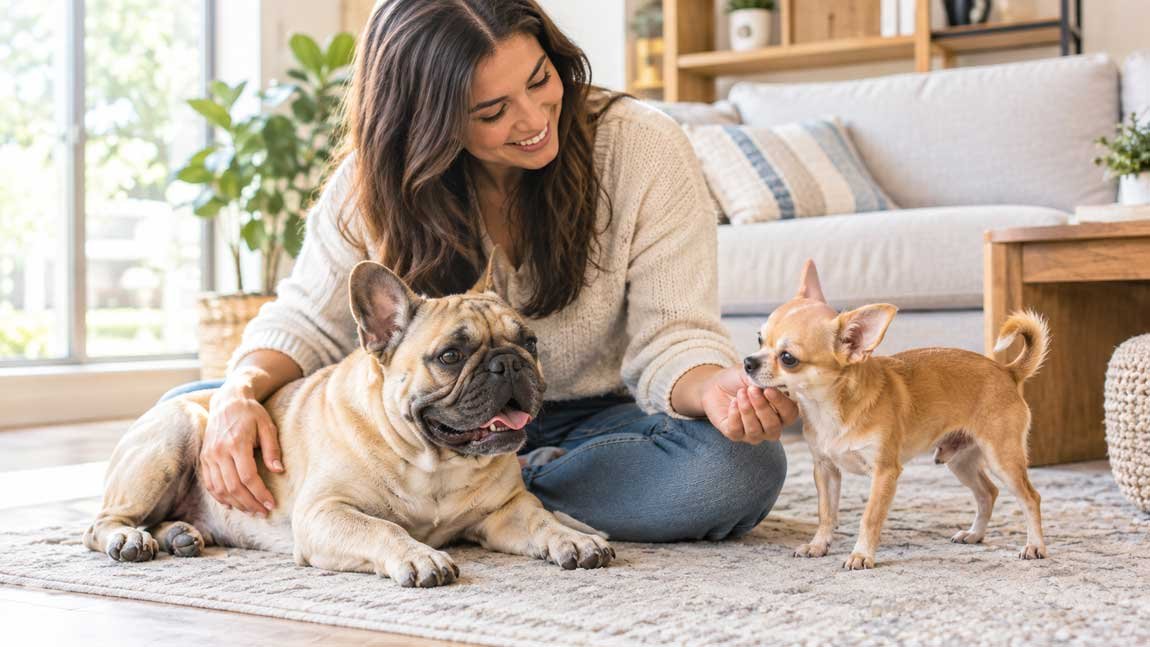
Both breeds can adapt well to apartment living.
French Bulldogs are often comfortable in smaller homes because they do not require large amounts of outdoor exercise. Short walks and indoor play can provide much of their daily activity. The breed is also known for being adaptable to city living.
A Chihuahua’s tiny size makes it physically easy to accommodate in an apartment. They can get a lot of their exercise through short walks and indoor activity.
However, there is another factor to consider: barking.
Chihuahuas can be quite vocal and may bark at unfamiliar people, sounds, animals, or activity outside the home. Early socialization and consistent training can help you manage unwanted barking.
French Bulldogs can also bark, but they are generally not considered a highly vocal breed.
If you live in an apartment with close neighbors, consider your dog’s individual temperament as well as the general tendencies of the breed.
For either breed, having a comfortable place to rest can make everyday life easier. A small dog bed with the right size and washable cover can be a practical addition to an apartment or smaller home.
Amazon.com search: Small dog bed washable
French Bulldog vs Chihuahua With Children
This is an important consideration for families.
French Bulldogs can be affectionate and playful companions for families. However, children should always be taught how to interact respectfully with dogs. They should not pull a dog’s ears, climb on the dog, disturb it while eating or sleeping, or treat it like a toy.
Chihuahuas need additional care around young children because of their very small size. The AKC notes that Chihuahuas are too small for roughhousing, and young children can accidentally injure them.
This does not mean every Chihuahua will have problems with children. It means that the dog’s size makes safe handling and supervision especially important.
For any breed, young children should always be supervised when interacting with a dog.
Training a French Bulldog vs Chihuahua
Both breeds are intelligent and capable of learning, but they benefit from patient, consistent training.
French Bulldogs can have big personalities and may sometimes be stubborn. At the same time, they are often people-oriented and can respond well to food rewards and positive training methods.
Chihuahuas are also intelligent and can learn quickly. They generally respond well to positive training techniques, but their small size should never be an excuse for allowing unwanted behavior.
For example, if a tiny Chihuahua constantly barks, jumps at people, or ignores boundaries, it can be tempting to overlook the behavior because the dog is small. Over time, however, those habits can become difficult to manage.
Training tips for both breeds
Use:
- Short training sessions
- Positive reinforcement
- Consistent household rules
- Small treats
- Praise and rewards
- Early socialization
- Patience
Avoid intimidation and harsh punishment.
Early training is especially useful because it helps your dog understand what is expected before unwanted habits become established.
Grooming: French Bulldog vs Chihuahua
Neither breed requires the complicated grooming routine of a heavily coated dog, but both still need regular care.
French Bulldog grooming
French Bulldogs have a short coat and generally benefit from weekly brushing to remove loose hair and help keep the coat healthy. Their facial folds should also be checked and kept clean and dry. Nails should be trimmed regularly.
Regular attention should also be given to:
- Teeth
- Ears
- Nails
- Skin
- Facial folds
A simple grooming routine can make it easier to notice skin irritation or other changes early.
Chihuahua grooming
Chihuahuas come in smooth and long coat varieties.
Smooth-coated Chihuahuas generally need occasional brushing, while long-coated Chihuahuas benefit from more frequent brushing to prevent tangles and mats. Their nails, ears, and teeth also need regular attention.
Dental care is particularly important for small dogs, so Chihuahua owners should establish a consistent oral-care routine.
Regular dental care is also part of a good grooming routine. A dog dental care kit with a dog-safe toothbrush and toothpaste can make it easier to build a simple brushing routine at home.
Amazon.com search: Dog dental care kit
Both breeds can benefit from regular brushing, even though their coats are short. A gentle dog grooming brush can help remove loose hair and keep the coat looking clean without making grooming a complicated routine.
Amazon.com search: Gentle dog grooming brush short hair
Shedding: Which One Sheds More?
Both French Bulldogs and Chihuahuas shed.
French Bulldogs have short coats, but their loose hair can still be noticeable around the home. Regular brushing can help remove some of that loose hair before it ends up on furniture and floors.
Smooth-coated Chihuahuas also shed. Long-coated Chihuahuas may have a different appearance when they shed because loose hair can become mixed with their longer coat.
If you are looking for a truly low-shedding dog, neither breed should be considered completely non-shedding.
Health Considerations
Health is one of the most important differences to understand before choosing either breed.
Every dog can develop health problems, but different breeds can have different areas of concern.
French Bulldog health
French Bulldogs are a flat-faced, or brachycephalic, breed. Their short muzzles can contribute to breathing difficulties and make it harder for them to tolerate heat and strenuous exercise.
Frenchies can also experience certain eye, skin, joint, and other health conditions. The AKC recommends health screening for breeding dogs that includes patella, hip, cardiac, and ophthalmologist evaluations.
French Bulldogs also have a front-heavy body structure and are poor swimmers, so they should never be left unattended around pools, bathtubs, or other bodies of water.
Keeping a Frenchie at a healthy weight is also important because excess weight can place additional stress on the dog’s body.
Chihuahua health
Chihuahuas are generally healthy little dogs, but they can also have breed-related health concerns.
The AKC lists possible issues including certain heart conditions, eye disease, patellar luxation, and epilepsy. Recommended health evaluations include patella, cardiac, and ophthalmologist examinations.
Because Chihuahuas are so small, owners also need to be careful about accidental injuries from falls, rough handling, or larger animals.
What should you ask before getting either breed?
If you are buying a puppy from a breeder, don’t be afraid to ask detailed health questions.
Ask about:
- Health testing of the parents
- Previous health problems in the family
- Veterinary records
- Vaccination and parasite-prevention history
- Any breathing, heart, eye, joint, or dental concerns
- What health information or guarantees the breeder provides
For French Bulldogs, it is especially important to understand the breed’s breathing and heat-related limitations before bringing one home.
For Chihuahuas, ask about dental health, patellar luxation, heart conditions, and eye health.
A responsible breeder should be willing to discuss health openly rather than focusing only on the puppy’s appearance.
Adoption from a reputable rescue organization is another option worth considering.
French Bulldog vs Chihuahua in Hot Weather
This is especially important for dog owners in warmer parts of the USA.
French Bulldogs are particularly vulnerable to heat because their short faces can make cooling themselves less efficient. Hot and humid conditions can make breathing and exercise even more difficult.
Chihuahuas can also struggle in excessive heat, so they should not be left outside for long periods in very hot conditions.
For either breed:
- Provide fresh, clean water.
- Keep the dog in a cool environment.
- Avoid strenuous exercise during the hottest part of the day.
- Never leave a dog alone in a parked car.
- Watch for signs of overheating.
- Contact a veterinarian if your dog shows concerning symptoms.
For Frenchies in particular, hot and humid weather deserves extra caution.
During warm weather, keeping your dog in a cool, comfortable environment is important. A dog cooling mat can be one useful comfort item for relaxing indoors, although it should not replace shade, fresh water, air conditioning, or other basic heat-safety measures.
Amazon.com search: Dog cooling mat small dogs
Which Dog Is Easier to Care For?
There is no universal answer because “easy” depends on what you find manageable.
A French Bulldog may suit someone who wants a relatively relaxed companion that enjoys being close to its owner and does not require long daily walks. However, Frenchies require special attention to heat, breathing, weight, and other breed-specific health considerations.
A Chihuahua may suit someone who wants an extremely small dog that is easy to carry and can get much of its daily activity through short walks and indoor play. However, Chihuahuas can be vocal and need careful handling because of their small size.
Both breeds require:
- Training
- Socialization
- Veterinary care
- Dental care
- Exercise
- Mental stimulation
- A safe home
- Daily attention
A smaller dog is not automatically a lower-maintenance dog.
French Bulldog vs Chihuahua: Cost of Ownership
The purchase price is only one part of the cost of owning a dog.
Your overall expenses can include:
- Quality dog food
- Routine veterinary visits
- Vaccinations
- Parasite prevention
- Grooming supplies
- Dental care
- Toys
- Training
- Pet insurance
- Emergency veterinary care
- Boarding or pet sitting
The actual cost can vary widely depending on where you live, the dog’s health, insurance coverage, food, veterinary needs, and the services you use.
French Bulldogs can require significant veterinary spending when breed-related health problems occur. Chihuahuas can also develop medical conditions that require ongoing care.
Instead of planning only for routine expenses, consider keeping an emergency pet fund or looking into pet insurance.
French Bulldog vs Chihuahua: Which Is Better for First-Time Owners?
Either breed can be a first dog, but neither should be chosen simply because it is small.
A first-time owner should think about whether they can provide:
- Consistent training
- Daily exercise
- Proper socialization
- Preventive veterinary care
- Safe housing
- Appropriate nutrition
- Dental care
- Financial support for unexpected medical expenses
A Chihuahua’s tiny size can make some people assume it is automatically easier.
A French Bulldog’s relaxed personality can create the opposite assumption that it does not need much care.
Both assumptions can be misleading.
A small dog still needs boundaries, socialization, training, veterinary care, mental stimulation, and daily interaction. Size alone should never be the main reason for choosing a breed.
How Long Do French Bulldogs and Chihuahuas Usually Live?
Lifespan is another factor worth considering before bringing either breed home.
French Bulldogs typically have a life expectancy of around 10–12 years, while the AKC lists the Chihuahua’s life expectancy at 14–16 years. Individual dogs can live shorter or longer lives depending on genetics, health, nutrition, veterinary care, and lifestyle.
A longer expected lifespan does not automatically mean fewer health or care needs.
Choosing a dog is a long-term commitment, so think beyond the puppy stage. Consider what your home, schedule, finances, and family may look like over the next 10 or more years.
Which One Fits Your Lifestyle?
Instead of asking which breed is “better,” think about which characteristics fit your everyday life.
A French Bulldog may suit you if you want:
- A compact but sturdy companion
- A dog that enjoys relaxing with you
- A playful but generally moderate-energy companion
- A social dog that likes being around people
- A dog that does not require long-distance exercise
- A breed that can adapt well to city living
A Chihuahua may suit you if you want:
- An extremely small companion
- A dog that is easy to carry
- A lively and alert personality
- A dog that can get exercise through short walks and indoor play
- A close bond with a small companion
- A dog that can adapt well to smaller living spaces
Neither list guarantees a particular personality. Individual dogs can differ significantly, so spending time with adult dogs of the breed can be helpful before making a decision.
Can a French Bulldog and Chihuahua Live Together?
Yes, a French Bulldog and Chihuahua can live together successfully.
However, compatibility depends much more on the individual dogs than simply their breed.
The size difference deserves special attention. A playful Frenchie could accidentally injure a much smaller Chihuahua during rough play, even without intending to hurt it.
If you are introducing the two dogs:
- Start in a calm, controlled environment.
- Keep the first interactions short.
- Supervise their play closely.
- Give each dog its own food and resting areas.
- Watch their body language.
- Do not force interaction.
- Reward calm and appropriate behavior.
If either dog appears frightened, highly stressed, or aggressive, separate them and consider getting help from a qualified dog behavior professional.
French Bulldog vs Chihuahua: Final Thoughts
The French Bulldog and Chihuahua are both popular companion breeds, but they offer very different experiences.
The French Bulldog is generally a sturdy, affectionate, playful companion that often enjoys a relaxed home life. Its biggest considerations include breathing, heat sensitivity, weight management, and other breed-specific health needs.
The Chihuahua is much smaller but can have an enormous personality. It can be affectionate, intelligent, energetic, alert, and vocal. Its tiny body also means owners need to be careful about handling, socialization, and health care.
Neither breed is automatically better.
Before choosing either one, spend time with adult dogs if possible. Talk to responsible breeders, rescue organizations, and your veterinarian. Think about your home, schedule, budget, family, and ability to provide care for the dog throughout its life.
The best dog for you isn’t necessarily the one that looks cutest in a photo. It’s the one whose needs you can realistically meet every day.
Frequently Asked Questions
Is a French Bulldog bigger than a Chihuahua?
Yes. French Bulldogs are significantly heavier and more muscular than Chihuahuas. Chihuahuas are one of the smallest recognized dog breeds, with the AKC listing a weight of no more than 6 pounds.
Are French Bulldogs calmer than Chihuahuas?
Many French Bulldogs have a relatively relaxed and adaptable personality, while Chihuahuas are often more alert and lively. However, individual temperament can vary, so breed tendencies should not be treated as guarantees.
Do Chihuahuas bark more than French Bulldogs?
Chihuahuas are often quite vocal and may bark at unfamiliar people, sounds, or activity around them. French Bulldogs are generally not considered a highly vocal breed, although individual Frenchies can certainly bark. Training and socialization can influence barking behavior.
Is a French Bulldog or Chihuahua better for an apartment?
Both can adapt to apartment living. French Bulldogs generally need only short daily walks and play, while Chihuahuas can get much of their exercise through short walks and indoor activity. Apartment owners should also consider barking, temperature control, building rules, and how much time they can spend with the dog.
Which lives longer, a French Bulldog or Chihuahua?
Chihuahuas generally have the longer expected lifespan. The AKC lists about 10–12 years for French Bulldogs and 14–16 years for Chihuahuas. Individual lifespan varies based on many factors.
Can French Bulldogs and Chihuahuas get along?
Yes. They can become good companions, but introductions should be gradual and supervised. Because a French Bulldog is much larger and more muscular, owners should pay particular attention to play intensity and accidental injuries.
Which dog is easier to train?
Both can learn well with consistent, positive training. French Bulldogs can be stubborn but are often motivated by food and interaction, while Chihuahuas are intelligent and responsive to positive training. Early socialization and consistent rules are important for both.
Are French Bulldogs or Chihuahuas better for families?
Both can be loving companions, but the family’s situation matters. French Bulldogs may fit well into many family homes, while Chihuahuas require extra care around young children because of their small size. Children should always be supervised around dogs and taught how to interact respectfully.
Which breed needs more grooming?
Both are relatively manageable compared with heavily coated breeds. French Bulldogs generally need weekly brushing and regular wrinkle care. Chihuahuas with smooth coats need less brushing, while long-haired Chihuahuas need more frequent brushing to prevent tangles.
Affiliate Disclosure: This post contains Amazon affiliate links. If you purchase through these links, we may earn a small commission at no extra cost to you.