
French Bulldog Digestive Issues Symptoms: Common Stomach Problems Every Owner Should Know
French Bulldog Digestive Issues Symptoms: French Bulldogs have become one of the most popular dog breeds in the United States, and it’s easy to see why. They’re funny, affectionate, playful, and full of personality. But along with their adorable looks and lovable nature, many Frenchie owners quickly discover another side of the breed — sensitive stomachs and ongoing digestive problems.
From excessive gas and diarrhea to vomiting and food sensitivities, digestive issues are extremely common in French Bulldogs. While some stomach problems are mild, others can become serious if ignored for too long.
The good news is that understanding the early warning signs can help you manage problems before they get worse. In this guide, you’ll learn the most common French bulldog digestive issues symptoms, possible causes, and simple ways to help your Frenchie feel better.
Why French Bulldogs Have So Many Digestive Problems
French Bulldogs are naturally prone to digestive issues because of their genetics and body structure. Their compact bodies, food sensitivities, allergies, and flat faces all play a role in stomach troubles.
Because Frenchies are brachycephalic (flat-faced), they often swallow extra air while eating and breathing. This can lead to bloating, gas, and digestive discomfort.
Some French Bulldogs only experience occasional stomach upset, while others may struggle with lifelong digestive disorders that require special diets and regular veterinary care.
Common French Bulldog Digestive Issues Symptoms
French Bulldogs may be small, but their digestive problems can sometimes be big. Here are the most common symptoms every Frenchie owner should watch for.
-
Excessive Gas (Flatulence)
If you own a French Bulldog, you’ve probably already experienced the famous “Frenchie gas.” Some owners even joke that their dog can clear a room within seconds.
While occasional gas is normal, excessive or very strong-smelling flatulence may be a sign that your dog’s digestive system is struggling.
Common causes include:
- Eating too fast
- Swallowing extra air
- Food sensitivities
- Poor-quality dog food
- Sensitive digestion
Many Frenchie owners notice gas becomes worse after table scraps, dairy products, or sudden food changes.
If your dog seems constantly gassy, switching to a higher-quality diet or using a slow-feeder bowl may help.
If your French Bulldog eats too fast, using a slow feeder bowl can help reduce gas and improve digestion.
👉 Product idea:
-
Diarrhea or Loose Stool
Loose stool is one of the most common French bulldog digestive issues symptoms owners deal with.
Some French Bulldogs may only experience occasional soft stool, while others struggle with chronic digestive upset.
Signs to watch for include:
- Frequent diarrhea
- Soft or watery stool
- Mucus in poop
- Sudden stomach upset
- Needing to go outside more often
Common causes may include:
- Food allergies
- Stress
- Parasites like Giardia
- Intestinal infections
- Inflammatory bowel disease (IBD)
Some Frenchies also experience stomach flare-ups after eating new treats, fatty foods, or low-quality ingredients.
If diarrhea lasts longer than 24–48 hours or your dog seems weak or dehydrated, contact your veterinarian.
Many Frenchie owners also use dog probiotics to support gut health and reduce recurring diarrhea issues.
👉 Product ideas:
-
Vomiting or Regurgitation
French Bulldogs are known for having sensitive digestive systems, so occasional vomiting can happen. However, frequent vomiting should never be ignored.
It’s also important to understand the difference between vomiting and regurgitation.
Vomiting
Vomiting usually comes from the stomach and may include:
- Heaving
- Nausea
- Drooling
- Partially digested food
Regurgitation
Regurgitation happens when food comes back up before reaching the stomach.
You may notice:
- Undigested food coming up suddenly
- No gagging or stomach contractions
- Difficulty swallowing
Conditions like megaesophagus or acid reflux can sometimes cause regurgitation in French Bulldogs.
If vomiting happens regularly or comes with diarrhea, lethargy, or appetite loss, your dog should be evaluated by a veterinarian.
-
Bad Breath
Many owners assume bad breath is normal in French Bulldogs, but it can sometimes point to digestive or dental problems.
Common causes include:
- Poor digestion
- Acid reflux
- Stomach bacteria
- Gum disease
- Tooth decay
Because French Bulldogs have crowded teeth and small mouths, bacteria and food particles can build up quickly if dental care is ignored.
Regular brushing and professional cleanings can help reduce both dental and digestive issues.
-
Loss of Appetite
If your French Bulldog suddenly stops eating or seems uninterested in food, it could be a sign of stomach discomfort or nausea.
You might notice your dog:
- Skipping meals
- Eating less than normal
- Walking away from food
- Showing interest in food but refusing to eat
Loss of appetite combined with vomiting, diarrhea, or low energy should always be taken seriously.
-
Stomach Noises and Bloating
Some stomach sounds are normal, but loud gurgling noises, bloating, or visible discomfort after eating may signal digestive problems.
Your Frenchie may:
- Stretch repeatedly
- Pace around the house
- Act restless
- Have a swollen stomach
- Seem uncomfortable after meals
Severe bloating can become dangerous very quickly. If your dog’s stomach suddenly becomes hard or swollen, seek veterinary care immediately.
Common Digestive Disorders in French Bulldogs
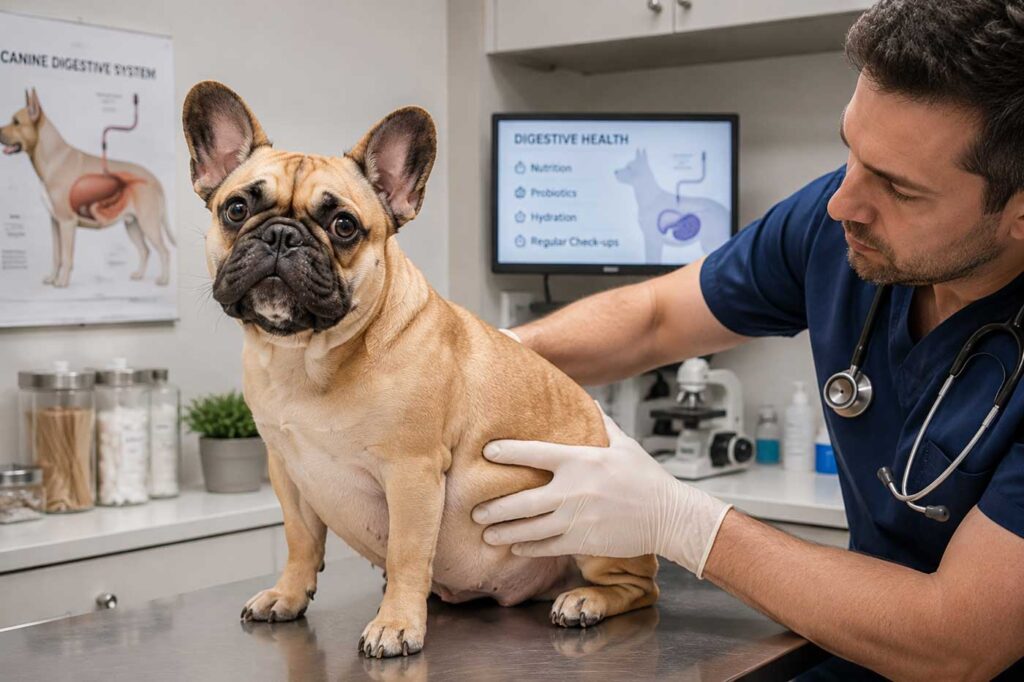
Food Allergies
Food allergies are very common in French Bulldogs and often affect both the digestive system and the skin.
Symptoms may include:
- Gas
- Diarrhea
- Vomiting
- Itchy skin
- Ear infections
- Paw licking
Chicken, dairy, wheat, and certain fillers are common triggers for food sensitivities in some Frenchies.
Many owners notice major improvements after switching to limited-ingredient or sensitive stomach dog food.
Skin irritation and ear infections are also common in Frenchies with allergies. Learn more about common French Bulldog skin allergy symptoms and treatments.
Inflammatory Bowel Disease (IBD)
Inflammatory bowel disease causes chronic inflammation inside the digestive tract.
Common symptoms include:
- Chronic diarrhea
- Vomiting
- Weight loss
- Poor appetite
IBD usually requires long-term management with prescription diets, medication, and regular veterinary monitoring.
Megaesophagus
Megaesophagus is a condition where the esophagus becomes enlarged and weak, making it difficult for food to move into the stomach.
Symptoms often include:
- Regurgitation
- Weight loss
- Choking
- Coughing after eating
This condition can become serious because food may enter the lungs and cause aspiration pneumonia.
Hiatal Hernia
A hiatal hernia happens when part of the stomach moves into the chest area.
French Bulldogs with this condition may experience:
- Acid reflux
- Vomiting after eating
- Regurgitation
- Difficulty swallowing
Mild cases may improve with medication, while severe cases sometimes require surgery.
Giardia Infection
Giardia is a parasite that affects the intestines and is especially common in puppies.
Symptoms may include:
- Watery diarrhea
- Foul-smelling stool
- Weight loss
- Dehydration
Fortunately, Giardia can usually be treated successfully with medication.
Best Diet Tips for French Bulldogs With Sensitive Stomachs
Diet plays a huge role in your Frenchie’s digestive health. In many cases, small feeding changes can make a big difference.
Helpful tips include:
- Feed high-quality dog food
- Avoid sudden food changes
- Use a slow-feeder bowl
- Feed smaller meals throughout the day
- Avoid table scraps
- Keep fresh water available
Many Frenchie owners notice improvements when they switch to foods with simple ingredients and fewer artificial additives.
Some dogs may also benefit from:
- Limited-ingredient diets
- Probiotics
- Prescription gastrointestinal food
Always talk to your veterinarian before making major diet changes.
Choosing the right food can make a huge difference for dogs with sensitive stomachs. Check out our guide to the best food for French Bulldogs with digestive issues.
Feeding a high-quality sensitive stomach dog food can significantly reduce digestive issues in French Bulldogs.
👉 Product ideas:
- Royal Canin French Bulldog Adult Dry Dog Food
- Hill’s Science Diet Sensitive Stomach & Skin
- Blue Buffalo Basics Limited Ingredient Diet
Are Grain-Free Diets Better for French Bulldogs?
Many owners switch to grain-free diets hoping to fix digestive issues, but grain-free food is not always necessary.
Healthy grains can actually provide:
- Fiber for digestion
- Important nutrients
- Support for healthy gut bacteria
In recent years, some veterinarians have also raised concerns about certain grain-free diets and heart health in dogs.
Unless your French Bulldog has a confirmed grain allergy, grain-free food may not improve symptoms.
Dental Health and Digestion Are Connected
French Bulldogs often develop dental disease because their teeth are crowded into a small mouth.
Poor dental health can lead to:
- Bad breath
- Difficulty chewing
- Gum infections
- Bacteria affecting digestion
Because food and bacteria can build up quickly, regular brushing and professional cleanings are extremely important for Frenchies.
When Should You Call the Vet?
Contact your veterinarian if your French Bulldog has:
- Repeated vomiting
- Blood in stool
- Severe diarrhea
- Rapid weight loss
- Refusal to eat
- Extreme bloating
- Trouble swallowing
If your Frenchie seems weak, dehydrated, or has breathing difficulties along with digestive symptoms, seek emergency veterinary care immediately.
Early treatment can help prevent serious complications and expensive medical bills later.
Frequently Asked Questions
Why does my French Bulldog fart so much?
French Bulldogs often swallow extra air while eating and breathing, which can lead to excessive gas. Food sensitivities and poor-quality diets may also make the problem worse.
What food is best for French Bulldogs with sensitive stomachs?
Many Frenchies do well on limited-ingredient diets, high-quality protein sources, and dog foods specially made for sensitive digestion.
Is diarrhea common in French Bulldogs?
Yes, diarrhea is very common in French Bulldogs because of food allergies, sensitive stomachs, parasites, and digestive disorders like IBD.
When should I worry about my French Bulldog vomiting?
You should contact your veterinarian if vomiting happens repeatedly or comes with blood, diarrhea, weakness, dehydration, or appetite loss.
Final Thoughts
Living with a French Bulldog can be incredibly rewarding, but their sensitive stomachs often require extra attention and care. The good news is that many digestive problems can be managed successfully when caught early.
Learning to recognize early French bulldog digestive issues symptoms can help you protect your dog’s health, improve their comfort, and avoid more serious complications down the road.
Pay close attention to changes in your Frenchie’s eating habits, stool, energy levels, and behavior. With the right diet, regular vet visits, and a little extra care, many French Bulldogs can live happy, healthy, and comfortable lives despite their digestive sensitivities.
This article is for informational purposes only and does not replace professional veterinary advice.