
Human Foods That Are Toxic to French Bulldogs: A Complete Guide for Every Frenchie Owner
French Bulldogs are loving, playful, and always ready to sit beside you during mealtime. Those adorable puppy eyes can make it hard t
o say no when they’re begging for a bite of your food. But not everything that’s safe for people is safe for your Frenchie.
Some everyday foods can upset your dog’s stomach, while others may damage their kidneys, liver, or nervous system. In serious cases, even a small amount can become a life-threatening emergency.
Knowing human foods that are toxic to French Bulldogs is one of the easiest ways to protect your pet and avoid expensive emergency vet visits.
Before sharing table scraps, it’s also helpful to understand what human foods French Bulldogs can safely eat.
In this guide, you’ll learn:
- Foods French Bulldogs should never eat
- Toxic fruits and vegetables
- Common food allergies in Frenchies
- What to do if your French Bulldog eats chocolate
- Safe human foods you can share
- Healthy homemade treats your Frenchie will love
Let’s get started.
Important: Every dog responds differently to toxic foods. A food that causes only mild stomach upset in one French Bulldog could trigger a life-threatening emergency in another. When in doubt, contact your veterinarian immediately rather than waiting for symptoms to appear.
Quick Reference Table
| Food | Safe? | Main Risk |
| Chocolate | ❌ | Poisoning |
| Grapes | ❌ | Kidney Failure |
| Raisins | ❌ | Kidney Failure |
| Onion | ❌ | Anemia |
| Garlic | ❌ | Red blood cell damage |
| Xylitol | ❌ | Liver failure & low blood sugar |
| Alcohol | ❌ | Alcohol poisoning |
| Macadamia Nuts | ❌ | Weakness & tremors |
What Can French Bulldogs Not Eat
French Bulldogs have sensitive stomachs and are more likely than many breeds to develop food allergies or digestive issues. Their compact body also makes obesity and pancreatitis more common, so choosing the right foods is especially important.
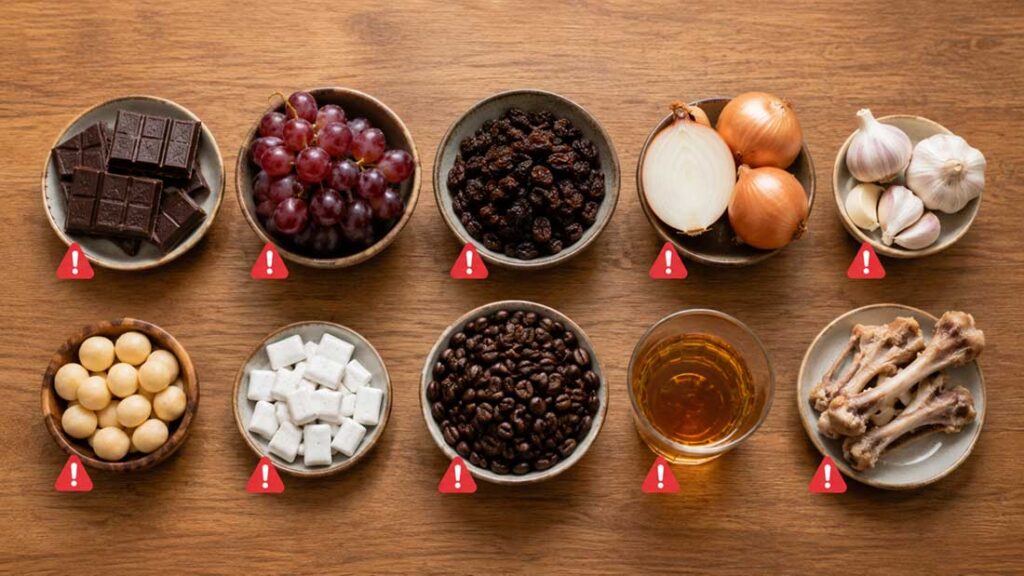
Here are the foods every French Bulldog owner should avoid.
Chocolate
Chocolate is one of the most dangerous foods for dogs.
It contains theobromine and caffeine, two compounds that dogs cannot process well. Dark chocolate and baking chocolate contain much higher levels than milk chocolate, making them even more dangerous.
Signs of chocolate poisoning include:
- Vomiting
- Diarrhea
- Fast heartbeat
- Restlessness
- Tremors
- Seizures
- Collapse
Even if your French Bulldog seems normal at first, symptoms can appear several hours later.
Never wait for signs to develop before calling your veterinarian.
Risk increases based on both your dog’s body weight and the type of chocolate eaten. Baking chocolate and dark chocolate contain much higher concentrations of theobromine than milk chocolate or white chocolate, making even small amounts potentially dangerous.
Grapes and Raisins
Many people don’t realize that grapes and raisins are extremely dangerous for dogs.
Even one grape can cause sudden kidney failure in some French Bulldogs. Scientists still don’t know exactly why some dogs react so severely, which is why no amount is considered safe. Because there is no known safe dose, veterinarians recommend treating every grape or raisin exposure as a medical emergency, even if your dog appears normal.
Foods that may contain raisins include:
- Cookies
- Trail mix
- Fruit cake
- Granola bars
- Bread
- Muffins
Always check ingredient labels before sharing baked goods.
Onions, Garlic, Leeks, and Chives
These vegetables belong to the allium family.
Whether they’re raw, cooked, powdered, dried, or mixed into seasoning, they can damage your dog’s red blood cells.
Over time, this may lead to anemia.
Watch for symptoms like:
- Weakness
- Pale gums
- Low energy
- Fast breathing
- Loss of appetite
Many prepared foods, soups, gravies, sauces, and frozen meals contain onion or garlic powder, so avoid sharing leftovers.
Xylitol
Xylitol is an artificial sweetener commonly found in sugar-free products.
You may find it in:
- Sugar-free gum
- Candy
- Peanut butter
- Toothpaste
- Protein bars
- Some baked goods
For dogs, xylitol can cause a dangerous drop in blood sugar within minutes.
It may also lead to liver failure.
Signs include:
- Weakness
- Vomiting
- Trouble walking
- Seizures
- Collapse
If you suspect your French Bulldog ate something containing xylitol, treat it as an emergency.
Always check the ingredient list before offering peanut butter or sugar-free products. Some brands now use xylitol (sometimes listed as birch sugar), which is extremely dangerous for dogs.
Recommended: Xylitol-free natural peanut butter for dogs on Amazon
Alcohol
Alcohol affects dogs much faster than humans.
Even small amounts may cause:
- Vomiting
- Poor coordination
- Difficulty breathing
- Low body temperature
- Coma
Keep alcoholic drinks, desserts containing alcohol, and unbaked bread dough out of your dog’s reach.
Caffeine
Coffee, tea, energy drinks, soda, and caffeine pills are dangerous for dogs.
Too much caffeine overstimulates the heart and nervous system.
Symptoms include:
- Hyperactivity
- Panting
- Fast heartbeat
- Tremors
- Seizures
Never leave coffee cups where your curious Frenchie can reach them.
Macadamia Nuts
Macadamia nuts are highly toxic to dogs.
Even a few nuts may cause:
- Weakness
- Vomiting
- Fever
- Muscle tremors
- Difficulty walking
- Joint pain
Symptoms usually begin within 12 hours after eating them.
Cooked Bones
Many people believe dogs should chew cooked bones.
Unfortunately, cooked bones can splinter into sharp pieces.
These pieces may:
- Get stuck in the throat
- Break teeth
- Cause choking
- Tear the stomach
- Puncture the intestines
Never give your French Bulldog cooked chicken, turkey, pork, or rib bones.
Instead, choose vet-approved dental chews designed specifically for dogs.
➜ Recommended: Vet-approved dental chews for French Bulldogs on Amazon
Fatty Foods
French Bulldogs are prone to pancreatitis, a painful condition caused by inflammation of the pancreas.
Foods high in fat include:
- Bacon
- Sausage
- Fried chicken
- Pizza
- Butter
- Fatty steak
- Turkey skin
Symptoms of pancreatitis include:
- Vomiting
- Severe stomach pain
- Refusing food
- Lethargy
- Diarrhea
A low-fat diet is much safer for French Bulldogs.
French Bulldogs are already predisposed to obesity and digestive disorders, making high-fat table scraps especially risky compared with leaner dog breeds.
Feeding a balanced diet is one of the best ways to reduce the risk of obesity and pancreatitis. Learn more in our French Bulldog Feeding Guide: Best Food, Portions & Nutrition.
Corn on the Cob
Corn itself isn’t usually the problem.
The cob is.
Dogs often swallow large pieces that become stuck inside the intestines.
This blockage usually requires emergency surgery.
Never let your French Bulldog chew or play with corn cobs.
What Fruits Are Toxic to French Bulldogs
Fresh fruit can be a healthy snack for many dogs, but not every fruit is safe. Some fruits contain toxins, while others have pits or seeds that can cause choking or serious health problems.
Before offering your French Bulldog a piece of fruit, make sure it’s on the safe list.
Can French Bulldogs Eat Grapes?
The simple answer is no.
Grapes are one of the most dangerous fruits for French Bulldogs. The same goes for raisins, currants, and sultanas. Even a small amount can cause sudden kidney failure, and there is no known “safe” serving size.
What makes grapes especially dangerous is that dogs react differently. One Frenchie may become seriously ill after eating just one or two grapes, while another may not show symptoms until much later. Because there’s no way to predict the reaction, veterinarians recommend treating every case as an emergency.
Signs of grape poisoning include:
- Vomiting
- Loss of appetite
- Low energy
- Stomach pain
- Diarrhea
- Increased or decreased urination
- Weakness
If your French Bulldog eats grapes or raisins, don’t wait for symptoms to appear. Contact your veterinarian or an emergency animal hospital immediately. Early treatment gives your dog the best chance of a full recovery.
Other Fruits French Bulldogs Should Avoid
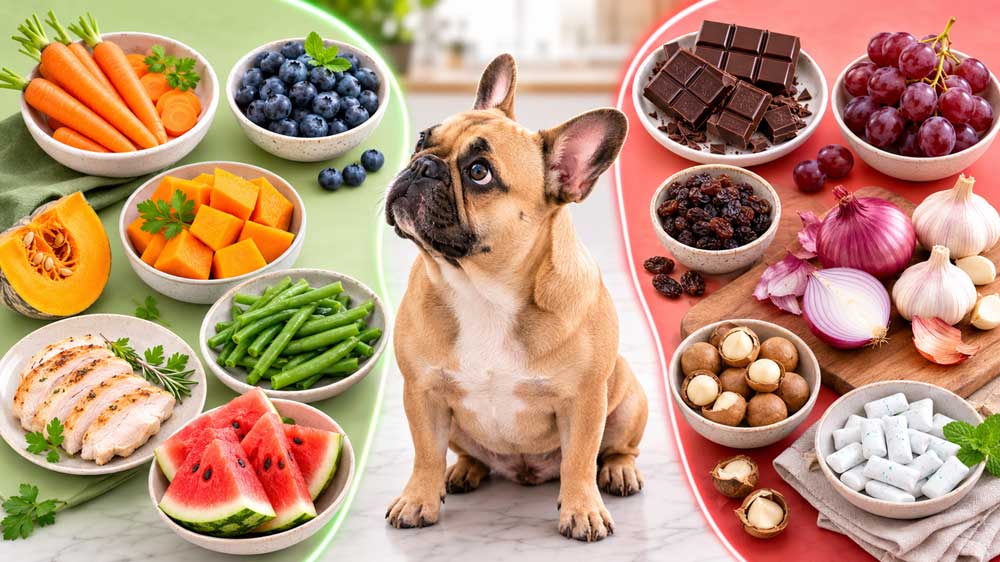
Cherries
While the flesh of a cherry isn’t highly toxic, the pit, stem, and leaves contain compounds that can release cyanide when chewed. Cherry pits can also become lodged in your dog’s throat or intestines.
Peaches
Fresh peach flesh is not highly toxic, but the pit can be dangerous. Peach pits contain cyanide-producing compounds and also create a choking or intestinal blockage risk.
Plums
Like peaches and cherries, plum pits contain toxic compounds and can block your dog’s digestive system if swallowed.
Apricots
Apricot pits, stems, and leaves should never be given to dogs. They contain naturally occurring toxins and can also cause choking.
Apples
Apples are generally safe when prepared correctly. However, never let your French Bulldog chew on the core or seeds. Apple seeds contain compounds that release cyanide when broken down.
If you want to share apples, remove the seeds and core first, then cut the fruit into small bite-sized pieces.
Fruits That Are Usually Safe in Moderation
Many fruits make healthy treats when served in small portions.
Safe options include:
- Blueberries
- Strawberries
- Bananas
- Seedless watermelon
- Cantaloupe
- Mango (without the pit)
- Pear slices with seeds removed
- Pineapple
- Cranberries
Fruit should only be an occasional snack because it contains natural sugars. Too much fruit may upset your French Bulldog’s stomach or contribute to weight gain.
Always wash fresh fruit thoroughly and cut it into bite-sized pieces to reduce choking risk.
Other Human Foods That Can Harm French Bulldogs
Not every dangerous food is obviously toxic. Some foods cause digestive problems, while others increase the risk of long-term health issues.
Avocados
Avocados contain a natural substance called persin. Although dogs are generally less sensitive to persin than some other animals, eating avocado can still cause vomiting, diarrhea, and stomach discomfort.
The large pit is another concern because it can become stuck in the digestive tract and require emergency surgery.
It’s safest to keep avocados completely off your Frenchie’s menu.
Mushrooms
Store-bought mushrooms are usually less risky than wild mushrooms, but it’s often impossible to know which type a dog has eaten.
Wild mushrooms can damage the liver, kidneys, or nervous system and may become life-threatening within hours.
If your French Bulldog eats a mushroom while outdoors, contact your veterinarian immediately. If possible, take a picture of the mushroom to help with identification.
Salty Foods
Many popular snacks contain far more salt than dogs need.
Foods to avoid include:
- Potato chips
- Pretzels
- Salted popcorn
- Processed meats
- Instant noodles
- Salted nuts
Too much sodium may lead to dehydration, vomiting, excessive thirst, and, in severe cases, sodium poisoning.
French Bulldogs can also develop stomach upset after eating heavily salted foods.
Dairy Products
Many French Bulldogs don’t digest lactose very well. Introduce dairy slowly, as tolerance varies from one French Bulldog to another.
Milk, ice cream, and soft cheeses may cause:
- Gas
- Diarrhea
- Bloating
- Stomach cramps
Some Frenchies tolerate small amounts of plain yogurt or cottage cheese because these products contain less lactose. If you’re introducing dairy for the first time, start with a very small amount and watch for digestive problems.
Raw Bread Dough
Raw dough made with yeast can become dangerous once it’s swallowed.
As the dough rises inside your dog’s stomach, it expands and creates painful pressure. At the same time, the yeast produces alcohol, which can lead to alcohol poisoning.
Keep rising bread dough well out of your dog’s reach.
Moldy or Spoiled Food
Dogs sometimes find spoiled leftovers in the trash before owners notice.
Mold growing on food can produce toxins that affect the brain and nervous system.
Symptoms may include:
- Tremors
- Seizures
- Vomiting
- Muscle twitching
- Weakness
If your French Bulldog gets into moldy food or garbage, contact your veterinarian as soon as possible.
Cat Food
Cat food isn’t toxic, but it isn’t made for dogs.
It usually contains much higher levels of protein and fat than a French Bulldog needs.
Eating cat food regularly may contribute to weight gain, digestive upset, and pancreatitis. It’s best used only in emergencies when no dog food is available, not as part of a normal diet.
Quick Food Safety Tips for French Bulldog Owners
Preventing accidents is much easier than treating them. A few simple habits can help keep your Frenchie safe every day.
- Store toxic foods in closed cabinets.
- Keep trash cans covered with secure lids.
- Never leave chocolate, grapes, or baked goods on low tables.
- Teach children not to feed table scraps.
- Read ingredient labels before sharing any human food.
- When you’re unsure if a food is safe, don’t offer it until you’ve checked with your veterinarian.
French Bulldogs are curious and often eat first and think later. Keeping harmful foods out of reach is one of the best ways to protect their health.
➜ Recommended: Airtight dog food storage containers to keep food fresh and safe-Check price on amazon.
French Bulldog Food Allergies List
Not every food that makes your French Bulldog sick is toxic. Some foods simply don’t agree with their digestive system or trigger an allergic reaction. French Bulldogs are one of the breeds most likely to develop food allergies, especially if they have sensitive skin or frequent ear infections.
A food allergy happens when your dog’s immune system overreacts to a specific ingredient. The symptoms often appear gradually and can become worse over time.
If your Frenchie has recurring food allergies or digestive issues, switching to a limited ingredient dog food may help under your veterinarian’s guidance.
Common Food Allergies in French Bulldogs
Some of the most common food allergens include:
- Beef
- Chicken
- Dairy products
- Eggs
- Wheat
- Corn
- Soy
- Lamb (less common)
- Artificial colors and preservatives
Every dog is different. One Frenchie may eat chicken for years without any problems, while another develops an allergy after repeated exposure.
Signs Your French Bulldog May Have a Food Allergy
Watch for symptoms such as:
- Constant itching
- Red or irritated skin
- Frequent ear infections
- Excessive licking of paws
- Hair loss
- Hot spots
- Chronic diarrhea
- Vomiting
- Gas or bloating
If these symptoms keep returning, schedule an appointment with your veterinarian. They may recommend an elimination diet to identify the ingredient causing the problem.
Avoid changing your dog’s food too often without professional guidance. Sudden diet changes can make digestive problems worse.
Food Allergy vs Food Intolerance
| Food Allergy | Food Intolerance |
| Immune reaction | Digestive problem |
| Itching | Diarrhea |
| Ear infections | Gas |
| Skin irritation | Vomiting |
My French Bulldog Ate Chocolate—What Do I Do?
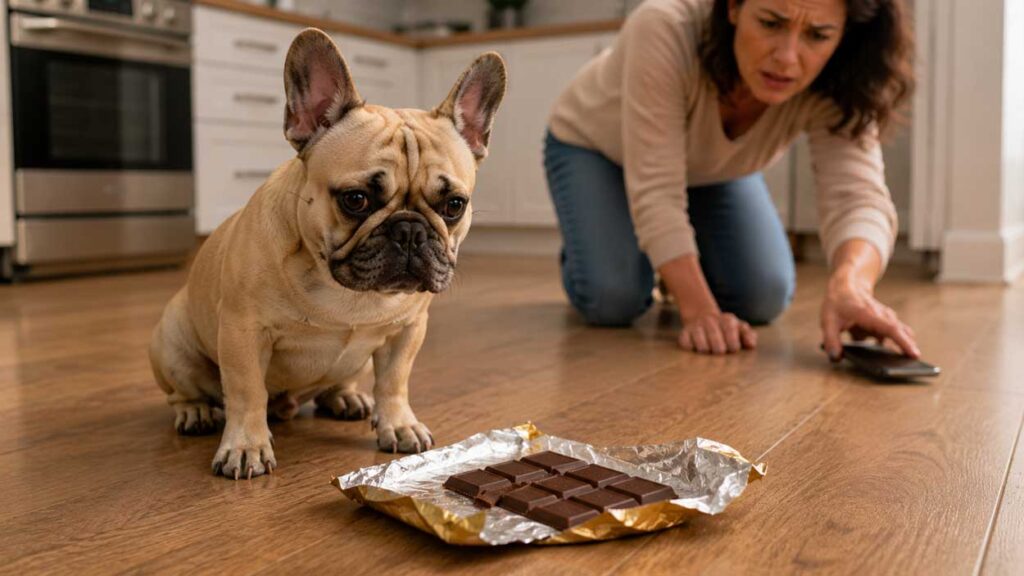
Chocolate poisoning is one of the most common pet emergencies, especially around holidays like Halloween, Christmas, Valentine’s Day, and Easter.
If your French Bulldog eats chocolate, act quickly.
Step 1: Stay Calm
Try not to panic. The amount and type of chocolate matter.
Dark chocolate and baking chocolate contain much more theobromine than milk chocolate or white chocolate, making them far more dangerous.
Step 2: Gather Information
Before calling your veterinarian, try to find:
- The type of chocolate
- Approximately how much was eaten
- Your dog’s weight
- The time your dog ate it
Keeping the packaging can also help your veterinarian estimate the risk.
Step 3: Call Your Veterinarian Immediately
Don’t wait for vomiting or other symptoms to appear.
Early treatment often prevents serious complications.
Never try to make your dog vomit unless a veterinarian specifically tells you to do so.
Symptoms of Chocolate Poisoning
Watch for signs including:
- Vomiting
- Diarrhea
- Restlessness
- Panting
- Fast heartbeat
- Muscle tremors
- Seizures
- Collapse
Some symptoms may take several hours to develop, so even if your French Bulldog seems fine, it’s still important to seek advice right away.
Emergency Checklist
✓ Remove remaining chocolate
✓ Save packaging
✓ Note your dog’s weight
✓ Estimate amount eaten
✓ Call veterinarian immediately
✓ Do not induce vomiting unless instructed
Dog Poison Control Hotline USA
If you believe your French Bulldog has eaten a toxic food, contact your veterinarian immediately. If your regular clinic is closed, these trusted resources are available in the United States:
- ASPCA Animal Poison Control Center: (888) 426-4435
- Pet Poison Helpline: (855) 764-7661
These services are available 24 hours a day and can provide guidance while you arrange emergency veterinary care. A consultation fee may apply.
Keep these numbers saved in your phone before an emergency happens, since every minute can matter after exposure to certain toxins.
Safe Human Food for French Bulldogs
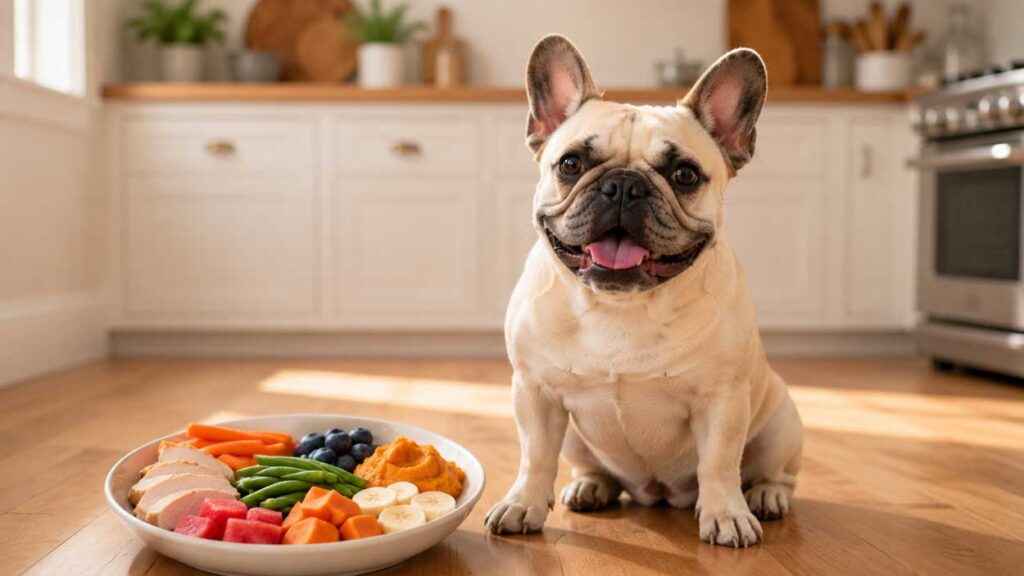
The good news is that many healthy human foods are perfectly safe for French Bulldogs when served in moderation.
Introduce only one new food at a time so you can easily identify any digestive upset or allergic reaction.
These foods can make excellent training treats or occasional snacks.
Safe Fruits
- Blueberries
- Strawberries
- Bananas
- Seedless watermelon
- Cantaloupe
- Apples without seeds
- Pear slices without seeds
Safe Vegetables
- Carrots
- Green beans
- Cucumbers
- Pumpkin puree
- Sweet potatoes
- Cooked broccoli in small amounts
- Cooked peas
Safe Protein Sources
- Plain cooked chicken
- Lean turkey
- Cooked salmon
- Eggs
- Plain cooked beef
Always cook meat without seasoning, garlic, onion, or heavy sauces.
If you’re wondering whether eggs can be a regular part of your Frenchie’s diet, see our guide on Can French Bulldogs Eat Boiled Eggs Every Day?
Healthy Snacks
- Plain oatmeal
- Plain rice
- Cooked pumpkin
- Unsweetened applesauce
- Plain popcorn without butter or salt
➜ Recommended: Slow feeder bowls and lick mats for French Bulldogs on Amazon
Plain rice is often recommended for dogs with temporary stomach upset. Learn how much is safe in our guide on Can French Bulldogs Eat Rice Every Day?
Remember that treats should make up only a small part of your dog’s daily diet. A balanced, high-quality dog food should remain their main source of nutrition.
Want to know which fruits are safest and how much to feed? Read our complete guide on Can French Bulldogs Eat Blueberries? (Safe Fruits List).
Can French Bulldogs Eat Peanut Butter Safely?
Yes—but only if you choose the right kind.
Peanut butter is a favorite treat for many dogs because it’s tasty and full of healthy fats and protein.
However, you should always read the ingredient label before sharing it.
Choose peanut butter that is:
- Xylitol-free
- Unsalted
- Unsweetened
- Made with simple ingredients
Avoid peanut butter that contains artificial sweeteners, especially xylitol, because even small amounts can be deadly for dogs.
Peanut butter is also high in calories, so serve it in moderation.
A small spoonful inside a puzzle toy or spread on a lick mat makes a fun enrichment activity for your French Bulldog.
Healthy Homemade Treats for Frenchies
Making treats at home allows you to control every ingredient and avoid unnecessary preservatives.
Here are a few simple ideas your French Bulldog may enjoy.
Frozen Banana Bites
Slice a ripe banana into small pieces and freeze them for a cool summer treat.
Pumpkin Oat Biscuits
Mix plain pumpkin puree with rolled oats until a dough forms.
Shape into small cookies and bake until firm.
Chicken and Sweet Potato Bites
Combine cooked shredded chicken with mashed sweet potato.
Roll into bite-sized balls and bake until lightly firm.
Yogurt Berry Pops
Mix plain, unsweetened Greek yogurt with mashed blueberries.
Freeze in silicone molds for a refreshing snack.
Always introduce new treats slowly and watch for any signs of stomach upset or allergies.
➜ Recommended: Silicone dog treat molds and homemade treat baking supplies on Amazon
Why French Bulldogs Are More Sensitive to Certain Foods
French Bulldogs have several breed-specific characteristics that make proper nutrition especially important.
- Sensitive digestive system
- Higher risk of food allergies
- Prone to obesity
- Higher pancreatitis risk
- Brachycephalic breed requiring careful weight management
Because of these factors, foods that may only upset another dog’s stomach could cause more serious digestive issues in some French Bulldogs.
Frequently Asked Questions about Human Foods That Are Toxic to French Bulldogs
Can French Bulldogs eat cheese?
Many French Bulldogs can eat small amounts of plain cheese. However, some are lactose intolerant and may develop diarrhea or gas. Offer only small portions and avoid flavored or highly processed cheeses.
Can French Bulldogs eat eggs?
Yes. Fully cooked eggs are a great source of protein and vitamins. Avoid feeding raw eggs because they may carry harmful bacteria.
Can French Bulldogs eat watermelon?
Yes. Seedless watermelon is a healthy, hydrating treat. Remove all seeds and the rind before serving.
Can French Bulldogs eat bread?
Plain baked bread is generally safe in small amounts. Avoid raw yeast dough because it expands in the stomach and can produce alcohol during fermentation.
Can French Bulldogs eat tomatoes?
Ripe tomatoes are usually safe in small quantities. However, green tomatoes, stems, and leaves contain compounds that may be harmful to dogs.
Can French Bulldogs eat peanut butter every day?
Peanut butter should only be an occasional treat because it is high in calories and fat. Always choose a xylitol-free product with simple ingredients.
Final Thoughts -Human Foods That Are Toxic to French Bulldogs
Keeping your French Bulldog healthy starts with making smart choices about what goes into their bowl. While sharing food with your furry friend may seem harmless, many everyday ingredients can cause serious health problems.
By learning which human foods that are toxic to French Bulldogs should always be avoided, you can help prevent accidents before they happen. Keep dangerous foods safely stored, read ingredient labels carefully, and offer only dog-friendly treats in moderation.
When you’re unsure whether a food is safe, it’s always better to check with your veterinarian first. A quick question today could save your Frenchie’s life tomorrow.
For a complete nutrition plan, including portion sizes and daily feeding schedules, see our French Bulldog Feeding Guide.
Your French Bulldog depends on you for every meal. With a little knowledge and a few simple precautions, you can give them a safe, healthy, and happy life filled with tail wags, playtime, and many years by your side.
Veterinary References
- American Veterinary Medical Association (AVMA)
- ASPCA Animal Poison Control Center
- Pet Poison Helpline
- Merck Veterinary Manual
- American Kennel Club (AKC)
Recommended Products for French Bulldog Owners
➜ Vet-approved dental chews for healthy teeth
➜ Xylitol-free peanut butter for dogs
➜ Slow feeder bowls for French Bulldogs
➜ Lick mats for mental enrichment
➜ Silicone molds for homemade dog treats
➜ Airtight dog food storage containers
Affiliate Disclosure: We may earn a small commission from qualifying purchases at no extra cost to you.
Disclaimer
This article is intended for educational purposes only and should not replace professional veterinary advice, diagnosis, or treatment. If your French Bulldog eats a potentially toxic food, contact your veterinarian or an emergency animal hospital immediately.