
Why Is My Dog Not Eating But Drinking Water? (Causes, Signs & What You Should Do)
If you’re sitting there worried and wondering, “Why is my dog not eating but drinking water?” — you’re not alone. This is one of the most common concerns dog owners face, and it can feel confusing and stressful at the same time. Your dog may still be drinking normally, which gives a bit of relief, but when they suddenly refuse food, it’s usually a sign that something isn’t quite right. Dogs don’t just skip meals for no reason, especially if they normally have a healthy appetite. Sometimes the issue is mild and temporary, but in other cases, it can point to a deeper health problem that needs attention.
It’s stressful to see your dog ignore food—especially when they usually get excited the moment you touch their bowl.
If your dog is not eating but still drinking water, it could be anything from a mild stomach upset to a serious health issue—and knowing the difference is important.
As a dog parent, you start noticing small changes — maybe your dog walks up to the food bowl, sniffs it, and walks away. Or maybe they’re less excited at mealtime, even though they’re still drinking water like usual. These little signs matter. Dogs can’t tell us what’s wrong, so their behavior becomes the only way they communicate discomfort, pain, or illness. That’s why it’s important to pay attention and act early.
Understanding Your Dog’s Normal Eating Behavior
Before you can figure out what’s wrong, you need to understand what’s normal for your dog. Some dogs eat all their food at once, while others prefer to graze throughout the day. Some eat twice a day like clockwork, while others may have smaller, more frequent meals. The key is knowing your dog’s usual routine. If your dog suddenly stops eating when they normally never miss a meal, that’s a clear sign something has changed.
Even if your dog is a “grazer,” you should still keep an eye on their food bowl. If the food remains untouched all day or they’re eating significantly less than usual, it’s worth paying attention. A missed meal here and there may not be serious, but if your dog hasn’t eaten for 24 hours, it’s time to take it seriously.
If you’re still wondering why your dog is not eating but drinking water, you’re not alone—this situation is more common than you think.
Why Is My Dog Not Eating But Drinking Water?
When a dog continues to drink water but refuses food, it often means they’re not feeling well but are still able to stay hydrated. This can happen for several reasons, ranging from mild issues to more serious health concerns.
Here are the most common reasons why your dog is not eating but drinking water:
– Stomach upset or digestive issues
– Dental or mouth pain
– Stress or anxiety
– Spoiled or changed food
– Infection or illness
– Serious conditions like kidney disease or pancreatitis
One of the simplest reasons could be the food itself. If the food has gone stale, spoiled, or changed in smell or texture, your dog may refuse to eat it. Dogs rely heavily on smell, so even a small change can make food unappealing. Always check expiration dates and make sure the food hasn’t gone bad.
Another common reason is mouth or dental pain. If your dog wants to eat but struggles or avoids chewing, the problem may be in their teeth or gums. You might notice them sniffing food, picking at it, or dropping it from their mouth. This kind of behavior often points to discomfort rather than a lack of appetite.
Stomach upset is another major cause. If your dog is dealing with nausea, gas, or digestive issues, they may avoid food but still drink water. In many cases, this comes along with other symptoms like vomiting, diarrhea, or low energy. Even a mild stomach issue can make food unappealing.
Stress and anxiety can also play a big role. Just like humans, dogs can lose their appetite when they’re stressed. Changes in environment, moving to a new home, new pets, loud noises, or even changes in your daily routine can affect how your dog eats. If the timing matches a recent change, stress could be the cause.
In some cases, more serious medical conditions may be responsible. Issues like infections, kidney disease, liver problems, pancreatitis, or intestinal blockages can all cause a dog to stop eating. While many of these conditions also affect drinking, some dogs may still drink water normally in the early stages. That’s why it’s important not to ignore the situation.
If your dog is also shaking or acting unusual, you can read our detailed guide on Why Is My French Bulldog Shaking and Not Eating? for a deeper understanding.
Signs That Indicate a Bigger Problem
If your dog is not eating but still drinking water, you should watch for other warning signs. These include lethargy, vomiting, diarrhea, weight loss, unusual behavior, or signs of pain. If your dog seems weak, avoids movement, or just doesn’t seem like themselves, it’s time to act.
A good general rule is this: if your dog hasn’t eaten for more than 24–48 hours, you should contact your vet. Even sooner if symptoms are getting worse. While some dogs can physically go a few days without food, that doesn’t mean it’s safe to wait.
What You Can Do at Home
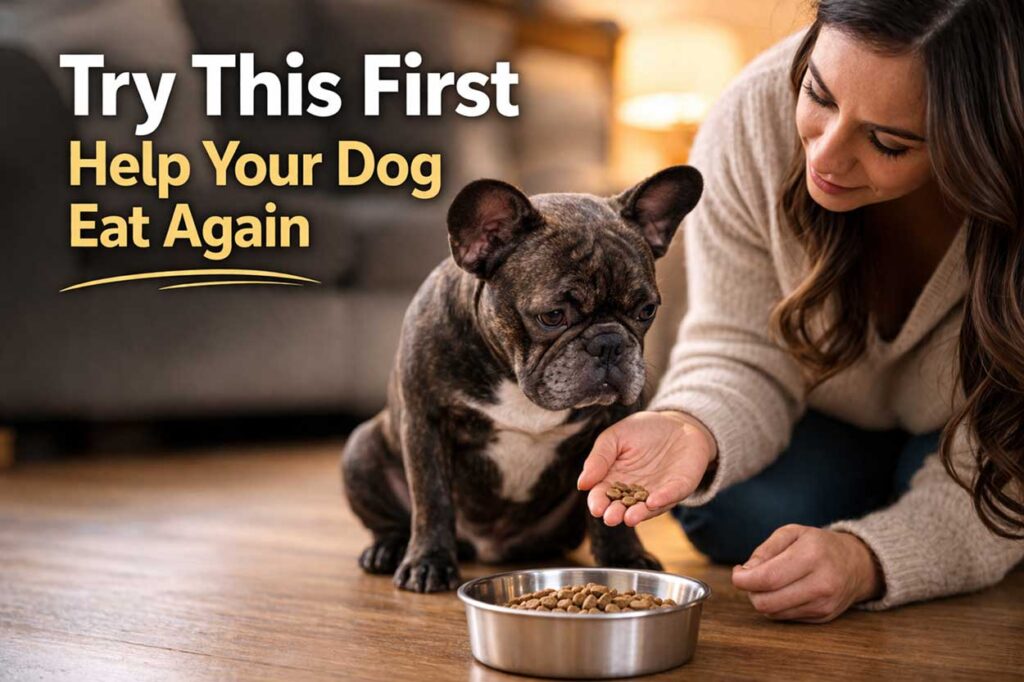
If your dog’s condition seems mild and they are otherwise alert and active, there are a few things you can try at home. Start by checking their food — make sure it’s fresh and smells normal. You can try offering something bland and easy to digest, like plain boiled chicken or rice, to see if that encourages eating.
Warming the food slightly can also help bring out the smell and make it more appealing. Some dogs respond well to hand-feeding or smaller, more frequent meals instead of one large portion. Keeping fresh water available is important to prevent dehydration.
If you suspect dental discomfort, you can try softening their food by adding warm water. For stress-related issues, focus on creating a calm and consistent feeding routine. Sometimes, just reducing noise and distractions during mealtime can help.
If your dog still refuses food after trying these steps, don’t wait — getting professional help early can prevent serious complications.
If your dog is not eating, adding a tasty food topper can sometimes help improve appetite. 👉 Check Best Dog Food Toppers on Amazon
You can also monitor your dog’s health at home using a pet thermometer.
👉 View Dog Thermometer on Amazon
When to See a Vet
If you’re still asking, “Why is my dog not eating but drinking water?” after trying basic steps, it’s time to involve a professional. You should see a vet immediately if your dog shows signs of severe illness, such as continuous vomiting, extreme lethargy, or refusal to drink water.
Also, if your dog has underlying health conditions like diabetes, skipping meals can be dangerous and should be addressed right away. Early diagnosis can prevent more serious complications and help your dog recover faster.
If your dog hasn’t eaten for more than 24 hours, don’t wait—early treatment can prevent serious health complications.
Final Thoughts
Seeing your dog refuse food can be worrying, especially when you don’t know the reason. But if you’re noticing that your dog is still drinking water, it gives you an important clue — they may not feel well, but their body is still functioning enough to stay hydrated. Even so, it’s not something to ignore.
If you keep wondering, “Why is my dog not eating but drinking water?” the safest approach is to observe closely, try simple solutions, and seek veterinary advice if things don’t improve quickly. Your dog depends on you to notice these changes, and acting early can make all the difference in keeping them healthy and happy.
Here are some common questions dog owners ask in this situation:
FAQ: Why Is My Dog Not Eating But Drinking Water?
Is it serious if my dog is not eating but drinking water?
Yes, it can be serious if it lasts more than 24–48 hours or comes with other symptoms.
How long can a dog go without eating?
Most dogs can go 2–3 days, but you should contact a vet after 24 hours.
Should I force my dog to eat?
No, forcing food can make things worse. Try light, soft food instead.
When should I worry?
If your dog is weak, vomiting, or not improving within a day, see a vet immediately.