
French Bulldog vs English Bulldog: What’s the Difference?
French Bulldogs and English Bulldogs are both adorable, wrinkly, and lovable, but they’re more different than you might think. Despite their similar names and shared bulldog heritage, these two breeds have distinct personalities, appearances, and care needs. If you’re trying to decide between the two (French Bulldog vs English Bulldog), here’s what you need to know.
When comparing French Bulldog vs English Bulldog, the biggest differences include their size, personality, exercise needs, and grooming requirements.
Bulldog History: From Fighters to Friends
English Bulldog
The English Bulldog’s history isn’t the easiest to look back on. Originally bred in England during the 13th century, these dogs were used in bull-baiting, a now-outlawed blood sport. Fortunately, after this cruel practice ended in the 1800s, breeders worked to make English Bulldogs friendlier and less aggressive. The English Bulldog was officially recognized by the AKC in 1886.
French Bulldog
The French Bulldog has a less violent history but still shares some similar roots. In the 1800s, lace workers in England developed a smaller bulldog to be a companion dog. When they moved to France, these small dogs became a favorite among Parisians and quickly made their way into the heart of French culture.
Comparison Chart
Here’s a quick comparison to help you understand the main differences between French Bulldogs and English Bulldogs.
French Bulldog vs English Bulldog: Quick Comparison
| Feature | French Bulldog | English Bulldog |
|---|---|---|
| Size | Smaller | Larger |
| Height | 11–13 inches | 14–15 inches |
| Weight | Up to 28 lbs | Up to 50 lbs |
| Energy Level | Playful and active | Calm and relaxed |
| Exercise Needs | 30–60 minutes daily | 15–40 minutes daily |
| Grooming | Low maintenance | Moderate maintenance |
| Personality | Social, playful, affectionate | Loyal, calm, slightly stubborn |
| Lifespan | 10–12 years | 8–10 years |
How Do They Look? Key Differences in Appearance
Both breeds share a similar wrinkled face and short snout, but there are some clear differences when you compare them side by side.
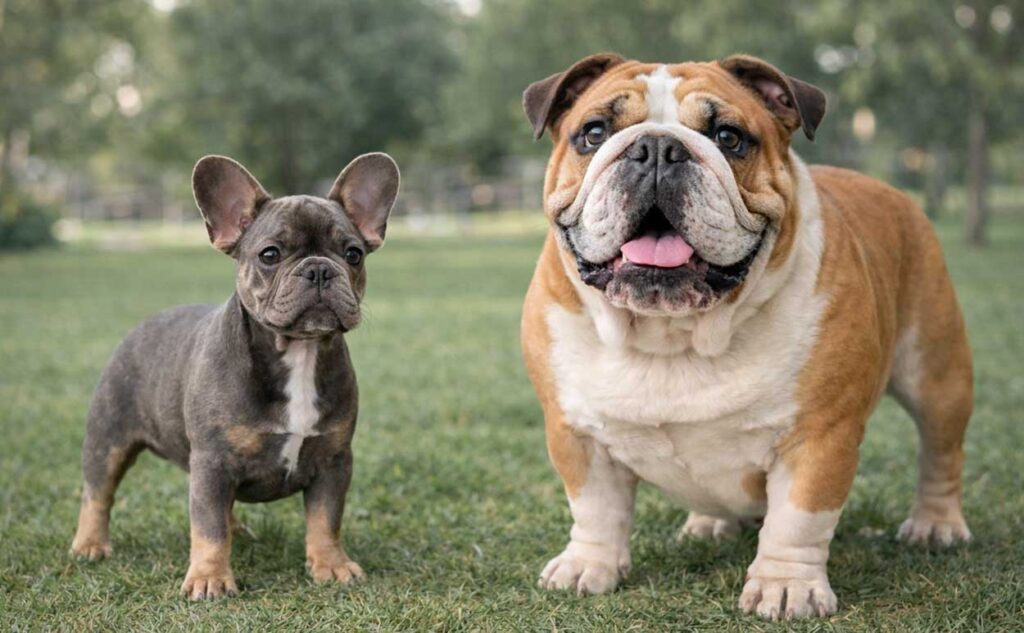
Size and Body Type
- English Bulldog: These dogs are stocky and solid, standing around 14-15 inches tall and weighing up to 50 pounds. They have a broad chest and muscular build.
- French Bulldog: Frenchies are smaller, standing at 11-13 inches tall and weighing up to 28 pounds. They have a more compact, lightweight build, making them popular companion dogs.
Head and Ears
- English Bulldog: They have a round head with a broad forehead, and their ears are smaller and fold down (like rose petals).
- French Bulldog: Frenchies are known for their “bat ears”—large, pointy ears that stand up straight, giving them a playful look.
Other Features
- English Bulldog: They have distinctive, hanging “chops” on either side of their mouths, adding to their tough appearance.
- French Bulldog: French Bulldogs have a more square head and a playful expression, giving them a friendly and charming look.
Grooming: Low Maintenance, but Not Hassle-Free
Both French Bulldogs and English Bulldogs have short coats that are fairly easy to manage, but their adorable wrinkles require some attention.
French Bulldog Grooming
Frenchies are generally low-shedding and require less grooming than their English cousins. A quick weekly brushing is enough to keep their coats shiny and smooth. However, make sure to clean the folds on their face to avoid skin irritation.
English Bulldog Grooming
English Bulldogs tend to shed a bit more and need to be brushed a couple of times a week. They also have more skin folds, which need regular cleaning to prevent infections.
Personality: Who’s the Right Fit for You?
English Bulldogs
English Bulldogs are calm, affectionate, and a little lazy. They’re generally friendly and loyal but tend to be more reserved with strangers. Their easygoing nature makes them great companions, but they need patience during training due to their stubborn streak.
French Bulldogs
French Bulldogs are playful, outgoing, and full of energy. While they can be a bit stubborn too, they love to please their owners and are generally easy to train with positive reinforcement. They form strong bonds with their humans and can sometimes be a bit clingy. They are generally good with children, but supervision is recommended with very young kids.
Health Concerns: What to Watch Out For
Both English and French Bulldogs face certain health challenges due to their brachycephalic (flat) faces, which can lead to breathing problems.
English Bulldog Health
English Bulldogs are prone to:
- Hip dysplasia (joint problems)
- Skin fold infections (due to their excess skin)
- Obesity (due to their laid-back nature)
French Bulldog Health
French Bulldogs are at risk for:
- Hip dysplasia
- Spinal issues
- Eye conditions like cherry eye and cataracts
Both breeds can suffer from breathing issues, so it’s important to keep them cool in hot weather and avoid intense exercise.
Exercise Needs: Different Energy Levels
French Bulldogs
Frenchies have a little more energy than English Bulldogs. They love to play, and a daily walk or some playtime is enough to keep them happy. Around 30 minutes to an hour of exercise is ideal, but don’t push them too hard, especially on hot days.
English Bulldogs
English Bulldogs are much more laid-back. They enjoy short walks and light play, but they don’t need as much exercise as more active breeds. About 15 to 40 minutes of activity a day is plenty for them.
Price and Availability
Both French Bulldogs and English Bulldogs are expensive breeds. You can expect to pay anywhere from $1,500 to $5,000 for a purebred puppy, depending on the breeder and location. This high cost is partly due to the fact that bulldogs often need to be delivered by C-section due to their large heads.
Adopting a bulldog from a rescue organization might be a more affordable option, and you can find both French and English Bulldogs through AKC-approved rescues.
Key Differences Between French Bulldog and English Bulldog
When comparing French Bulldog and English Bulldog, several key differences stand out. French Bulldogs are smaller, more playful, and generally better suited for apartment living due to their compact size and moderate exercise needs. English Bulldogs, on the other hand, are larger, calmer, and more laid-back, making them ideal for owners who prefer a relaxed companion.
Another major difference is their appearance. French Bulldogs are known for their distinctive bat-like ears and square-shaped heads, while English Bulldogs have smaller folded ears and a broader, more muscular build. Their energy levels also differ slightly, with French Bulldogs typically being more active and playful than English Bulldogs.
Both breeds are affectionate and loyal, but the right choice ultimately depends on your lifestyle, living space, and the type of personality you want in a dog.
Conclusion: French Bulldog vs English Bulldog
Choosing between a French Bulldog and an English Bulldog ultimately depends on your lifestyle, living space, and what kind of companion you’re looking for. Both breeds are affectionate, loyal, and love spending time with their owners, but they have different energy levels, grooming needs, and personalities.
- French Bulldogs are playful, energetic, and a bit more outgoing, making them a great fit for people who want a smaller, more active dog that loves attention and affection.
- English Bulldogs, on the other hand, are calm, relaxed, and laid-back. They require less exercise and are more content lounging around with their family, making them ideal for owners seeking a low-maintenance, easygoing companion.
Both breeds can have health challenges due to their brachycephalic faces, so it’s important to be mindful of their breathing, weight, and overall well-being. Whether you choose a Frenchie or an English Bulldog, both will quickly steal your heart with their endearing personalities and irresistible charm.
No matter which breed you decide on, a bulldog can bring joy, love, and lots of cuddles into your life. Just remember to choose the one that best matches your home, activity level, and the kind of companion you’re looking for!
Frequently Asked Questions About French Bulldog vs English Bulldog
1. Which is better: French Bulldog or English Bulldog?
Both breeds make great companions, but the better choice depends on your lifestyle. French Bulldog are smaller, more playful, and ideal for apartment living, while English Bulldog are calmer and more relaxed, making them great for owners who prefer a laid-back pet.
2. Are French Bulldogs more expensive than English Bulldogs?
Yes, French Bulldogs are often more expensive than English Bulldogs. Their high demand, smaller litter sizes, and the need for special breeding methods often increase their price.
3. Do French Bulldogs or English Bulldogs require more exercise?
French Bulldogs usually need a bit more activity than English Bulldogs. They enjoy playtime and short walks, while English Bulldogs are more relaxed and require less daily exercise.
4. Are French Bulldogs good for apartment living?
Yes, French Bulldogs are considered one of the best dog breeds for apartment living because of their small size and moderate exercise needs.
5. Do English Bulldogs have more health problems?
English Bulldogs can be prone to certain health issues such as joint problems, obesity, and skin fold infections. However, both breeds can experience breathing issues due to their flat faces.
6. Which bulldog breed is better for families with children?
Both breeds can be good with children when properly trained and supervised. French Bulldogs are playful and affectionate, while English Bulldogs are calm and patient, making them good family companions.
No related posts found.