
Stopping Jumping & Biting Guide for French Bulldogs: Easy Steps to a Gentle, Happy Pup
French Bulldogs are playful, affectionate, and full of personality, making them one of the most lovable companion dogs. But sometimes, their excitement and tiny teeth can turn into jumping or biting. While it might seem cute at first, frequent nipping or leaping can hurt family members, surprise guests, and make everyday life stressful. Stopping Jumping & Biting in French Bulldogs may feel challenging, but with the right techniques, patience, and consistency, you can guide your pup toward calm behavior, safe play, and gentle greetings.
The good news? With clear rules, short training sessions, and a structured daily routine, your Frenchie can learn to express excitement safely. This guide provides step-by-step strategies to prevent biting and jumping, helping you build a happier, calmer home for both you and your furry friend.
Why French Bulldogs Bite or Jump
French Bulldogs explore the world with their mouths. Puppies especially bite when teething or when they’re excited, while adult Frenchies may bite due to fear, pain, frustration, or guarding toys, food, or their favorite spot. Jumping usually comes from excitement and the desire for attention.
Some common triggers include:
- Teething and sore gums
- Over-excitement during play or walks
- Fatigue or skipped naps
- Fear of hands, collars, or grooming
- Pain from ears, joints, teeth, or skin
- Boredom or insufficient mental stimulation
Understanding why your Frenchie reacts this way allows you to prevent bites before they happen. Learn your dog’s signals, intervene early, and you’ll see fewer “oops” moments.
Reading Your Frenchie’s Body Language
French Bulldogs communicate a lot with their bodies before biting or jumping. Watch for these early signals:
- Lip licking, yawning, or turning their head away
- Stiff posture, tense legs, or holding their breath
- Whale eye (white of the eye showing)
- Tail tucked or ears pinned back
- Low growls, rumbles, or stiff facial expressions
When you notice these signs, pause, give your dog space, and redirect them to a safe activity. Acting early prevents stress from escalating into biting or jumping.
Quick Steps to Stop Biting and Jumping
Here’s how you can teach gentle play and calm greetings right away:
- Freeze on Contact: If your Frenchie’s teeth touch skin, stop moving, say nothing, and wait 2–3 seconds. Calmly offer a toy before resuming play.
- Redirect the Mouth: Keep safe chews, tug toys, or puzzle feeders handy. Every time your dog mouths hands or clothes, guide them to a toy and reward the switch.
- Mark Gentle Behavior: Use a word like “Yes!” or a clicker whenever your dog plays softly or sits calmly. Immediate reinforcement helps lessons stick.
- Use Time-Outs: For repeated biting or jumping, calmly remove your dog for 20–60 seconds. Return only when they’re calm.
- Set Rules for Kids and Guests: Teach children to stand still, cross their arms, and toss treats instead of hugging or running. Guests should ignore jumping and offer toys or treats for calm greetings.
Consistency is key. When everyone in the household follows the same rules, your Frenchie will quickly understand what’s expected.
Daily Routine for a Calm, Gentle Frenchie
French Bulldogs thrive on routine. A predictable schedule reduces stress, prevents energy spikes, and decreases biting and jumping.
Sample Day:
- Morning: 10–15 minute sniff walk, 5-minute tug session with rules, breakfast in a puzzle feeder
- Midday: Short training sessions (“sit,” “drop,” “leave it”), followed by nap or quiet time
- Evening: Light indoor scent games, calm fetch, chew time, wind down for the night
Multiple mini-sessions work better than long training marathons. They keep your dog engaged without overwhelming them.
Teaching Bite Control and Soft Mouth
Bite inhibition is essential—it teaches your dog to play with lips, not teeth.
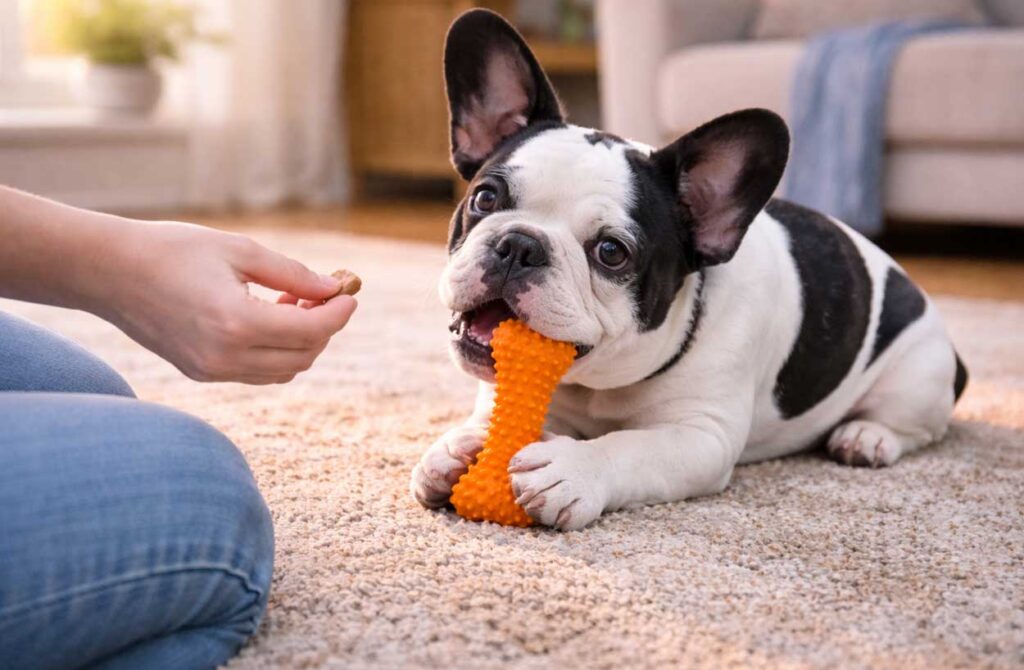
Step-by-Step:
- Offer a toy between your hands and your dog’s mouth.
- If teeth touch skin, say “Ouch” calmly, stop, and pause for a moment.
- Resume play with the toy. When your dog mouths gently, say “Yes!” and reward.
- Repeat over several days, gradually asking for softer mouth pressure.
Short, frequent sessions are best. Your Frenchie will learn to play safely with humans and other dogs.
Redirect Biting and Jumping to Safe Outlets
French Bulldogs love to use their mouths. Give them safe alternatives:
- Rubber chew toys or rope toys for tug
- Food-stuffed puzzles or lick mats
- Frozen Kongs or carrot sticks for teething
When your dog goes for hands, immediately offer a toy. Reward the switch and end play if biting or jumping repeats too quickly.
For example, when your Frenchie goes for your hands or clothes, offer a durable chew option like a stuffed rubber toy (such as a Kong-style chew). This keeps them busy, redirects biting safely, and reinforces calm play.
Handling and Grooming Without Stress
Fear of touch can trigger biting. Build trust gradually:
- Touch a paw for one second, treat, then stop. Slowly add brushing or nail filing.
- Touch the collar, reward, and hold briefly. Repeat often.
- Teach “chin rest” on your hand for calm nail care or vet visits.
Key: small steps, rewards, patience. Never force or punish.
Managing the Environment
A Frenchie-friendly home reduces accidents and reinforces boundaries:
- Use baby gates or playpens for safe zones
- Keep chew toys in every room
- Remove shoes, wires, and tempting items
- Use a light house line for gentle guidance
A well-structured environment supports your training and prevents impulsive biting.
Long-Term Success and Maintenance
Stopping biting and jumping is ongoing. Build lifelong habits:
- Daily practice of “drop,” “leave it,” “touch,” and “place”
- Short handling games every other day
- Three sniff walks per week for mental stimulation
- Daily chew time for teething and mouth activity
Monitor life stages: puppies need 16–20 hours of sleep, teens need structure and breaks, and adults or seniors need health checks for pain, teeth, and joints.
When to Seek Professional Help
Call a force-free trainer or behaviorist if:
- Bites break skin or leave marks
- Growling/snapping occurs over toys, food, or people
- Biting escalates quickly or targets children/guests
- Freeze-and-stare, stiff body, or sudden fear occurs
A certified pro can design a custom plan and guide your family safely.
Key Takeaways: Stopping Jumping & Biting Guide French Bulldog
- See stress early: lip licks, head turns, stiff body, whale eye
- Act fast: pause play, give space, offer toys, reward calm
- Teach simple skills: “leave it,” “drop,” “settle,” “touch”
- Set up the environment: gates, pens, chew baskets, house lines
- Routine wins: walks, naps, chew breaks, short training sessions
- Call a pro when needed: safety first, especially for fear, pain, or severe bites
With patience, clear rules, and daily practice, your Frenchie can enjoy playtime without jumping or biting. Gentle hands, safe toys, and steady routines build trust, calm behavior, and a happy home.
For a complete guide on French Bulldog training, including potty training, socialization, and advanced behavior tips, check out our Complete French Bulldog Training Guide.
Frequently Asked Questions (FAQ)
- Is puppy biting normal for French Bulldogs?
Yes! Most puppies nip or bite while teething or playing. With bite inhibition training and safe chews, this usually fades by 5–6 months. - Can I use time-outs if my Frenchie jumps or bites?
Absolutely. Keep them short (20–60 seconds), calm, and consistent. Avoid yelling or punishment. - How do I stop my Frenchie from jumping on guests?
Teach guests to stand still, ignore jumping, and toss treats for calm greetings. Practice sit-and-greet routines regularly. - What if my Frenchie bites hard or shows fear?
If bites break skin or are sudden, consult a force-free trainer or behaviorist. Pain or fear can worsen biting, so always rule out health issues first. - How does this guide fit with other training?
This guide focuses on stopping jumping and biting. For full training on French Bulldogs, including calm greetings, chew outlets, and socialization, see our Complete French Bulldog Training Guide.
Conclusion
Stopping biting and jumping in your French Bulldog is all about patience, consistency, and clear rules. Watch your pup’s body language, act early, and reward calm, gentle behavior. Provide safe toys, short training sessions, and a steady daily routine.
Small steps every day lead to a happy, well-behaved Frenchie who can enjoy playtime without hurting anyone. Start today—your Frenchie will thank you with calm paws, happy tail wags, and gentle greetings!
Start these steps today, and share your Frenchie success stories in the comments!