
French Bulldog Puppy Care Guide (USA) – Raise a Happy & Healthy Pup
French Bulldog Puppy Care Guide: Welcoming a French Bulldog puppy into your life is one of the most exciting and joyful experiences you can have. These small, affectionate companions are playful, full of personality, and ready to steal your heart in seconds. But while Frenchies are adorable, they also require special care to stay healthy and happy, especially in the USA, where climate, city life, and lifestyle can impact their wellbeing.
Raising a French Bulldog puppy isn’t just about feeding them or taking them for walks. It’s about understanding their unique needs, keeping them safe, and building a loving home where they feel secure. Puppies are like little sponges—they absorb everything around them, from social cues to new experiences. In urban settings like New York apartments or suburban backyards in California, factors like summer heat, indoor air conditioning, noise, and social environments play a big role in shaping their physical and emotional health.
Many first-time Frenchie owners underestimate the importance of early training, proper nutrition, and preventive care. Without guidance, puppies may develop behavioral issues, gain excess weight, or become anxious. Small mistakes in the first few months can have long-term effects, but with the right approach, your Frenchie can grow into a healthy, confident, and happy adult dog.
I’ve seen many new owners in the USA feel overwhelmed during the first weeks, especially managing feeding schedules, potty training, and summer heat. Many US owners notice that Frenchie puppies quickly become emotionally attached and thrive best when they feel safe, understood, and loved from day one. With patience, consistency, and a little planning, raising a French Bulldog can be one of the most rewarding experiences of your life.
In this French Bulldog Puppy Care guide, we’ll cover everything you need to know to raise a French Bulldog puppy in the USA:
- Nutrition & Feeding Tips – How to choose the best food and establish a feeding routine.
- Vaccinations & Vet Care – Staying up to date with US vaccine schedules and preventive care.
- Housing & Safety Guidance – Puppy-proofing your home and crate training tips.
- Training & Socialization – Commands, potty training, and building confidence.
- Play, Exercise, & Mental Stimulation – Safe ways to keep your pup active and happy.
- Grooming & Hygiene – Skin fold care, bathing, nail trimming, and dental health.
- Common Mistakes & FAQs – Avoid pitfalls most first-time owners make.
By following this French Bulldog Puppy Care guide, you’ll provide a strong foundation for your French Bulldog puppy to grow healthy, confident, and happy. Every cuddle, playful bark, and small milestone will be a memory you cherish forever.
Nutrition & Feeding – Part of Your French Bulldog Puppy Care Guide

Why Nutrition Matters
A French Bulldog puppy grows very quickly during the first year, and proper nutrition is the foundation for their health. The right food helps with:
- Bone and joint development – Frenchies are prone to hip and joint issues, so strong bones matter.
- Healthy skin and coat – Shiny, soft fur keeps them comfortable and prevents infections.
- Brain development – Puppies need essential fatty acids like DHA to grow smart and alert.
- Energy levels and immunity – Balanced nutrition keeps them playful, happy, and healthy.
I’ve seen many US owners make the mistake of overfeeding or choosing generic puppy food. French Bulldogs can gain weight quickly, which puts extra stress on their joints and breathing. Small, mindful meals are much better than one large portion.
Choosing the Right Food in the USA
When selecting food for your Frenchie, focus on quality over quantity. Popular US stores like Petco, Chewy, and Amazon offer excellent breed-specific puppy foods. Key points to consider:
- High protein – Supports muscle growth and energy.
- Limited fillers – Avoid corn, soy, or artificial additives.
- Omega fatty acids – Keeps skin healthy and coat shiny.
- DHA – Important for cognitive development.
Many US owners also supplement with vet-approved fish oil or omega-3 chews to support skin and joint health. Always check ingredients and consult your vet before adding supplements.
Portion Control & Feeding Schedule
Frenchie puppies have small stomachs but high energy needs. Overfeeding can lead to weight gain and breathing issues. A typical schedule in the US could be:
| Time | Meal |
| Morning | ¼–½ cup dry kibble + a small portion of wet food |
| Afternoon | Healthy snack (apple slice, carrot stick, or vet-approved treat) |
| Evening | ¼–½ cup dry kibble |
| Optional | Small omega-3 supplement (vet-approved) |
Remember, every puppy is different. Monitor their weight, energy, and stool quality, and adjust accordingly.
Treats & Rewards
Treats are great for training, but moderation is key.
- Choose healthy, US-approved treats
- Avoid chocolate, onions, grapes, or sugary snacks
- Use treats primarily for positive reinforcement
Feeding time is more than just nutrition—it’s bonding time. I’ve seen Frenchie puppies wag their tails so enthusiastically during meals that it’s impossible not to smile. This daily routine builds trust and strengthens your connection.
Quick Tips for US Owners
- Buy locally available quality brands (Wellness, Blue Buffalo, Royal Canin)
- Avoid cheap fillers that cause allergies
- Split meals into 3–4 portions per day
- Watch weight carefully—French Bulldogs are prone to obesity
Vaccinations & Vet Care

Why Vet Care is Essential in the USA
French Bulldog puppies need regular veterinary care to prevent illnesses and ensure healthy growth. In the United States, vets follow strict schedules for vaccinations, deworming, and preventive treatments. Early vet visits also help you detect potential health issues before they become serious.
Many new US owners worry that vet visits stress their puppies. I’ve noticed that Frenchies adapt quickly if visits are positive and gradual, especially when they are praised and rewarded afterward. Regular checkups give peace of mind and build lifelong habits for your pup.
Core Vaccinations
French Bulldog puppies should receive core vaccines to protect against common and dangerous diseases:
- Distemper – Affects the respiratory, gastrointestinal, and nervous systems
- Parvovirus – Highly contagious and potentially deadly
- Rabies – Required by law in all US states
- Adenovirus (Hepatitis) – Protects liver function
Non-core vaccines depend on lifestyle and environment. For example:
- Bordetella – Recommended if your puppy will visit dog parks or boarding facilities
- Leptospirosis – Advised in areas prone to wildlife exposure
Typical Vet Visit Schedule
| Age | Appointment |
| 6–8 weeks | First vaccines, deworming, basic checkup |
| 10–12 weeks | Second round of vaccines |
| 14–16 weeks | Third round + booster shots |
| Yearly | Annual checkup, boosters, dental exam |
US owners often ask how to remember all these appointments. A tip: use a calendar or puppy app to track vaccine dates and vet visits.
Preventive Care Tips
French Bulldogs are prone to skin issues, joint problems, and respiratory difficulties. Preventive care includes:
- Flea and tick prevention – Use seasonal treatments approved for US climates
- Heartworm prevention – Especially important in southern states
- Dental care – Brush teeth 2–3 times a week and provide chew toys to prevent tartar
- Regular monitoring – Check ears, eyes, and skin for redness, odor, or infection
I’ve seen many Frenchie owners feel relieved after establishing a routine vet schedule. Knowing your puppy is fully vaccinated and protected allows you to enjoy playtime, cuddles, and walks without constant worry. Early preventive care ensures your Frenchie grows up healthy, confident, and happy, avoiding stressful emergencies later.
Housing & Safety
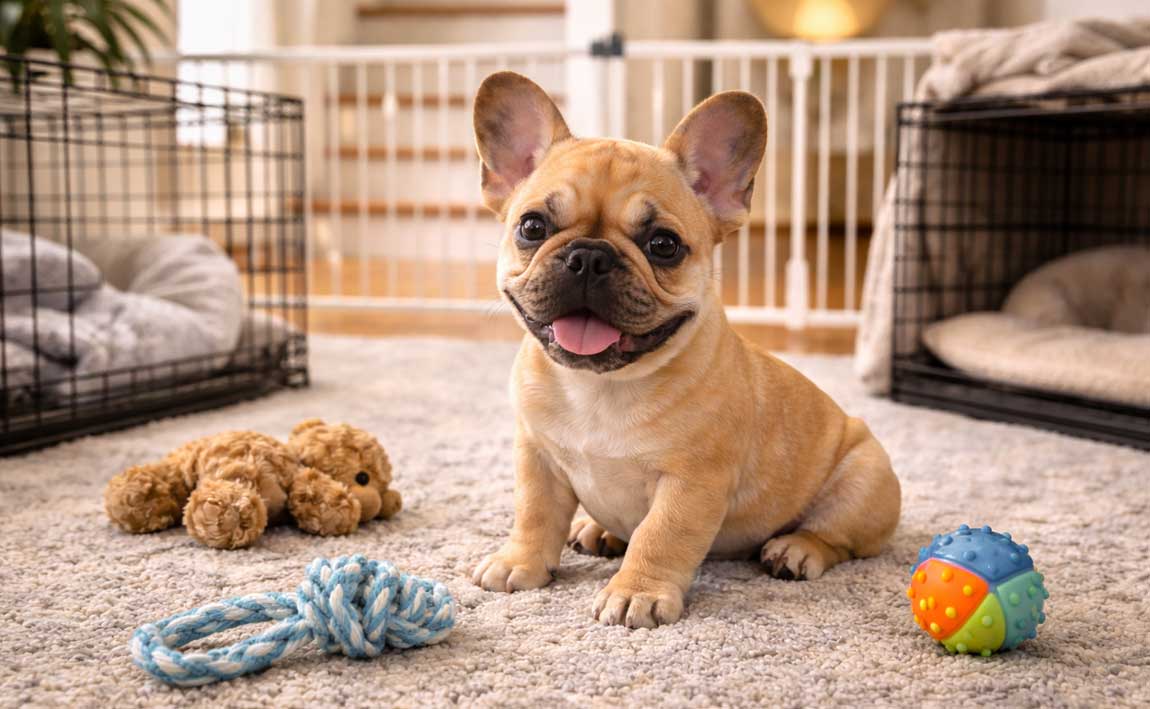
Creating a Safe Home for Your Frenchie Puppy
French Bulldog puppies are curious, playful, and full of energy, but their small size makes them prone to accidents. Creating a safe environment at home is essential, especially in US apartments, condos, or homes with stairs and pools. A well-prepared space keeps your puppy confident and reduces the risk of injury.
Many new Frenchie owners in the USA underestimate how quickly puppies explore. I’ve seen little pups get into shoes, cords, or even kitchen cabinets within minutes if the environment isn’t puppy-proofed. Taking preventive steps early saves both your nerves and your furniture!
Puppy-Proofing Tips
- Block Off Dangerous Areas – Use baby gates to prevent access to stairs, pools, kitchens, or balconies.
- Remove Small Objects – Puppies explore with their mouths; small items like coins or hair ties can be choking hazards.
- Electrical Safety – Hide wires with cord protectors or tape them down.
- Secure Toxic Substances – Cleaning supplies, medications, and chemicals should always be out of reach.
- Temperature Control – French Bulldogs are sensitive to extreme heat and cold. Use air conditioning in summer, heaters in winter, and avoid direct sun.
Crate Training
Crate training is an excellent way to provide a safe, comfortable space while teaching potty training and independence. Here’s how to make it work:
- Make the crate cozy with a soft bed or blanket
- Introduce it gradually with treats and praise
- Never use the crate as punishment; it should always be positive
I’ve seen US owners watch their Frenchies happily nap in their crates, feeling secure and calm. This safe space also helps when guests visit or during travel.
Apartment & Small Space Tips
- Use vertical space with shelves for toys and supplies
- Keep a small play area with mats or rugs
- Rotate toys to keep your puppy mentally stimulated indoors
Many city owners notice that Frenchies adapt well to apartments if they get enough mental stimulation and short walks. A well-planned indoor space prevents boredom, anxiety, and destructive behavior.
Creating a safe home isn’t just about preventing accidents; it’s about giving your Frenchie confidence and comfort. Watching your puppy explore a secure environment—sniffing, playing, and napping peacefully—gives immense joy and peace of mind.
Training & Socialization
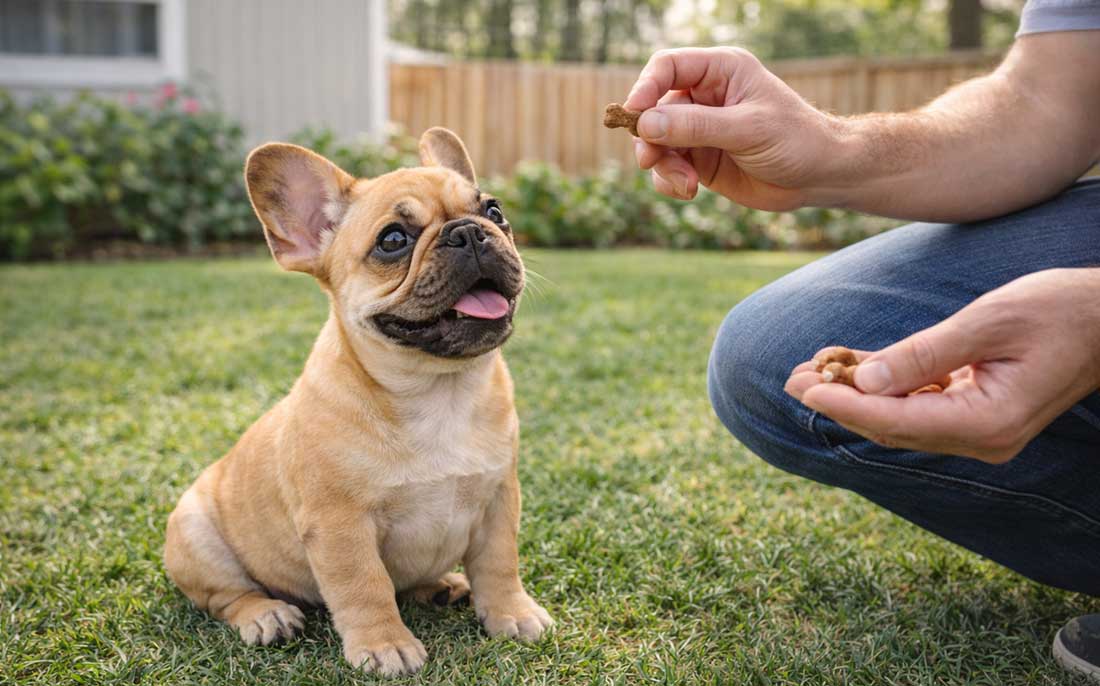
Importance of Early Training
French Bulldogs are intelligent but can be a bit stubborn. Starting training early helps prevent bad habits, separation anxiety, and behavioral issues later. In the USA, where urban life often means close contact with people, pets, and city noises, socialization is equally critical.
I’ve seen many first-time US owners struggle when they delay training. Puppies that miss early guidance can become shy, anxious, or pushy. A little patience and consistency early on goes a long way in raising a confident adult Frenchie.
House Training
Potty training should start immediately after bringing your puppy home:
- Take your puppy outside every 2–3 hours, especially after meals or naps
- Praise and reward successful potty trips with treats or gentle words
- Establish a consistent spot outside so your puppy associates it with bathroom time
Consistency is key. I’ve noticed that Frenchies respond best to routine, and accidents happen less when owners stick to a schedule.
Basic Commands
Start teaching simple commands like:
- Sit
- Stay
- Come
- Leave it
- Down
Use positive reinforcement with treats, praise, or play. Keep sessions short—about 5–10 minutes for young puppies—so they don’t get overwhelmed.
Socialization
Socialization is essential for a well-adjusted puppy:
- Introduce new people, dogs, and environments gradually
- Visit dog parks or pet-friendly areas in the US for supervised socialization
- Expose your puppy to different sights, sounds, and textures
Proper socialization helps your Frenchie stay calm in busy cities, at family gatherings, or during travel.
Leash Training
- Use a lightweight harness instead of a collar to protect their delicate neck
- Practice walking in safe areas first
- Reward calm walking and ignore pulling
Many US owners find that early leash training reduces stress during walks and makes city living easier.
Training isn’t just about discipline—it’s communication and bonding. Every command your Frenchie masters builds trust, understanding, and a stronger connection. I’ve watched owners beam with pride when their puppies respond quickly to commands and explore the world confidently.
Read: French Bulldog Training Guide
Play, Exercise, & Mental Stimulation
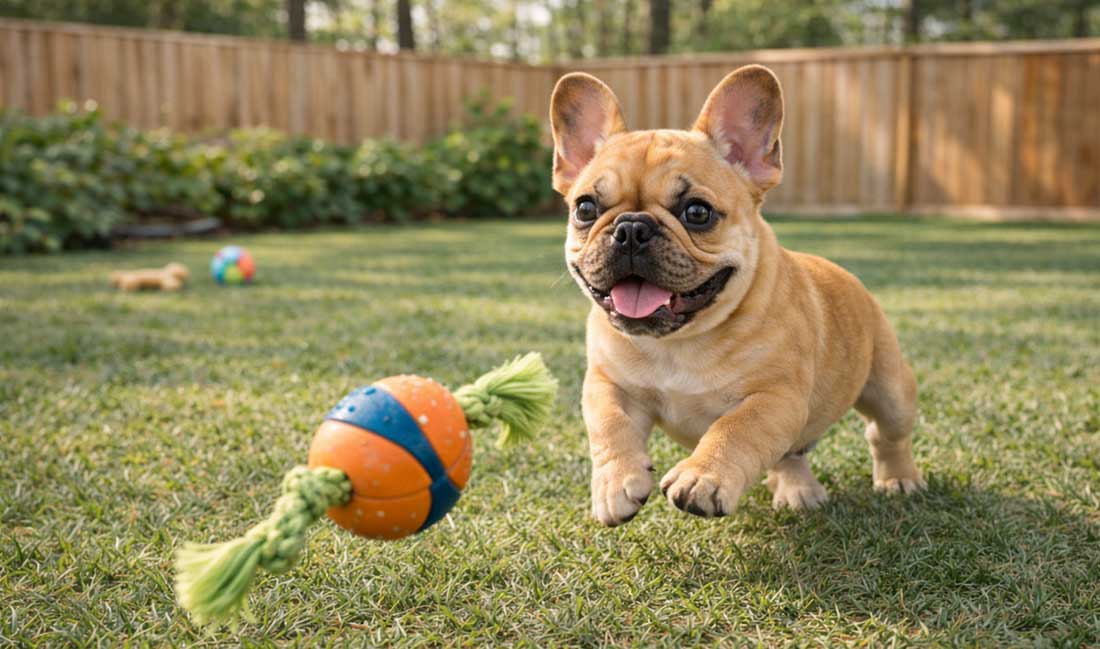
Why Exercise Matters
French Bulldogs are energetic little dogs, but their short muzzles make heavy breathing difficult. Regular exercise keeps them healthy, prevents obesity, and stimulates their mind. Proper play and exercise routines are especially important in the USA, where city living, hot summers, and winter climates can affect your puppy’s activity.
I’ve noticed many new US owners worry about how much exercise their Frenchie needs. The key is moderation—short, frequent sessions are better than long, strenuous walks.
Indoor Play
Indoor play is essential, especially for apartment dwellers or during extreme weather:
- Puzzle toys and chew toys keep your puppy mentally engaged
- Short games like tug-of-war or fetch in safe spaces
- Rotate toys regularly to prevent boredom
Play indoor also helps manage pent-up energy, so your puppy behaves calmly when you need them to rest or focus.
Outdoor Play
- Short walks during early morning or evening avoid the heat in US summers
- Supervised play in fenced yards or dog parks ensures safety and socialization
- Avoid overexertion, especially in hot or humid areas; Frenchies can overheat quickly
Many US owners notice their Frenchies love exploring grassy areas, smelling new scents, and interacting with friendly dogs—but always under supervision.
Seasonal Considerations
- Summer: Use air conditioning indoors, shaded walks, and cooling mats to prevent overheating
- Winter: Short outdoor sessions, dog jackets, and paw protection in snowy states
Adjust exercise based on your puppy’s energy, age, and the local climate.
Mental Stimulation
- Teach new commands or tricks during play
- Hide treats in puzzle toys to encourage problem-solving
- Provide interactive games that challenge your puppy’s mind
Mental exercise prevents boredom, anxiety, and destructive behaviors, and helps your Frenchie grow into a confident adult dog.
Playtime is more than physical activity—it’s bonding and joy. Watching your Frenchie chase toys, explore safely, and learn new tricks fills the heart with happiness. I’ve seen puppies who once hesitated in new places become confident explorers simply through gentle, consistent play and encouragement.
Grooming & Hygiene
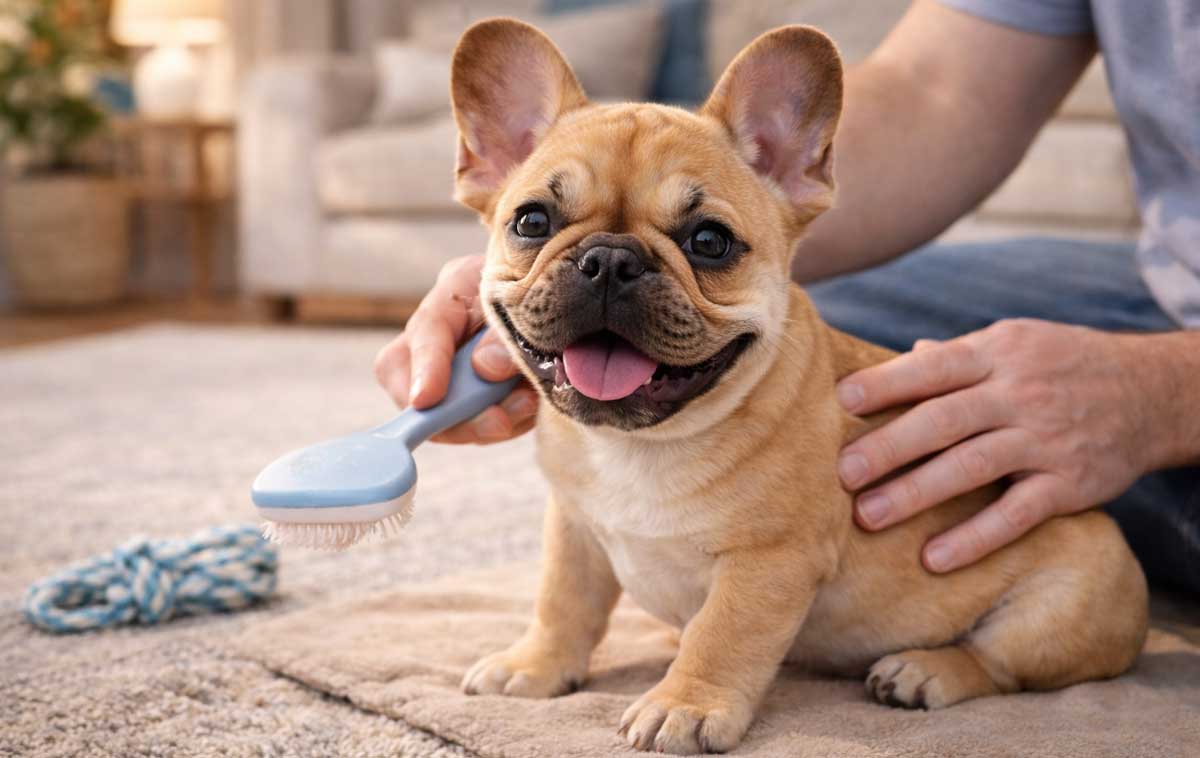
Why Grooming Matters
French Bulldogs have short hair, but their sensitive skin and unique features—like skin folds and flat faces—require regular grooming. Grooming is not just about keeping them clean; it also prevents skin infections, odor, and discomfort, while strengthening the bond between you and your puppy.
I’ve seen many new owners in the USA underestimate grooming. A Frenchie that isn’t groomed regularly may develop tear stains, skin irritation, or bad breath, which can be avoided with simple routines.
Bathing
- Bathe your puppy 1–2 times per month using a vet-approved gentle shampoo
- Avoid over-bathing; it can dry out their skin
- Pay special attention to skin folds, as dirt and moisture can cause infections
Bath time can also be fun bonding time. Praise your puppy and give treats, so they associate bathing with something positive.
Brushing
- Brush 2–3 times per week to remove dead hair and distribute natural oils
- Reduces shedding and keeps their coat shiny
- Use a soft-bristle brush suitable for short-haired breeds
Many US owners notice Frenchies enjoy the gentle brushing if you make it calm and rewarding.
Nail Care
- Trim nails every 3–4 weeks
- Be careful not to cut the quick (the sensitive part inside the nail)
- Use a nail file or grinder for safety
Short nails prevent discomfort while walking and reduce the risk of scratches indoors.
Ear & Eye Care
- Clean ears weekly with a vet-approved solution
- Check for redness, odor, or wax buildup
- Wipe tear stains gently and monitor for infections
French Bulldogs are prone to eye discharge due to their facial structure. Regular checks keep them healthy and comfortable.
Dental Hygiene
- Brush teeth 2–3 times per week using dog-safe toothpaste
- Provide chew toys to prevent tartar buildup
- Healthy teeth prevent bad breath and more serious health issues later
Grooming is more than maintenance—it’s quality time. Every gentle stroke, bath, or nail trim reassures your puppy that they are safe, loved, and cared for. I’ve seen Frenchies who once resisted grooming start enjoying it because owners took it slowly and added praise, making it a bonding ritual rather than a chore.
Common Mistakes
Even the most loving French Bulldog owners can make mistakes without realizing it. Avoiding these common errors will help your puppy grow healthy, happy, and well-behaved.
1. Overfeeding
French Bulldogs are prone to weight gain, which can lead to joint problems and breathing difficulties. Many US owners unintentionally overfeed because puppies beg for treats or leftovers. Stick to recommended portion sizes and avoid free-feeding.
2. Skipping Socialization
Puppies that don’t meet new people, dogs, or environments may grow up shy, anxious, or aggressive. In the US, where city life is busy, socialization is crucial. Take your puppy to parks, pet-friendly cafes, or training classes early on.
3. Neglecting Vet Visits
Missing vaccines or checkups can lead to serious illnesses. Regular preventive care, flea/tick treatments, and heartworm prevention are especially important in the USA, where climates and wildlife vary by region.
4. Overexertion
Frenchies have short muzzles and can overheat easily. Avoid long walks in hot weather, strenuous play, or leaving your puppy in a car. Many summer heat-related emergencies can be prevented with caution.
5. Inconsistent Training
Puppies thrive on routine and clear rules. Inconsistent training leads to confusion, bad habits, and frustration for both owner and puppy. Short, frequent sessions work best.
6. Ignoring Grooming
Skipping brushing, bathing, or nail care can lead to skin infections, tear stains, and dental problems. Regular grooming also strengthens your bond with your puppy.
Being aware of these common mistakes ensures that your French Bulldog grows into a confident, happy, and well-adjusted adult. I’ve seen many US owners feel proud and relieved when they follow routines carefully—the puppies are healthier, calmer, and more affectionate. Small efforts in the early months pay off for a lifetime.
Frequently Asked Questions
Q1: How often should I feed my Frenchie puppy?
A: Feed 3–4 small meals per day, adjusting based on age, weight, and activity level. Puppies have small stomachs but high energy needs, so portion control is essential.
Q2: When should I start potty training?
A: Start immediately after bringing your puppy home. Take them outside every 2–3 hours, especially after meals or naps, and reward successful potty trips with treats and praise.
Q3: Can Frenchies tolerate hot US summers?
A: No, they are prone to overheating due to their short muzzles. Use air conditioning indoors, take shaded walks in early morning or evening, and provide cooling mats.
Q4: What vaccines are essential in the USA?
A: Core vaccines include Distemper, Parvovirus, Rabies, and Adenovirus. Non-core vaccines, like Bordetella, depend on lifestyle and environment. Always follow your vet’s guidance.
Q5: How do I prevent separation anxiety?
A: Gradually increase alone time, provide puzzle toys, and use positive reinforcement. Crate training and consistent routines also help your Frenchie feel secure.
Q6: How often should I groom my puppy?
A: Bathe 1–2 times per month, brush 2–3 times per week, trim nails every 3–4 weeks, and clean ears weekly. Start grooming early so your puppy enjoys it.
Q7: What is the best diet for growth?
A: Choose high-protein, breed-specific puppy food with limited fillers. Occasionally give healthy treats approved for French Bulldogs in the USA.
Q8: When do I start training?
A: Start immediately with basic commands like sit, stay, and come. Keep sessions short (5–10 minutes) and always use positive reinforcement.
Q9: How much exercise is safe?
A: Short, moderate indoor or outdoor play is ideal. Avoid overexertion, especially in hot or humid climates. Monitor your puppy’s energy and breathing.
Q10: How do I keep my puppy mentally stimulated?
A: Use puzzle toys, interactive games, training exercises, and socialization. Daily mental stimulation prevents boredom, anxiety, and destructive behavior.
I’ve seen many US owners feel anxious when their puppies face new experiences or challenges. FAQs like these help guide them through daily routines, feeding, training, and care. When you follow these tips, your Frenchie becomes a confident, happy, and playful companion, and life together is joyful and stress-free.
Conclusion :

Raising a French Bulldog puppy is one of the most rewarding experiences, full of love, laughter, and little challenges. I’ve seen many US owners feel nervous at first, worrying about feeding, vaccinations, or city life, but with the right guidance, these puppies adapt beautifully. Every cuddle, playful bark, and milestone creates memories you’ll cherish forever.
By focusing on nutrition, vet care, training, socialization, grooming, and mental stimulation, you provide a strong foundation for your Frenchie’s health and happiness. In the USA, where urban apartments, hot summers, and busy lifestyles can pose unique challenges, following a structured routine ensures your puppy grows safe, confident, and well-adjusted.
Remember, consistency is key. Regular feeding, playtime, training sessions, and grooming habits make your Frenchie feel secure and loved. I’ve personally seen shy puppies blossom into affectionate, playful companions simply through daily routines and gentle encouragement. By following this French Bulldog Puppy Care Guide, your pup will thrive in the USA.
Lastly, raising a French Bulldog is about more than just care—it’s about connection and joy. Watch them explore, learn, and snuggle into your lap. Celebrate small victories, like the first potty success or mastering a command, because these moments form the foundation of a lifelong bond.
Explore our French Bulldog Health Guide to give your puppy the best care, ensure safety, and raise a happy, healthy Frenchie who thrives in your home and heart.