
Adopting a French Bulldog – Everything You Need to Know
Thinking about adopting a French Bulldog? You’re definitely not alone. Frenchies are one of the most loved dog breeds in the United States — and yes, there are good reasons for that. They’re funny, affectionate, and full of personality.
But here’s the part many people don’t hear upfront: adopting a French Bulldog, especially from a rescue, is a serious commitment. It’s rewarding, but it’s not always easy. And it’s not something to rush into.
This guide covers everything you really need to know before adopting a French Bulldog — the good, the challenging, and the honest truths that can make or break the experience.
Why French Bulldogs Are So Popular
French Bulldogs are known for being incredible companion dogs. Most Frenchies don’t just want to live near you — they want to be involved in whatever you’re doing.
You’ll usually find them:
- On the couch next to you
- Following you into the kitchen
- Curled up at your feet while you work
Common French Bulldog traits include:
- Affectionate and loyal
- Playful, but not nonstop energy
- Well-suited for apartment living
- Naturally funny and expressive
- Very people-focused
They enjoy short play sessions, long naps, and lots of closeness. In the right home, a Frenchie doesn’t just feel like a pet — they feel like a little shadow with a big personality.
The Reality of Adopting a Rescue French Bulldog
Let’s be honest for a moment.
Many rescue French Bulldogs didn’t come from perfect situations. Some were surrendered because medical bills became overwhelming. Others struggled with behavior issues that their previous families weren’t prepared to handle.
That doesn’t make them “problem dogs.”
It means they need patience, structure, and realistic expectations.
One important truth that needs to be said clearly:
Rescue French Bulldogs are not a cheaper way to get a Frenchie.
Medical care, training, time, and emotional investment all come with the territory. If you’re looking for a low-cost or low-effort dog, this breed is probably not the right fit.
Understanding the French Bulldog Personality
French Bulldogs are smart. They’re also stubborn, opinionated, and surprisingly strong-willed for their size.
Because of their bulldog roots, some common challenges can show up, such as:
- Resource guarding (food, toys, or even people)
- Jealous or possessive behavior
- Dog aggression, especially with the same sex
- Resistance to traditional training methods
The good news?
Most of these issues improve with clear boundaries, calm leadership, and consistency.
Frenchies thrive when they feel secure — not when they’re allowed to run the household. Love is important, but structure matters just as much.
Bringing a French Bulldog Home: The First Days Matter
The first few weeks after adoption set the tone for everything that follows.
Give Them Space
Your new Frenchie may feel scared, confused, or overwhelmed — even if they don’t show it right away.
Set up a quiet space with:
- A comfortable bed
- Food and water
- Very limited visitors
Avoid excessive handling, grooming, or dressing them up during this adjustment period.
Slow Introductions
If you already have pets:
- Meet on neutral ground first
- Keep some distance at the beginning
- Watch body language closely
Not every dog becomes best friends immediately — and that’s okay.
Be Patient
Fear often looks like aggression. Growling or snapping is usually a sign of discomfort, not a dangerous dog.
Grooming and Daily Care Needs
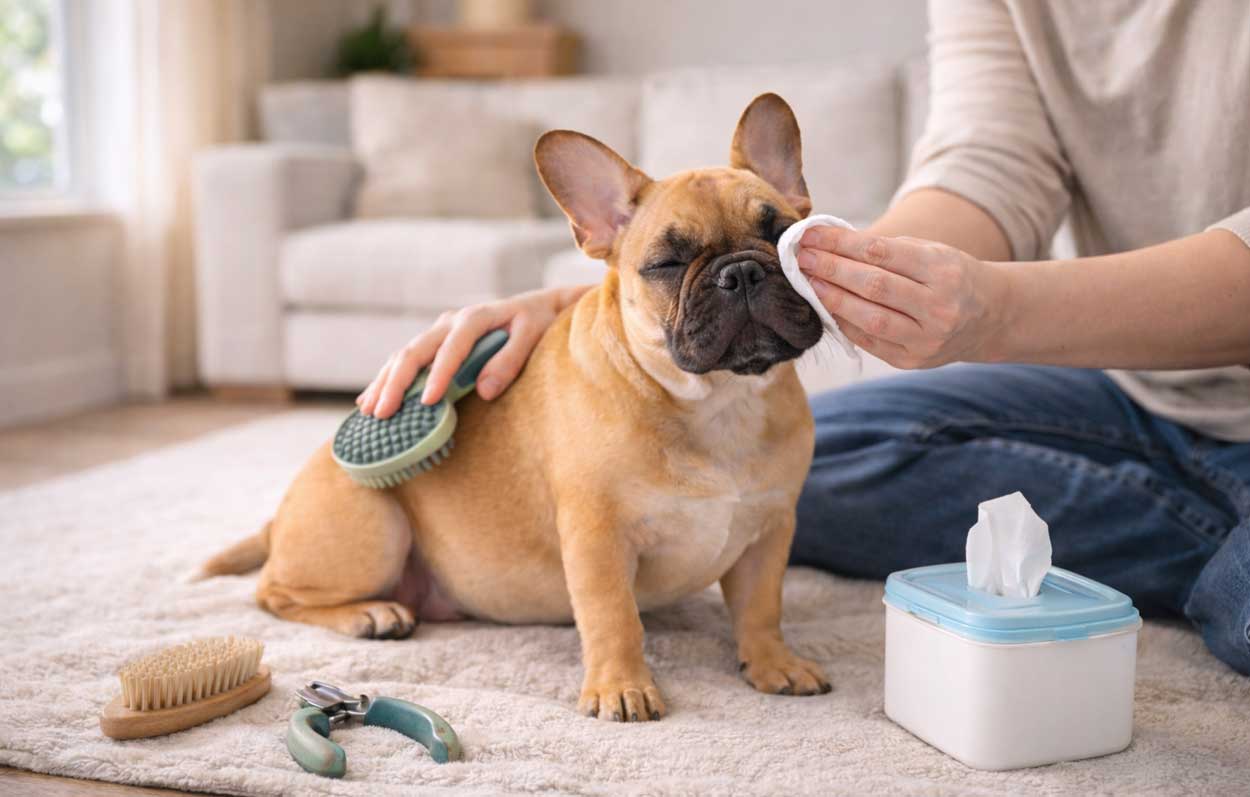
French Bulldogs don’t shed much, but they are not low-maintenance.
Regular care usually includes:
- Weekly brushing
- Nail trims
- Cleaning facial folds
- Ear cleaning
- Occasional baths
- Tail fold care for some dogs
Many Frenchies are sensitive about being handled. Go slowly. Use treats. Build trust over time. A snap during grooming usually means fear or unfamiliarity, not aggression.
We recommend using a gentle brush like the Amazon Basics Soft Bristle Brush and fold-cleaning wipes to keep your Frenchie comfortable during grooming
French Bulldog Health Issues You Must Be Ready For
This is the most important part of adopting a French Bulldog – everything you need to know.
French Bulldogs are prone to several serious health issues, including:
- Breathing problems (BOAS)
- Allergies and chronic skin infections
- Ongoing ear infections
- Eye injuries and ulcers
- IVDD, which can lead to paralysis
- Digestive sensitivities
French Bulldogs are prone to breathing problems, skin issues, and other breed‑specific conditions. For detailed health care tips and what to watch for, check out our French Bulldog health guide.
Some surgeries range from $6,000 to $20,000, and timing can be critical. Delays may result in permanent damage.
A dog first aid kit, like the Ruff First Aid Kit, is essential for quick care in case of minor injuries.
Pet Insurance Is Not Optional
If the cost of medical care is a concern, this breed may not be right for you.
Getting pet insurance before problems start is strongly recommended.
Will a French Bulldog Get Along With Others?
Kids & People
Many Frenchies love people, but not all are comfortable with kids. Teaching children how to respect a dog’s space is essential.
Other Dogs
French Bulldogs vary widely:
- Many do best as the only pet
- Same-sex aggression is common
- Dominant personalities are not unusual
Always read individual dog bios carefully.
Cats & Small Animals
Some Frenchies coexist peacefully with cats. Others have a strong prey drive. Chickens and small livestock are usually not a good match.
Do French Bulldogs Bite?
Most well-socialized French Bulldogs do not bite under normal circumstances. However, rescue dogs may have fear-based triggers.
Bites often happen when:
- Dogs are pushed too quickly
- Boundaries are ignored
- Early warning signs are missed
Giving space, moving slowly, and respecting limits prevents most problems.
Why Breed-Specific Rescues Matter
French Bulldog rescues do much more than rehome dogs.
They often provide:
- Breed education
- Medical guidance
- Ongoing emotional support
- Foster homes instead of kennel environments
Many rescues stay involved even after adoption to help families succeed long-term.
Who Should Adopt a French Bulldog?
A French Bulldog may be a great fit if you:
- Want a close companion
- Can afford ongoing medical care
- Have patience for training
- Understand breed limitations
- Spend a lot of time at home
They may not be ideal if you:
- Want a low-cost pet
- Travel frequently
- Expect instant perfect behavior
- Aren’t prepared for medical expenses
Final Thoughts: Is a French Bulldog Right for You?
Adopting a French Bulldog isn’t just about bringing home a cute dog. It’s about committing to their health, happiness, and long-term well-being.
If you’re prepared, the rewards are huge:
- Endless laughs
- Deep loyalty
- Constant companionship
- A dog that truly feels like family
Adopting a French Bulldog – Everything You Need to Know really comes down to honesty, preparation, and heart. When those align, life with a Frenchie can be incredibly special.
Frequently Asked Questions About Adopting a French Bulldog
Q. Are French Bulldogs a good choice for first-time dog owners?
They can be, but only for people who are willing to learn as they go. French Bulldogs are loving and people-oriented, but they’re also stubborn and can have ongoing health needs. First-time owners should be comfortable with vet visits, routine care, and the fact that training may take patience.
Q. Is adopting a French Bulldog expensive?
In most cases, yes. Even when adopting from a rescue, French Bulldogs often come with higher medical and care costs than many other breeds. Between insurance, vet visits, food sensitivities, and possible surgeries, this is not a low-budget breed.
Q. Do French Bulldogs usually have health problems?
Many do. French Bulldogs are known for breathing difficulties, skin and allergy issues, ear infections, spinal problems like IVDD, and sensitive stomachs. Some dogs have minor issues, while others need ongoing medical care. Having a good vet and pet insurance makes a big difference.
Q. Can a French Bulldog live comfortably in an apartment?
Yes, and many do very well in apartments. French Bulldogs don’t need long runs or intense exercise. That said, they don’t handle heat well, so good airflow, air conditioning, and temperature awareness are important no matter where you live.
Q. Are rescue French Bulldogs aggressive?
Most are not. Some rescue Frenchies may be fearful or unsure at first, especially in new environments. With time, structure, and gentle boundaries, many settle into calm, affectionate companions. Each dog is different, which is why reading individual bios matters.
Q. What do people often wish they knew before getting a French Bulldog?
A lot of owners say they wish they had better understood how much time, money, and emotional energy the breed can require. French Bulldogs give a lot of love, but they also depend heavily on their humans and may need ongoing medical support throughout their lives.
Q. What are the biggest downsides of owning a French Bulldog?
Health concerns and cost are the most common challenges. French Bulldogs can also struggle with being alone for long periods, as they bond very closely with their people. If you’re away from home all day, this breed can become unhappy or anxious.
Q. Can French Bulldogs be left alone for a full workday?
Occasionally, yes — but not regularly. Most French Bulldogs don’t do well being left alone for eight hours every day. They are companion dogs and thrive on human interaction. Long, daily absences can lead to anxiety or unwanted behaviors.
Q. Is a French Bulldog easy to care for?
In some ways, yes — and in other ways, not really. They don’t need heavy exercise or professional grooming, but they do need regular fold and ear cleaning, close health monitoring, and protection from heat. Their care is more about consistency than effort.