
French Bulldog vs Boston Terrier: Key Differences Explained
If you’ve ever spotted a small dog with a flat face, big eyes, and perky ears walking down the street, you might have wondered whether it was a French Bulldog or a Boston Terrier. These two breeds look surprisingly similar, which is why many people often mix them up. When comparing French Bulldog vs Boston Terrier, the differences become clearer once you take a closer look at their origins, physical features, personality, and care needs.
While both breeds are affectionate, compact, and great companions, they each have unique traits that make them special in their own way.
In this guide, we’ll break down the key differences between the French Bulldog and the Boston Terrier so you can easily tell them apart—and decide which breed might be the better fit for your lifestyle.
French Bulldog and Boston Terrier: Their Origins
Both the Boston Terrier and the French Bulldog share a common ancestor, the Bulldog. However, they come from different backgrounds and histories.
- French Bulldogs, or “Frenchies,” were first bred in France in the 1800s by English immigrants. These smaller, compact dogs were created to be affectionate companions. They quickly became popular in France and were later brought to America, where they’re now one of the most beloved dog breeds.
- Boston Terriers, known as the “American Gentleman,” originated in Boston, Massachusetts, in the late 1800s. They were the result of breeding between English Bulldogs and the now-extinct White English Terrier. While initially bred as a strong, compact dog for fighting, Boston Terriers evolved into friendly, gentle companions.
French Bulldog and Boston Terrier: Physical Differences
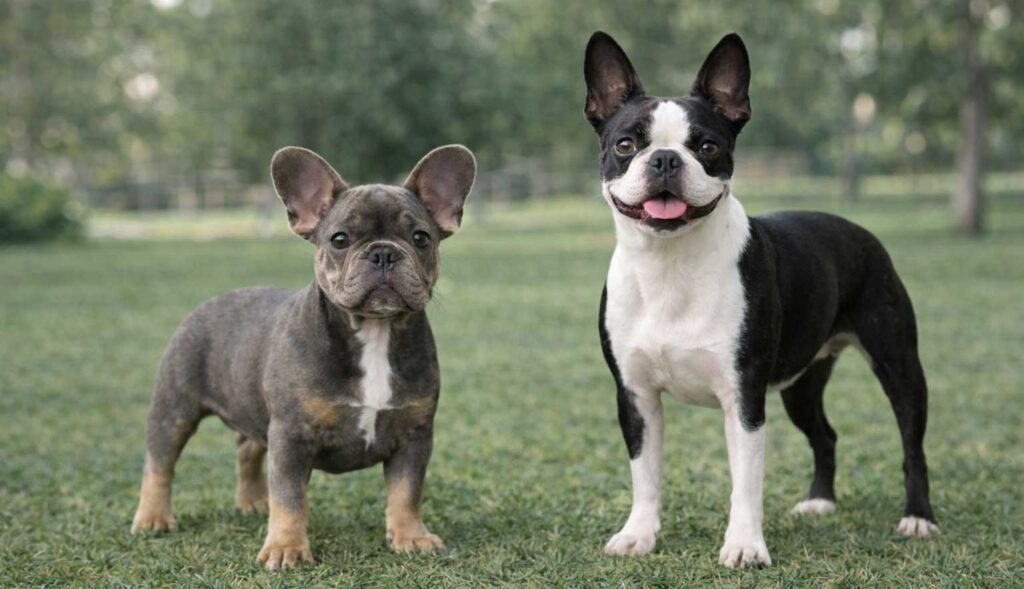
At first glance, French Bulldogs and Boston Terriers might seem nearly identical, with their short snouts, big eyes, and small size. But if you look closer, you’ll see they each have distinct features.
- Ears: One of the easiest ways to tell them apart is by their ears. French Bulldogs have large, rounded “bat ears,” while Boston Terriers have small, pointed ears.
- Head Shape: A Frenchie has a square-shaped head, whereas a Boston Terrier’s head is rounder.
- Body Type: Boston Terriers are generally leaner and lighter, with a maximum weight of 25 pounds, while French Bulldogs are stockier, weighing up to 28 pounds.
- Height: Boston Terriers are taller, with a maximum height of 17 inches, while French Bulldogs stand at a maximum height of 13 inches.
- Coat Colors: Both breeds can have black and white markings, but Boston Terriers are known for their distinctive “tuxedo” coat pattern. Frenchies, on the other hand, come in a wider range of colors, including brindle, fawn, cream, and more.
While both breeds share the same short snout and expressive eyes, their body shape, ears, and overall build can help you quickly tell them apart.
To make it easier to understand the main differences between a French Bulldog and a Boston Terrier, here’s a quick side-by-side comparison.
| Feature | French Bulldog | Boston Terrier |
|---|---|---|
| Weight | Up to 28 lbs | Up to 25 lbs |
| Height | Up to 13 inches | Up to 17 inches |
| Body Type | Stocky and muscular | Lean and athletic |
| Ears | Large rounded “bat ears” | Small pointed ears |
| Energy Level | Low to moderate | Moderate to high |
| Lifespan | 10–12 years | 11–13 years |
This quick comparison highlights some of the most noticeable Boston Terrier vs French Bulldog differences, making it easier to understand how these two breeds vary in size, appearance, and energy levels.
French Bulldog and Boston Terrier: Health Considerations
Both breeds are prone to some similar health issues because they are brachycephalic, meaning they have short snouts. This can lead to breathing problems, especially in hot weather or during exercise. It’s essential to keep them cool and avoid overheating.
- French Bulldogs tend to suffer from joint problems like hip dysplasia, and they may also experience heart disease and spinal issues.
- Boston Terriers are more likely to face patellar luxation (dislocated kneecaps), deafness, and a condition called hemivertebrae (spinal deformities).
On average, Boston Terriers live about 11–13 years, while French Bulldogs live around 10–12 years.
Because both breeds are brachycephalic (short-nosed dogs), many veterinarians recommend avoiding intense exercise during hot weather and ensuring they always have access to a cool environment.
French Bulldogs are prone to joint problems and breathing issues; for a detailed care routine, check out our French Bulldog health guide.
If you want to know how French Bulldogs compare with other breeds, see French Bulldog vs English Bulldog.
French Bulldog and Boston Terrier: Personality and Temperament
When it comes to temperament, both breeds are affectionate, intelligent, and great for families, but there are subtle differences.
- French Bulldogs are known for their sassy and mischievous personalities. They’re playful, but they also have an independent streak. They love to be around their humans, often cuddling on the couch or joining in on the fun with their quirky antics.
- Boston Terriers are active, affectionate, and very sociable. They thrive on attention and are happy to play and learn new things. Known for their intelligence, they excel in dog sports like agility and obedience. Bostons are equally happy lounging with you on the couch or running around in the backyard.
Both breeds are excellent family pets and can live happily in apartments, as long as they get daily exercise and attention.
One of the most charming traits of the French Bulldog personality is their playful and slightly mischievous nature. These dogs love spending time with their owners and are often happiest when relaxing close to their favorite humans.
The Boston Terrier temperament is often described as friendly, energetic, and highly social. These dogs enjoy interacting with people and usually get along well with children and other pets.
French Bulldog vs Boston Terrier: Special Care and Considerations
Both French Bulldogs and Boston Terriers need special care to keep them healthy and happy.
- Vet Visits: Due to their brachycephalic nature, both breeds need regular vet checkups, especially for breathing and eye problems. They’re also sensitive to anesthesia, so make sure your vet is experienced with brachycephalic dogs.
- Obesity Prevention: These dogs are prone to gaining weight, so it’s essential to keep their diet in check and provide regular exercise. Both breeds need about 30 to 60 minutes of physical activity daily to stay healthy.
- Socialization: While both breeds are friendly and adaptable, early socialization is crucial to ensure they are calm around other dogs, people, and in new situations.
When looking at Boston Terrier vs French Bulldog differences, their ears, body shape, and overall size are usually the easiest ways to tell them apart.
French Bulldog vs. Boston Terrier: Grooming and Exercise Needs
When it comes to grooming, both breeds are relatively low-maintenance. They have short coats that don’t shed much, but they do benefit from weekly brushing to remove loose hairs and distribute natural oils. French Bulldogs also need their facial folds cleaned regularly to prevent irritation.
- Exercise: Boston Terriers are more energetic and love activities like running around the yard, playing fetch, or learning simple tricks. They excel in dog sports and can participate in activities like agility, flyball, and even weight pulling. They do need more exercise than French Bulldogs but are still happy with a good walk and some playtime.
- French Bulldogs, while still playful, have lower energy levels. A short walk and a bit of playtime each day will usually suffice for them, but it’s important not to overexert them, especially in warm weather.
Which Dog Is Right for You?
Both French Bulldogs and Boston Terriers make wonderful pets, but the right choice depends on your lifestyle.
- If you want a playful, yet independent dog that enjoys a good cuddle and doesn’t mind a little mischief, the French Bulldog might be the perfect match.
- If you’re looking for a high-energy dog with an affectionate nature who loves to be active, the Boston Terrier could be the one for you.
Either way, both dogs are loving companions who will bring joy and laughter to your life.
Conclusion
At the end of the day, both breeds are lovable companions with their own unique charm. Whether you fall in love with the playful personality of a Boston Terrier or the adorable, laid-back attitude of a French Bulldog, either dog can become a wonderful addition to the right home.
Frequently Asked Questions
1. Are Boston Terriers healthier than French Bulldogs?
In general, Boston Terriers tend to have slightly fewer health problems than French Bulldogs. Because Frenchies have a flatter face and heavier body structure, they are more prone to breathing difficulties and joint issues. However, with proper care, regular vet visits, and a healthy diet, both breeds can live happy and healthy lives.
2. Which dog is easier to train, Boston Terrier or French Bulldog?
Boston Terriers are usually easier to train because they are very eager to please and highly intelligent. French Bulldogs are smart too, but they can sometimes be a bit stubborn. Using positive reinforcement and short training sessions works best for both breeds.
3. Do French Bulldogs bark more than Boston Terriers?
French Bulldogs are generally quieter dogs and don’t bark very often. Boston Terriers may bark a little more, especially when they are excited or trying to get your attention.
4. Which breed is better for apartment living?
Both breeds do very well in apartments because of their small size. However, French Bulldogs are slightly better suited for apartment life since they require less exercise compared to Boston Terriers.
5. Are Boston Terriers more active than French Bulldogs?
Yes, Boston Terriers are usually more energetic. They enjoy running, playing, and learning new activities. French Bulldogs prefer shorter play sessions and are generally more relaxed.